Crystal Control and Quality Preservation of High Voltage Electrostatic Assisted Food Freezing
Food freezing is a critical preservation method that extends the shelf life of perishable foods while maintaining quality. The formation of ice crystals during freezing affects the texture, appearance, and nutritional content of the food. High voltage electrostatic fields applied during freezing can influence the ice crystal formation, potentially improving the quality of frozen foods. Understanding and controlling this effect is essential for practical applications.
Ice crystal formation during freezing occurs through nucleation and growth. Nucleation is the formation of small ice crystals that serve as seeds for further growth. The nucleation rate determines the number of crystals formed. Higher nucleation rates produce more, smaller crystals. The crystal size affects the food quality, with smaller crystals causing less damage to cellular structures.
Slow freezing, typical in conventional freezing processes, produces few nucleation sites and allows time for the crystals to grow large. The large crystals can puncture cell walls, causing drip loss and texture degradation upon thawing. Rapid freezing produces more nucleation sites and less time for growth, resulting in smaller crystals and better quality preservation.
Electrostatic freezing applies a high voltage electric field to the food during the freezing process. The electric field may influence the water molecules and the ice nucleation process. Research has shown that appropriate electric fields can increase the nucleation rate, producing smaller ice crystals. The mechanism may involve alignment of water molecules by the field, affecting the nucleation kinetics.
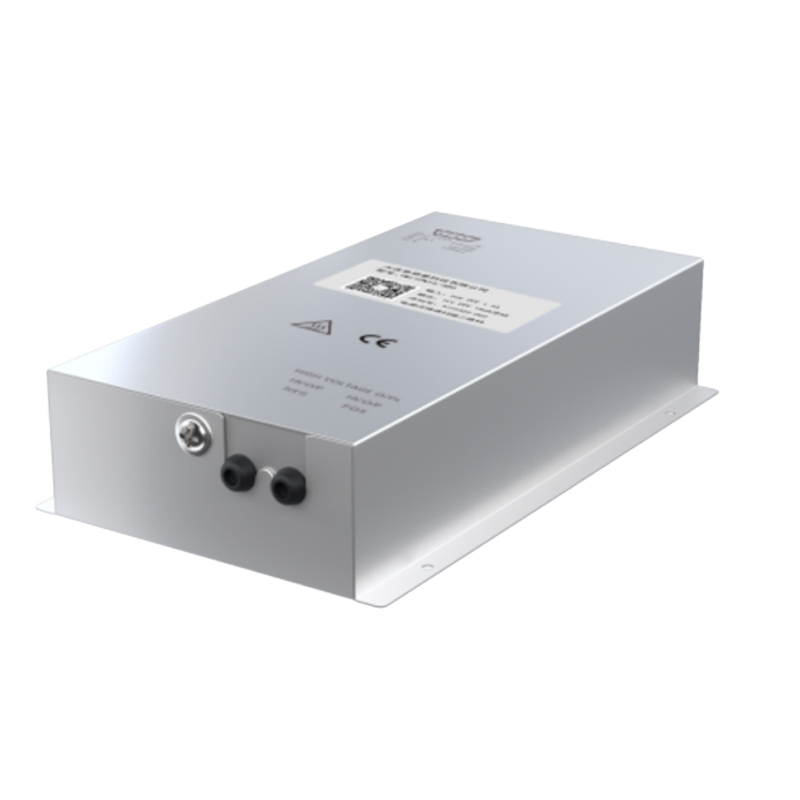
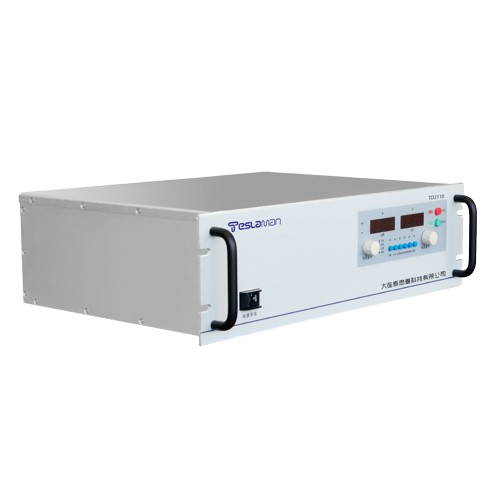
The high voltage power supply for electrostatic freezing provides the electric field between electrodes placed around the food. Typical field strengths are in the range of kilovolts per meter. The supply must operate reliably in the cold, humid environment of a freezer. The output must be controllable to optimize the field for different foods and freezing conditions.
The electrode configuration affects the field distribution and the effectiveness of the treatment. Parallel plate electrodes produce a uniform field between the plates. Point electrodes produce non uniform fields with high field near the points. The electrode geometry must be compatible with the food product and the freezing equipment. The electrodes must not interfere with the freezing process or the food handling.
The timing of the electric field application relative to the freezing process affects the results. The field may be applied continuously throughout freezing, or only during specific phases such as the initial nucleation period. The optimal timing depends on the food type and the freezing conditions. The power supply control must enable the required timing sequences.
The electric field strength affects the nucleation enhancement. Higher fields may produce stronger effects but also increase the power consumption and the potential for electrical discharge. The optimal field strength depends on the food and the desired effect. Excessive fields may cause unwanted effects such as electrolysis or discharge.
Food type affects the response to electrostatic freezing. Foods with high water content may respond differently than foods with lower water content. The presence of dissolved solutes affects the freezing point and the ice formation. The cellular structure of the food affects how ice crystals impact the quality. The electrostatic parameters may need optimization for each food type.
Quality assessment of electrostatic frozen foods measures the relevant quality attributes. Microscopic examination reveals the ice crystal size and distribution. Texture analysis measures the firmness and other mechanical properties. Drip loss measurement quantifies the fluid released upon thawing. Sensory evaluation assesses the eating quality. These measurements determine whether the electrostatic treatment provides quality benefits.
Process integration considers how electrostatic freezing fits into the overall food processing operation. The electrodes and power supply must be compatible with existing freezing equipment. The treatment must not slow the freezing rate or reduce the throughput. The additional energy consumption must be justified by the quality improvement. The equipment must meet food safety and sanitation requirements.