Coordinated Control and Structure Regulation of High Voltage Power Supply for Multi Material Electrospinning
Multi material electrospinning enables the fabrication of complex nanofibrous structures with spatially varying composition and properties. This advanced technique uses multiple spinnerets, each supplying a different polymer solution, to create fibers with controlled composition gradients or patterns. The high voltage power supply system must provide coordinated control of multiple outputs to achieve the desired structural regulation in the deposited fibers.
Electrospinning uses electrostatic forces to draw polymer solutions into nanofibers. A high voltage applied to a spinneret creates an electric field that stretches a jet of polymer solution toward a grounded collector. As the jet travels, the solvent evaporates and the polymer solidifies into a fiber with diameter typically in the nanometer to micrometer range. The fiber properties depend on the solution characteristics, the processing parameters, and the electric field conditions.
Multi material electrospinning extends the basic process by using multiple spinnerets. Each spinneret can supply a different polymer solution, enabling fibers with different compositions to be deposited simultaneously or sequentially. By controlling the relative positions and the voltages applied to each spinneret, the deposition pattern and the fiber mixing can be controlled.
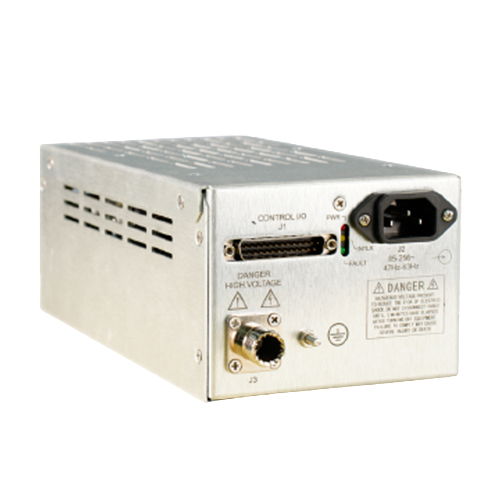
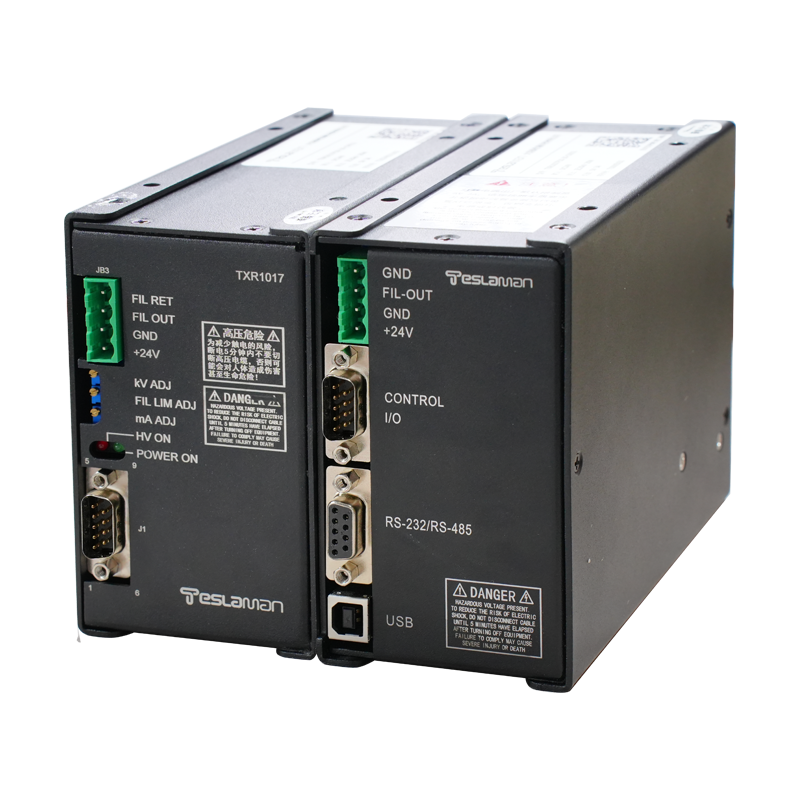
The high voltage power supply system for multi material electrospinning must provide multiple independently controllable outputs. Each spinneret requires its own high voltage channel. The number of channels depends on the number of spinnerets, which can range from two to dozens depending on the complexity of the desired structure. The channels must be independently adjustable to enable differential control of the spinning conditions at each spinneret.
Coordinated control of the multiple channels enables regulation of the fiber structure. The relative voltages at different spinnerets affect the electric field distribution and the jet trajectories. By adjusting the voltages, the deposition positions of fibers from different spinnerets can be controlled. This enables creation of patterns, gradients, or controlled mixing of different fiber types.
The electric field from each spinneret interacts with the fields from other spinnerets. This interaction affects the jet behavior and the fiber deposition. The coordination must account for these interactions to achieve the intended structure. Models of the electric field distribution and the jet dynamics can guide the coordination strategy.
Voltage modulation during spinning enables dynamic structural control. By varying the voltages over time, the fiber deposition can be varied during the process. This enables creation of layered structures, gradients, or patterns that vary through the thickness of the deposit. The modulation must be coordinated across channels to maintain the desired relationships.
Feedback from process monitoring enables adaptive coordination. Cameras or other sensors can observe the jet behavior and the fiber deposition. Analysis of the sensor data provides information about the actual structure being formed. This feedback can be used to adjust the voltages in real time to correct deviations from the intended structure.
The collector configuration affects the fiber deposition and the achievable structures. Rotating collectors can align fibers or create gradient structures. Patterned collectors can create specific deposition patterns. The collector geometry must be coordinated with the spinneret arrangement and the voltage control strategy.
Solution delivery to each spinneret must be coordinated with the voltage control. The flow rate affects the fiber diameter and the jet stability. Multiple syringe pumps or a multi channel pump system provide independent flow control. The flow rates and the voltages must be coordinated to maintain consistent spinning conditions at each spinneret.
Environmental control affects all spinnerets simultaneously. Temperature and humidity affect the solvent evaporation and the fiber formation. The environmental conditions must be maintained uniformly across the spinning region or the effects must be compensated through the voltage and flow control.
Scale up of multi material electrospinning requires maintaining the coordination as the number of spinnerets increases. The control system must handle more channels while maintaining the ability to coordinate them effectively. The computational complexity of the coordination increases with the number of channels. Efficient algorithms and appropriate hardware enable real time coordination for large scale systems.