Micro Displacement Control of High Voltage Driving Power Supply for Scanning Electron Microscope In Situ Tensile Stage
In situ tensile testing in scanning electron microscopes enables observation of material deformation and fracture at high resolution. The tensile stage applies controlled strain to the sample while the electron microscope images the evolving microstructure. Piezoelectric actuators driven by high voltage power supplies provide the precise micro displacement required for controlled deformation. The displacement control precision directly affects the quality of the mechanical and microstructural data.
In situ mechanical testing combines mechanical loading with microscopic observation. The tensile stage mounts in the microscope chamber and applies tension to the sample. The microscope images the sample surface during deformation, revealing the nucleation and evolution of cracks, the motion of dislocations, and other deformation mechanisms. The observation requires stable imaging conditions and controlled, precise displacement.
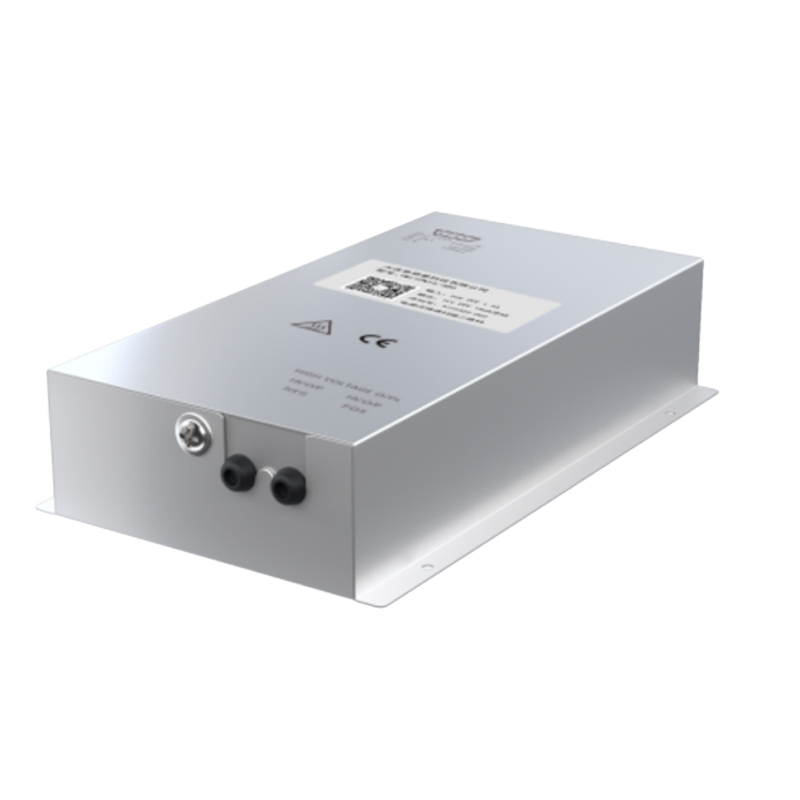
Piezoelectric actuators convert electrical voltage to mechanical displacement through the inverse piezoelectric effect. The displacement is approximately proportional to the applied voltage. Typical piezoelectric actuators provide nanometer resolution over travel ranges of tens to hundreds of micrometers. The high voltage power supply drives the actuator with the required voltage range, typically hundreds of volts.
Displacement control precision encompasses the resolution, accuracy, and stability of the positioning. The resolution is the smallest displacement increment that can be reliably achieved. The accuracy is how well the actual displacement matches the commanded displacement. The stability is how well the position is maintained over time despite disturbances.
Voltage resolution determines the displacement resolution. The displacement per volt depends on the piezoelectric coefficient of the actuator. The power supply voltage resolution, determined by the digital to analog converter, translates to displacement resolution. Sub nanometer resolution requires millivolt level voltage resolution for typical actuators.
Piezoelectric nonlinearity and hysteresis affect the displacement accuracy. The displacement voltage relationship is not perfectly linear, particularly at high fields. The hysteresis means the displacement depends on the voltage history. These effects can be corrected through calibration and compensation algorithms in the control system.
Creep in piezoelectric actuators causes drift at constant voltage. The displacement gradually increases over time under constant voltage. The creep rate depends on the voltage level and the actuator material. For long duration tests, the creep can cause significant drift. Active position feedback can compensate for creep.
Position feedback using strain gauges or capacitive sensors enables closed loop control. The sensor measures the actual displacement, and the control adjusts the voltage to achieve the commanded position. Closed loop control eliminates the effects of nonlinearity, hysteresis, and creep, providing accurate positioning. The sensor resolution and the control bandwidth determine the achievable performance.
Force measurement complements displacement control for mechanical testing. Load cells measure the force applied to the sample. The stress is calculated from the force and the sample cross section. The strain is calculated from the displacement and the initial length. The stress strain curve characterizes the mechanical behavior.
Strain rate control requires coordinated displacement ramping. The strain rate is the rate of change of strain with time. Constant strain rate testing requires linear displacement increase with time. The power supply must provide controlled voltage ramping to achieve the desired strain rate. The ramp rate must be precise and stable.
Synchronization with imaging coordinates the mechanical loading with the observation. Images are captured at specific strain levels or time intervals. The displacement control must reach the target positions accurately for consistent imaging. The synchronization requires communication between the tensile stage controller and the microscope control system.
Environmental control in the microscope chamber affects the piezoelectric performance. Vacuum conditions eliminate air damping and may affect the actuator dynamics. Temperature variations affect the piezoelectric coefficients. The chamber environment must be considered in the displacement control design.