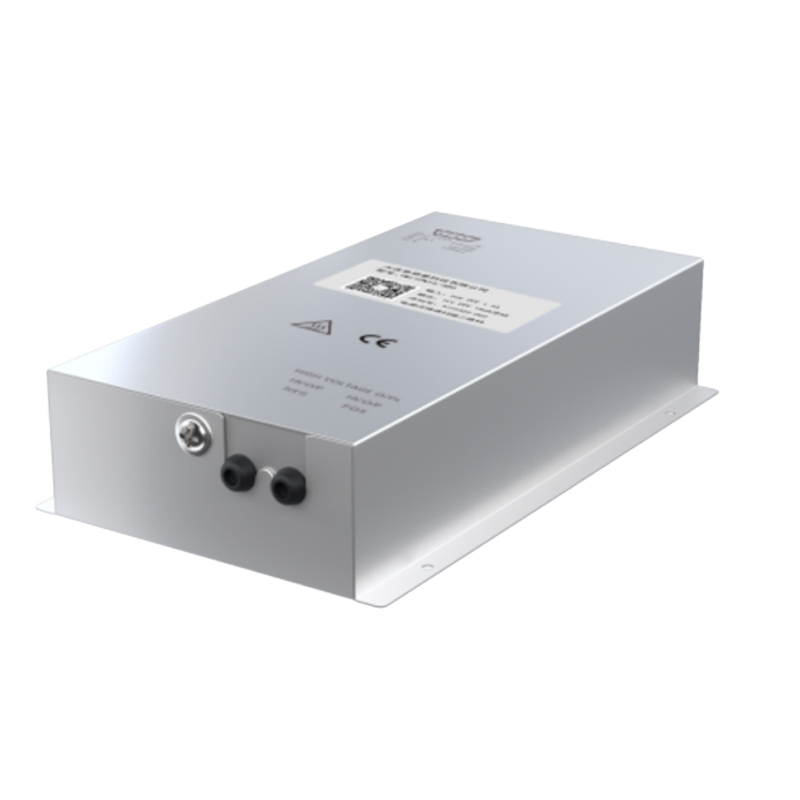
Grid Voltage Transient Immunity of High Voltage Power Supply for High Current Proton Linear Accelerator
High current proton linear accelerators serve critical roles in scientific research, medical isotope production, and emerging applications such as accelerator driven subcritical reactors. These machines accelerate intense proton beams to energies ranging from tens to hundreds of million electron volts, requiring high voltage power supplies for various subsystems including radio frequency amplifiers, focusing magnets, and beam diagnostics. The electrical grid supplying these accelerators experiences transient disturbances from switching events, fault conditions, and load changes throughout the distribution network. The immunity of high voltage power supplies to grid voltage transients is essential for maintaining accelerator availability and protecting sensitive components from damage.
Grid voltage transients encompass a wide range of disturbances varying in magnitude, duration, and waveform. Voltage sags are momentary reductions in voltage magnitude lasting from cycles to seconds, caused by fault conditions or large motor starting elsewhere in the network. Voltage swells are temporary voltage increases typically caused by load rejection or single line to ground faults. Impulsive transients are brief voltage spikes lasting microseconds to milliseconds, arising from lightning strikes, switching of capacitive loads, or fault clearing operations. Oscillatory transients exhibit decaying sinusoidal characteristics following switching events. Each transient type presents distinct challenges for power supply immunity.
The high voltage power supplies for accelerator subsystems typically convert the grid alternating current to the direct current required for their loads. This conversion process involves rectification, filtering, and often regulation through linear or switching techniques. The power supply response to grid transients depends on the converter topology, the energy storage in filter capacitors and inductors, and the behavior of any active regulation circuits. Power supplies with substantial energy storage can ride through brief transients by supplying load power from stored energy, while supplies with minimal storage require rapid response from active circuits to maintain output during grid disturbances.
Radio frequency amplifier power supplies represent particularly critical loads in proton accelerators. The RF amplifiers provide the accelerating fields that transfer energy to the proton beam, with the amplifier output power directly affecting the beam energy gain. Voltage variations on the amplifier power supplies modulate the RF output, causing beam energy variations and potentially affecting beam stability. Klystron amplifiers used in high power applications require high voltage direct current supplies with exceptional stability and ripple performance. Grid voltage transients that propagate through the power supply can cause klystron output variations, and in severe cases may stress the klystron tube beyond its operational ratings.
Design features for transient immunity begin at the power supply input. Input filters attenuate high frequency transients before they reach the converter circuits. Metal oxide varistors and other surge suppression devices clamp impulsive transients to safe levels, protecting rectifier components from overvoltage damage. Soft start circuits limit the inrush current during power supply turn on, reducing the transient imposed on the grid and preventing nuisance tripping of upstream protection devices. Input voltage monitoring enables the control system to anticipate performance limitations during abnormal grid conditions.
Energy storage in the power supply provides ride through capability for voltage sags and brief interruptions. The filter capacitors on the direct current bus store energy that can supply the load during momentary grid disturbances. The ride through time depends on the stored energy and the load power, with larger capacitance providing longer ride through at the expense of increased size, cost, and inrush current requirements. Some accelerator power supplies incorporate auxiliary energy storage such as ultracapacitors or flywheels to extend ride through capability for longer duration sags.
Active regulation circuits respond to grid transients by adjusting the power supply operation to maintain output stability. Linear regulators using series pass elements can respond extremely rapidly to input voltage changes, but dissipate substantial power at high currents. Switching regulators offer higher efficiency but have limited bandwidth determined by the switching frequency and control loop design. Hybrid approaches using a switching preregulator followed by a linear postregulator combine the efficiency of switching conversion with the transient response of linear regulation.
The response of the power supply to transients must consider not only the output voltage stability but also the stress on internal components. Rectifier diodes experience peak current stress during voltage swells that may exceed their surge ratings. Filter capacitors experience increased voltage stress during swells and increased ripple current during transients that affect their temperature and lifetime. Transformer cores may saturate during voltage sags if the converter attempts to maintain output by increasing the duty cycle, potentially leading to overcurrent conditions. Component derating and protection circuits must account for the transient environment to ensure reliable operation.
Testing and verification of transient immunity requires subjecting the power supply to representative disturbance waveforms. Standard test waveforms defined in international standards provide common reference conditions for comparing immunity performance. Surge testing applies impulsive transients with defined peak voltage and waveform shape. Sag testing reduces the voltage by defined percentages for specified durations. The power supply must maintain specified performance during and after these test disturbances, demonstrating the immunity required for the intended application environment.
Coordination with accelerator protection systems ensures that grid transients do not lead to equipment damage or safety incidents. Beam interlock systems monitor beam parameters and terminate beam extraction if conditions indicate potential damage. Power supply fault signals integrate with these interlocks to inhibit beam operation during power supply disturbances. The coordination between power supply immunity and accelerator protection determines the overall susceptibility of the accelerator to grid disturbances, with the goal of maintaining beam availability during minor transients while protecting equipment during severe events.