Electron Trajectory Simulation and Gain Prediction of High Voltage Power Supply for Curved Channel Electron Multiplier
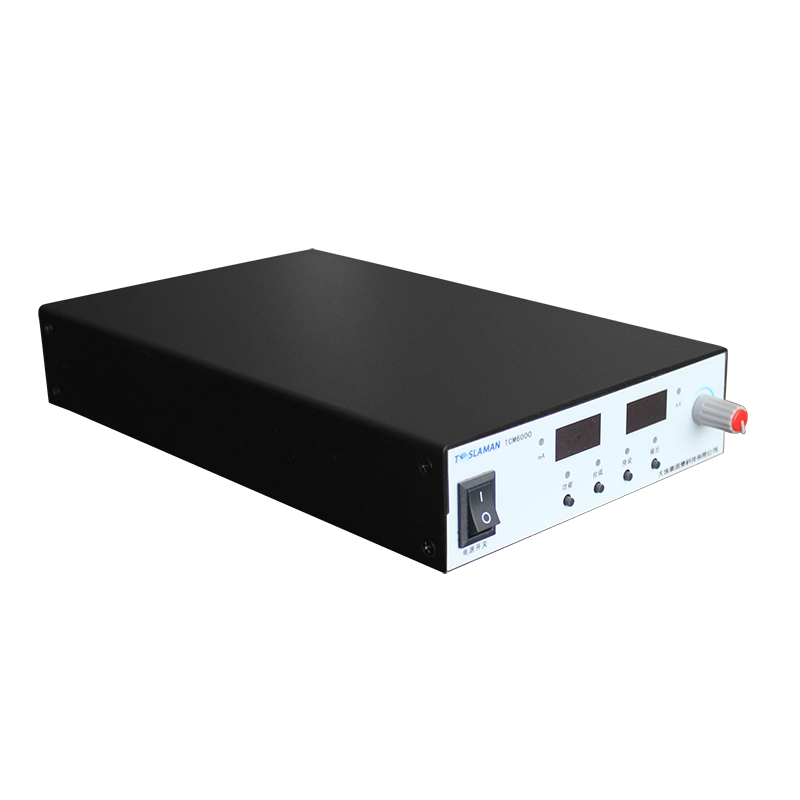
Curved channel electron multipliers represent an evolution of the straight channel microchannel plate design, offering enhanced performance characteristics for single particle detection. The curved channel geometry suppresses ion feedback that can cause instability and afterpulsing in straight channels, enabling higher gain operation and improved signal characteristics. Understanding the electron trajectories within these curved channels and predicting the gain as a function of applied voltage requires sophisticated simulation and modeling approaches. The high voltage power supply determines the electric field configuration within the channels, making its characteristics central to the multiplier performance.
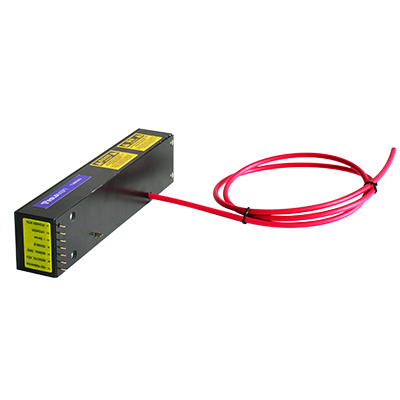
The curved channel electron multiplier consists of a continuous dynode structure with a channel that follows a curved or helical path through the device. Electrons entering the channel are accelerated by the electric field along the channel axis and undergo multiple collisions with the channel walls. Each collision releases secondary electrons that continue the multiplication process. The curved geometry causes electrons to follow oscillating trajectories that repeatedly intersect the channel walls, ensuring efficient multiplication without the ion feedback problems of straight channels.
Ion feedback occurs when positive ions generated in the channel by electron impact ionization of residual gas travel backward toward the channel entrance. In straight channels, these ions can reach the input end and initiate spurious pulses, causing afterpulsing and instability. The curved channel geometry prevents ions from traveling directly backward, as their trajectories are bent by the channel curvature and they collide with the channel walls before reaching the entrance. This suppression of ion feedback enables stable operation at gains exceeding those practical with straight channels.
Electron trajectory simulation requires solving the equations of motion for electrons in the electric field within the channel. The electric field configuration depends on the applied voltage and the channel geometry. In a resistive channel, the voltage drops linearly along the channel length, creating a uniform axial electric field. The curved geometry introduces radial field components that affect the electron trajectories. The simulation must account for the three dimensional nature of the electron motion and the boundary conditions at the channel walls.
Secondary electron emission at the channel walls is the mechanism that sustains the electron multiplication. When an electron strikes the wall, it can release one or more secondary electrons depending on the electron energy and the wall material properties. The secondary electron yield is a function of the incident electron energy, typically reaching a maximum at energies of a few hundred electron volts. The simulation must incorporate this yield function to accurately predict the multiplication process.
Monte Carlo simulation methods provide a statistical approach to modeling the electron multiplication. Each electron is tracked through its trajectory with random sampling of the initial conditions, collision events, and secondary emission. By simulating many electrons, the statistical properties of the multiplication process emerge, including the gain distribution and transit time spread. The computational requirements are substantial due to the large number of electrons that must be tracked to achieve good statistics.
Gain prediction from simulation requires accurate models of the secondary emission characteristics and the electric field configuration. The secondary emission yield of the channel coating material must be characterized experimentally or obtained from literature values. The yield may vary with the condition of the surface, including contamination and aging effects that accumulate during operation. The electric field depends on the applied voltage and the resistive properties of the channel material, which may also vary with temperature and history.
The high voltage power supply characteristics affect the electric field and therefore the electron trajectories and gain. Higher voltages produce stronger axial fields, accelerating electrons to higher energies between collisions. This increases the secondary electron yield at each collision, increasing the gain. The relationship between voltage and gain is approximately exponential, with small voltage changes producing large gain variations. The simulation can predict this relationship, enabling selection of the operating voltage for desired gain.
Voltage stability requirements follow from the gain voltage sensitivity. If the gain changes by a certain percentage per volt, then voltage fluctuations cause corresponding gain variations. For applications requiring stable gain, such as quantitative intensity measurements, the voltage stability must be sufficient to keep gain variations within acceptable limits. The simulation provides the gain voltage sensitivity that guides the power supply specification.
The spatial uniformity of the multiplier response depends on the consistency of the channels throughout the device. Variations in channel dimensions, curvature, or surface condition cause gain variations between channels. The simulation can assess the sensitivity of gain to these geometric variations, providing insight into the manufacturing tolerances required for uniform performance. The power supply voltage distribution across the multiplier face must also be uniform to avoid additional gain variations.
Pulse height distribution from the multiplier provides experimental validation of the gain predictions. Single particle events produce output pulses with a distribution of amplitudes reflecting the statistical nature of the multiplication process. The mean pulse height corresponds to the average gain, while the distribution width reflects the gain variance. The pulse height distribution can be measured and compared with simulation predictions to validate the models and refine the input parameters.
Temperature effects on the multiplier performance arise from changes in the resistive properties of the channel material and the secondary emission characteristics. The channel resistance typically decreases with increasing temperature, affecting the electric field configuration for a given applied voltage. The secondary emission yield may also be temperature dependent. These effects can be incorporated into the simulation to predict performance across the operating temperature range, guiding the design of temperature control or compensation strategies.