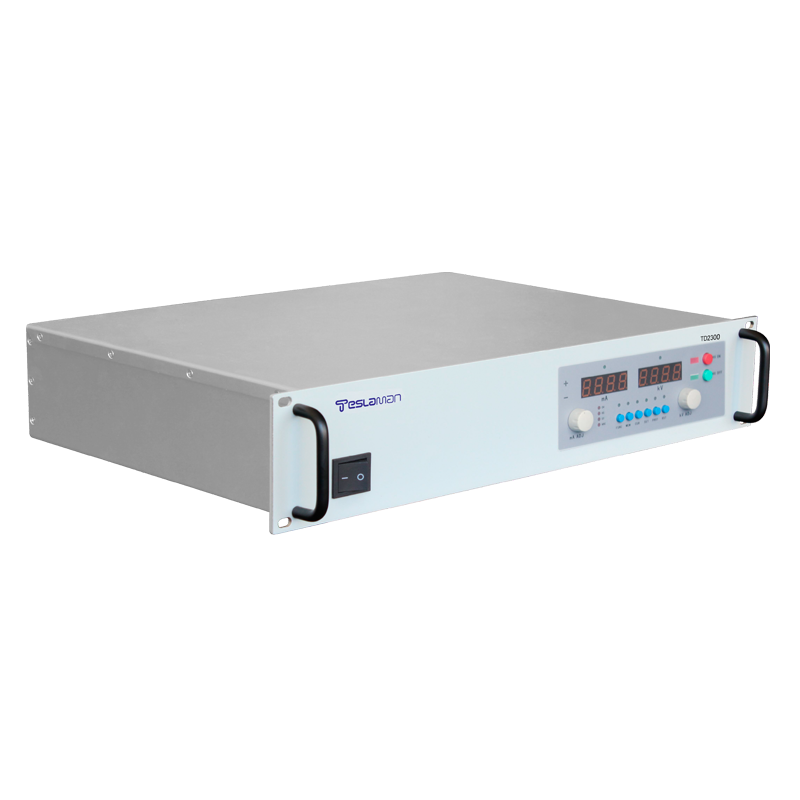
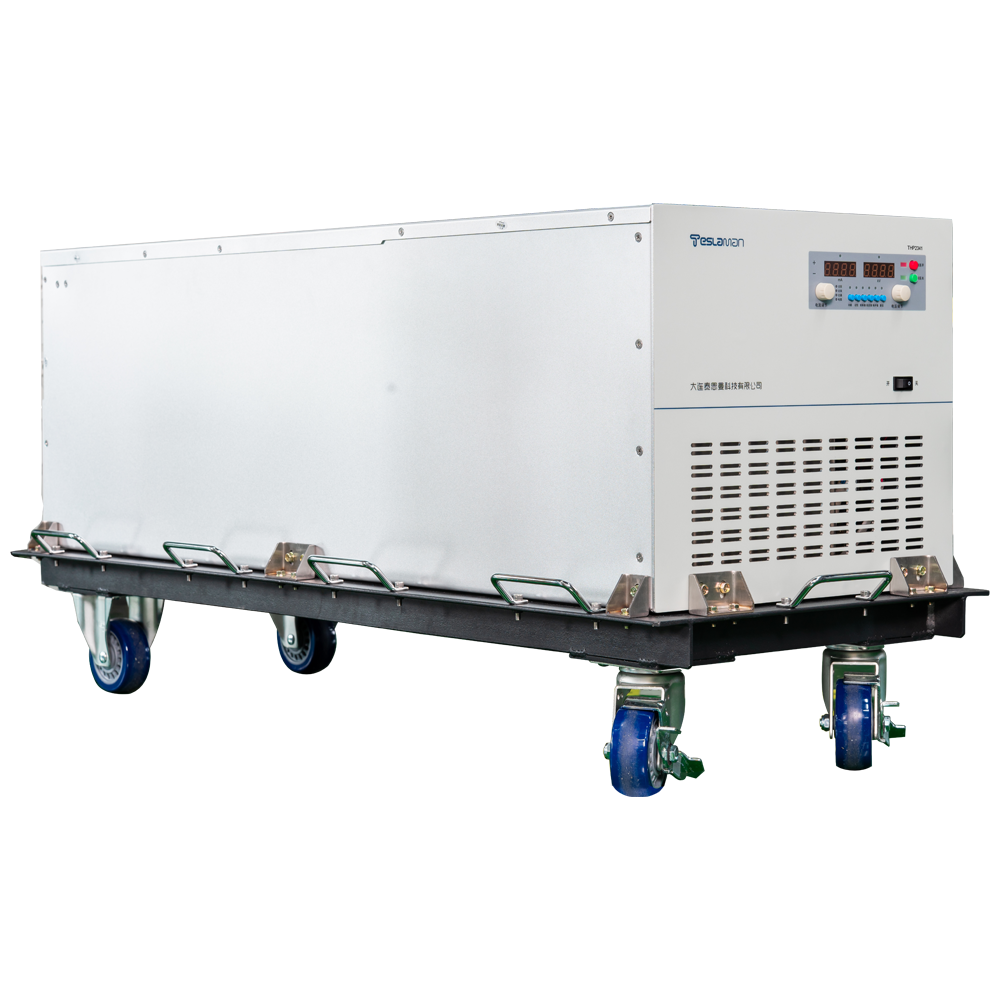
High Power High Voltage Power Supply System for Marine Electromagnetic Exploration Seabed Transmitter
Marine electromagnetic exploration methods probe the electrical resistivity structure of subseabed geological formations to identify hydrocarbon reservoirs, geothermal resources, and other subsurface features. The controlled source electromagnetic method employs a high power transmitter on or near the seabed that injects time varying electromagnetic energy into the formation, with the resulting fields detected by arrays of receivers on the seabed. The high voltage power supply system for the transmitter must deliver high power output with the reliability and efficiency required for extended offshore operations.
The marine controlled source electromagnetic method exploits the resistivity contrast between hydrocarbon filled reservoirs and the surrounding conductive sediments. Hydrocarbon reservoirs have high electrical resistivity, while marine sediments saturated with conductive seawater have low resistivity. When an electromagnetic field is applied, the current distribution is distorted by the resistivity variations, creating detectable anomalies in the received signals. The depth of investigation depends on the source moment, which is the product of the source current and the antenna length, with larger source moments enabling deeper penetration.
The transmitter architecture for marine electromagnetic surveys typically consists of a high voltage power supply, a current controller, and a dipole antenna deployed on the seabed. The power supply converts the primary power from batteries or a surface vessel into the high voltage needed to drive the antenna current. The current controller regulates the antenna current waveform, which may be a square wave, a biphasic pulse, or a more complex waveform depending on the survey requirements. The antenna consists of a long horizontal dipole, typically hundreds of meters in length, that injects the electromagnetic energy into the formation.
High voltage requirements for marine electromagnetic transmitters arise from the need to drive sufficient current through the antenna impedance. The antenna impedance includes the resistance of the antenna wire and the contact impedance at the electrode seawater interface. The electrode impedance depends on the electrode area, the seawater conductivity, and the electrochemical processes at the electrode surface. Higher voltages enable higher currents for a given antenna impedance, increasing the source moment and the depth of investigation.
Power levels for marine electromagnetic transmitters range from kilowatts to tens of kilowatts depending on the survey requirements and the target depth. The power supply must deliver this power continuously for the duration of the transmitter deployment, which may extend to days for large surveys. The primary power source, whether batteries or power from a surface vessel, limits the available energy and constrains the transmitter operation. Power supply efficiency directly affects the energy consumption and the operational endurance.
The marine environment presents severe challenges for high voltage equipment operation. Seawater is highly conductive and provides abundant paths for electrical leakage if insulation is compromised. The hydrostatic pressure at seabed depths can reach hundreds of atmospheres, stressing pressure housings and potentially affecting the properties of insulation materials. Corrosion from seawater exposure can degrade electrical connections and structural components. The power supply design must address these environmental factors to achieve reliable operation.
Pressure compensated housings protect the power supply electronics from the ambient hydrostatic pressure. Oil filled housings equalize the internal pressure with the external seawater pressure through flexible membranes or pressure compensation systems, avoiding the need for heavy pressure vessels. The dielectric properties of the compensation oil must be compatible with high voltage operation, and the oil must remain stable at the operating temperatures and pressures. Alternative approaches use atmospheric pressure vessels that maintain internal pressure near one atmosphere, requiring robust mechanical design to withstand the external pressure.
Electrode design for the antenna current injection affects both the transmitter performance and the power supply requirements. Long electrode lengths reduce the current density and the associated electrochemical effects, but increase the antenna drag and deployment complexity. Electrode materials must withstand the electrochemical environment without excessive corrosion or degradation that would increase the contact impedance. The electrode impedance affects the voltage required to drive the target current, with higher impedance requiring higher voltage capability from the power supply.
Thermal management in the sealed transmitter housing must accommodate the heat generated by power supply losses and antenna current flow. The limited volume and the thermal insulation of the housing restrict the heat dissipation rate. Temperature rise during operation affects component reliability and may change the characteristics of insulation materials. Thermal design must ensure that temperatures remain within acceptable limits throughout the deployment, considering both the continuous operation heating and the thermal mass of the system.
Reliability requirements for marine electromagnetic transmitters are stringent due to the high cost of offshore operations and the difficulty of intervention if problems occur. The transmitter must operate continuously for the survey duration without failure that would compromise data acquisition or require recovery and redeployment. Component derating, redundancy for critical functions, and thorough testing before deployment enhance reliability. Failure modes that could affect the received data quality, such as waveform distortion or timing errors, must be prevented by design.