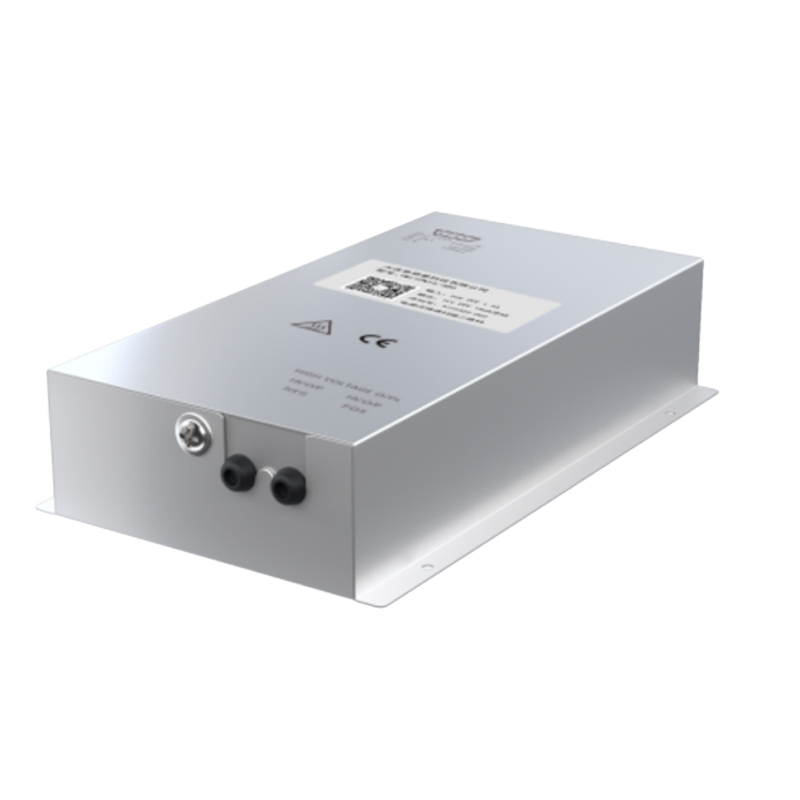
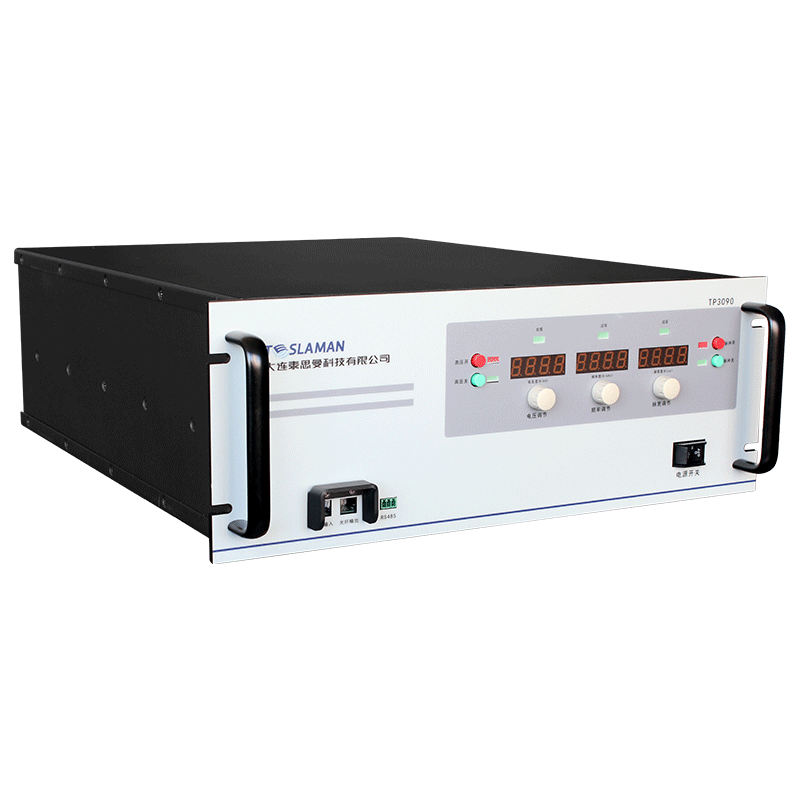
Stress Uniformity Control Research of Electrostatic Chuck High Voltage Power Supply in Wafer Thinning Process
Wafer thinning processes reduce the thickness of semiconductor wafers to meet requirements for packaging, thermal management, or three dimensional integration. Handling thin wafers presents significant challenges due to their mechanical fragility and tendency to warp or wrinkle. Electrostatic chucks provide wafer handling by applying high voltage to electrodes that create electrostatic attraction between the chuck surface and the wafer. The stress distribution on the wafer during chucking affects the wafer flatness and the risk of damage, making stress uniformity control critical for thin wafer processing.
Electrostatic chuck operation relies on the electrostatic force between charged electrodes and the induced or deposited charge on the wafer. When voltage is applied to chuck electrodes, an electric field develops between the electrodes and the wafer. This field induces charge in the conductive wafer or deposits charge on the wafer surface through the small gap between wafer and chuck. The electrostatic attraction force holds the wafer against the chuck surface, enabling secure handling during processing.
The magnitude of the electrostatic force depends on the applied voltage, the electrode geometry, and the gap between the wafer and chuck. Higher voltages produce stronger attraction, improving the holding force but also increasing the stress on the wafer. The electrode pattern, whether continuous or segmented, affects the force distribution across the wafer surface. Nonuniform force distribution creates stress gradients that can warp the wafer or cause localized damage.
Stress uniformity requires uniform electrostatic force across the wafer surface. In ideal conditions with perfect contact between wafer and chuck, the force would be uniform if the electrode and wafer were parallel and the electrode potential was uniform. In practice, wafer bow, chuck flatness variations, and particulate contamination create gaps that vary across the surface. The gap variations cause force variations because the electrostatic force depends on the gap distance.
High voltage power supply parameters affecting stress uniformity include the voltage level, the voltage stability, and the electrode energization pattern. The voltage level determines the nominal force magnitude. Voltage fluctuations cause time varying forces that may excite wafer vibrations or cause stress cycling. For chucks with multiple independently controlled electrode zones, the relative voltages on different zones can be adjusted to compensate for gap variations and improve force uniformity.
Multi zone electrostatic chucks enable spatial control of the holding force. Each zone can be powered independently, allowing adjustment of the local force to compensate for nonuniformities. Measurement of the wafer shape or the gap distribution can inform the voltage adjustment for each zone. Active control systems can continuously adjust the zone voltages during processing to maintain uniform stress despite changing conditions.
The chucking and dechucking processes require careful voltage control to avoid stress transients that could damage thin wafers. Rapid voltage application creates sudden force that may excite wafer vibrations or cause impact with the chuck surface. Gradual voltage ramping allows the wafer to settle smoothly against the chuck. Dechucking requires controlled voltage reduction to release the wafer without sudden movement. The voltage waveform during these transitions affects the wafer stress history.
Wafer conductivity affects the electrostatic chucking mechanism and the stress distribution. Conductive wafers, such as silicon with moderate doping, respond to the applied field through charge induction at the wafer surface. The induced charge distribution depends on the field distribution, creating feedback between the charge and the field. Dielectric wafers or wafers with insulating layers require charge deposition through the gap, which may have different uniformity characteristics.
Backside conditions on the wafer affect the chucking behavior. Patterned backside features create surface topography that affects the gap distribution. Backside films with different dielectric constants modify the electric field distribution. Rough backside surfaces from grinding or etching processes create distributed contact points rather than uniform contact. The power supply and chuck design must accommodate the expected backside conditions for the application.
Measurement and characterization of stress uniformity employ various techniques. Wafer curvature measurements indicate the overall stress distribution. In situ gap measurement using capacitance or optical techniques reveals the contact uniformity. Post process inspection for damage or distortion assesses the effectiveness of the chucking control. These measurements provide feedback for optimizing the power supply parameters and the chuck design for thin wafer handling.