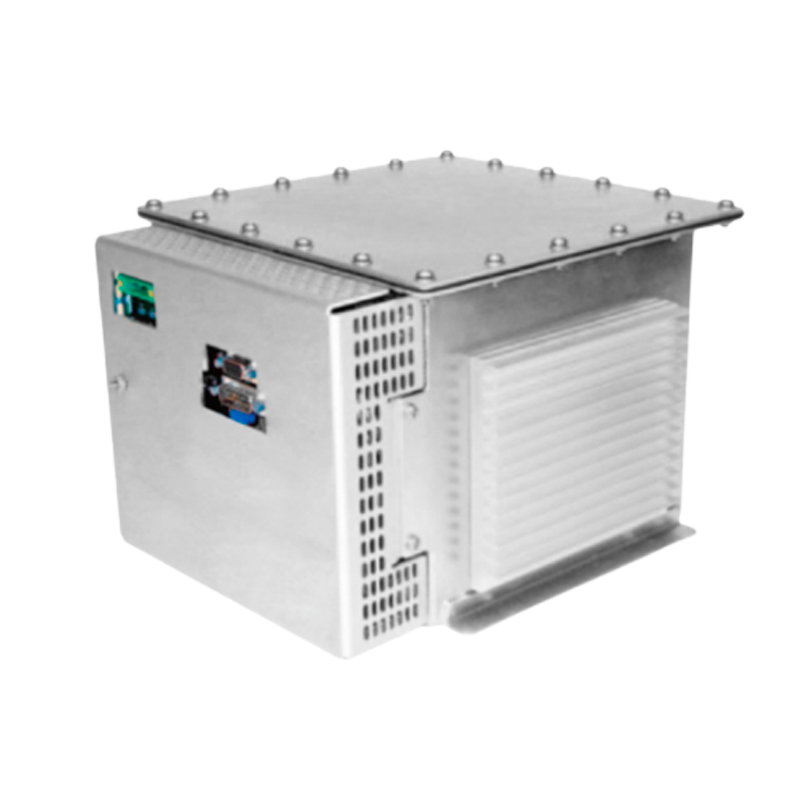
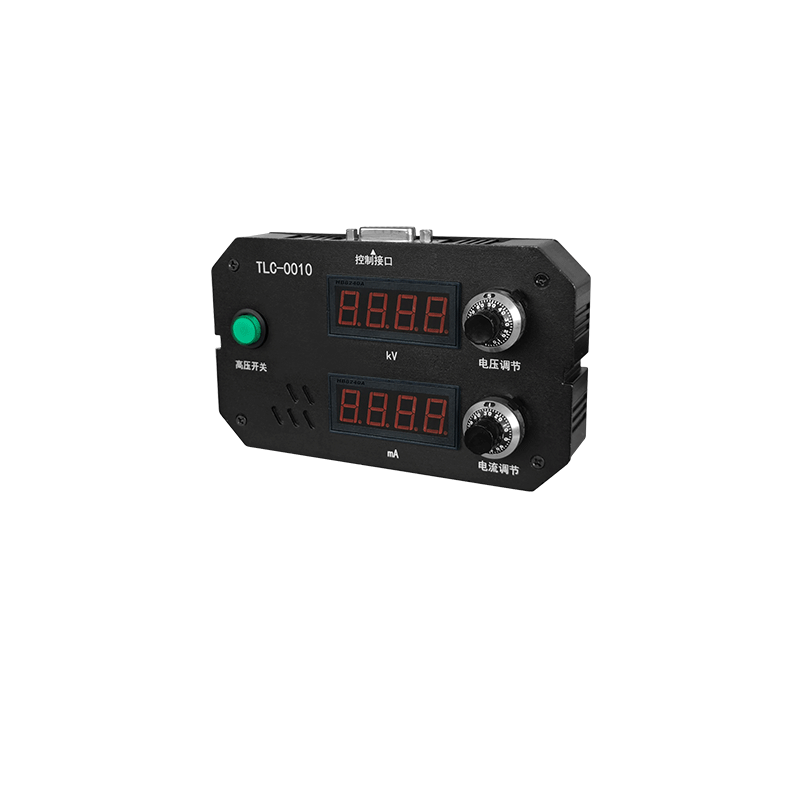
Application of 320kV Programmable High Voltage Power Supply for Partial Discharge Pattern Recognition in GIS Equipment
Gas insulated switchgear uses sulfur hexafluoride gas as the insulating medium to achieve compact, reliable equipment for high voltage transmission and distribution. Partial discharge activity in GIS indicates developing insulation defects that, if undetected, can progress to complete failure. Pattern recognition of partial discharge signals enables identification of the defect type and severity, supporting condition based maintenance decisions. The 320 kilovolt programmable high voltage power supply enables controlled voltage application for partial discharge testing with the flexibility needed for comprehensive diagnostic evaluation.
Partial discharge in GIS occurs when the local electric field exceeds the breakdown strength in a small region, creating a localized discharge that does not bridge the entire insulation gap. The discharge occurs in voids within solid insulation, along interfaces between different insulation materials, from protrusions on conductors or enclosures, or from free conducting particles in the gas. Each defect type produces partial discharge signals with characteristic patterns that can be distinguished through pattern recognition analysis.
The partial discharge measurement system detects the electrical pulses generated by discharge events. The pulses couple to measurement sensors, which may be coupling capacitors, ultra-high frequency sensors, or acoustic sensors. The signals are amplified, filtered, and digitized for analysis. The measurement captures the pulse magnitude, the phase angle of occurrence relative to the AC voltage cycle, and the repetition rate. These parameters form the basis for pattern recognition.
Phase resolved partial discharge analysis plots the discharge pulses as a function of their phase angle and magnitude. Different defect types produce different patterns in the phase resolved plot. Internal voids tend to produce symmetric patterns with discharges occurring in both positive and negative half cycles. Surface discharges along interfaces produce asymmetric patterns with different characteristics in the two half cycles. Corona from sharp protrusions produces discharges concentrated in one half cycle. The pattern recognition algorithms classify the defect type based on these characteristics.
The programmable high voltage power supply enables controlled voltage variation during the diagnostic test. The test may involve ramping the voltage from a low level to the test voltage while monitoring partial discharge inception and extinction voltages. The partial discharge inception voltage indicates the severity of the defect, with lower inception voltages indicating more severe defects. Voltage holds at different levels allow observation of the discharge behavior under different stress conditions. The programmability enables automated test sequences that provide comprehensive diagnostic information.
Voltage waveform control affects the partial discharge pattern. The standard test uses sinusoidal voltage at power frequency, but other waveforms can provide additional diagnostic information. Very low frequency testing at 0.1 hertz can be used for testing where power frequency test sets would be impractically large. Damped AC voltage from oscillating circuits provides a different stress condition. The programmable supply can generate these various waveforms for comprehensive evaluation.
The voltage level for partial discharge testing is typically below the normal operating voltage for routine testing, but may exceed operating voltage for withstand tests. The test voltage must be sufficient to stress the insulation and stimulate partial discharge from existing defects, while avoiding damage to the insulation. Standards specify the test voltage levels for different equipment classes and test purposes. The 320 kilovolt capability addresses the requirements for GIS equipment at transmission voltage classes.
Multi channel measurement systems capture partial discharge signals from multiple sensors simultaneously. GIS may have multiple compartments or multiple measurement points. Simultaneous measurement enables localization of the defect by comparing signal arrival times at different sensors. The programmable power supply maintains consistent voltage across all measurement channels, enabling comparison of discharge activity at different locations.
Automated pattern recognition systems use statistical and machine learning techniques to classify defect types. The algorithms analyze features extracted from the partial discharge patterns, including statistical moments, pulse shape parameters, and frequency domain characteristics. Training data from known defect types enables the algorithm to learn the patterns associated with each type. The automated classification provides rapid, objective assessment of the defect type, supporting maintenance decisions.
Integration with asset management systems enables the partial discharge diagnostic results to inform maintenance planning. The defect type and severity indicate the urgency of maintenance action. Trending of partial discharge parameters over time reveals the progression of defects, enabling prediction of remaining life. The programmable power supply and measurement system interface with database systems to record the diagnostic data and support the asset management workflow.