Partial Discharge Recognition and Localization Method of High Voltage Test Power Supply for Insulation Material
High voltage testing of insulation materials applies voltage to stress the insulation and detect any weaknesses or defects that could lead to failure in service. Partial discharge activity indicates localized breakdown within the insulation that does not completely bridge the electrodes. Recognition and localization of partial discharges from the test power supply measurements enable identification of the defect type and location, supporting insulation quality assessment and failure analysis.
Partial discharge occurs when the local electric field exceeds the breakdown strength in a small region of the insulation. The discharge may occur in gas filled voids within solid insulation, along interfaces between different materials, or from sharp points on electrodes. Each discharge creates a small current pulse that can be detected with appropriate instrumentation. The pattern of discharges provides information about the defect characteristics.
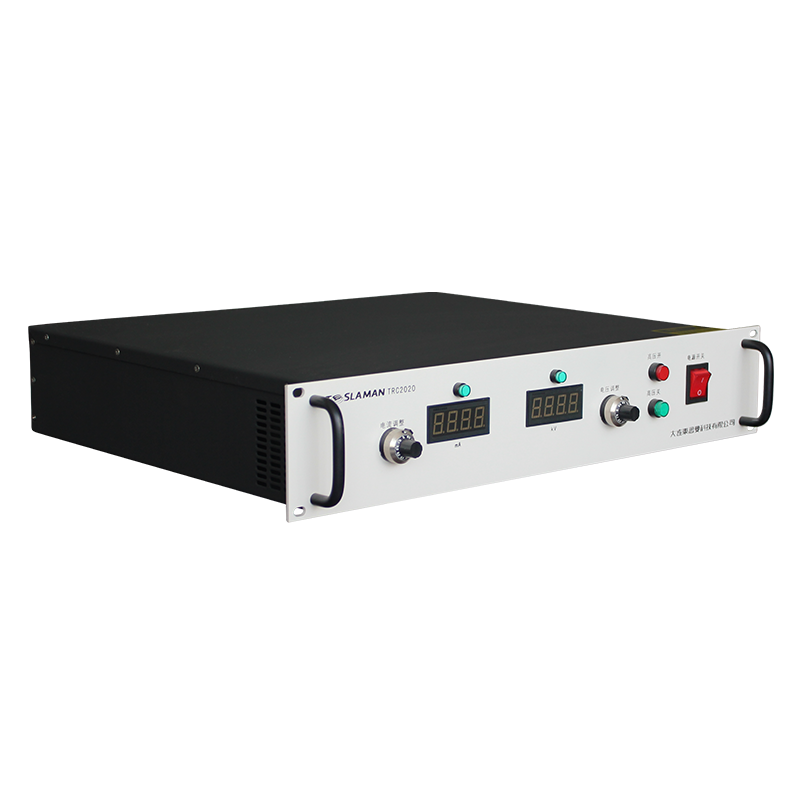
The high voltage test power supply provides the voltage to stress the insulation. During testing, the voltage is raised to the test level while monitoring for partial discharge. The test may involve voltage ramping to identify the inception voltage, or sustained voltage holds to assess the discharge behavior at a specific stress level. The power supply must provide clean voltage without excessive interference that could mask partial discharge signals.
Partial discharge measurement circuits couple to the test object to detect the discharge pulses. The coupling capacitor provides a low impedance path for the high frequency discharge pulses while blocking the power frequency voltage. The measurement impedance converts the discharge current to a voltage signal for detection. The measurement system must have adequate bandwidth and sensitivity to detect the discharge pulses of interest.
Recognition of partial discharge patterns analyzes the detected pulses to identify the defect type. Phase resolved partial discharge analysis plots the discharge pulses as a function of their phase angle relative to the AC voltage cycle and their magnitude. Different defect types produce characteristic patterns in the phase resolved plot. Internal voids tend to produce symmetric patterns with similar discharge activity in both voltage half cycles. Surface discharges produce asymmetric patterns with different characteristics in positive and negative half cycles. Corona from sharp points produces discharges concentrated in one half cycle.
Statistical analysis of the partial discharge pattern provides quantitative features for recognition. The pulse count, the total charge, and the maximum pulse magnitude characterize the discharge activity. Statistical moments including skewness and kurtosis of the pulse distribution characterize the pattern shape. These features can be used in automated recognition algorithms to classify the defect type.
Localization of partial discharge sources determines the position of the defect within the insulation. For simple geometries, the location can be estimated from the pattern characteristics. For more complex geometries, multiple measurement points can triangulate the source location. Time of arrival differences between sensors at different positions provide distance information. Acoustic detection of the discharge can also provide localization through time of arrival or acoustic beam forming.
Electrical localization uses the pulse arrival times at multiple measurement points. The discharge pulse propagates through the insulation and the external circuit at a finite velocity. The arrival time differences between sensors depend on the propagation distances from the source to each sensor. With known propagation velocities and sensor positions, the source location can be calculated. The localization accuracy depends on the timing resolution and the knowledge of propagation velocities.
Acoustic localization detects the mechanical waves generated by the discharge. The rapid energy release of the discharge creates acoustic waves that propagate through the insulation material. Acoustic sensors on the insulation surface detect the waves, and the arrival times at different sensors provide localization information. Acoustic localization can achieve high spatial resolution for discharges within the detection volume.
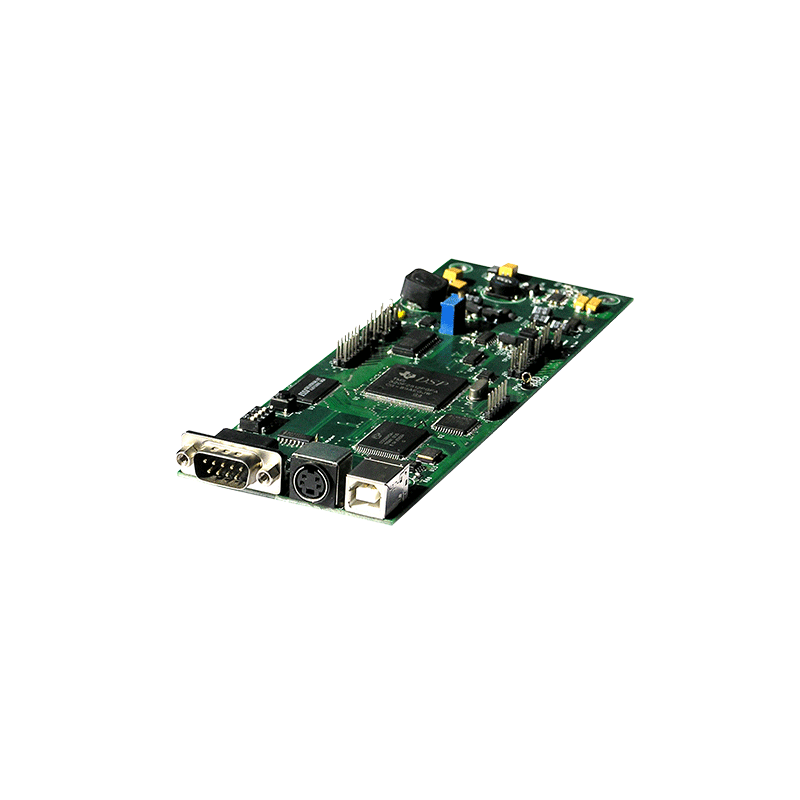
Noise rejection is critical for partial discharge measurement, as the signals are small and can be masked by external interference. Filtering removes noise outside the measurement bandwidth. Gating excludes periods when known noise sources are active. Pattern recognition distinguishes partial discharge signals from noise based on their characteristics. Digital signal processing techniques enable sophisticated noise rejection that improves measurement sensitivity.
Calibration of the partial discharge measurement system establishes the relationship between the detected signals and the actual discharge magnitude. Calibration injects known charge pulses into the measurement circuit and measures the system response. The calibration factor enables quantitative measurement of discharge charge. Regular calibration maintains measurement accuracy and enables comparison between different measurement systems.