Electrospinning High Voltage Power Supply Application in Carbon Nanotube Composite Fiber
Electrospinning has emerged as a versatile and scalable technique for producing continuous nanofibers with diameters ranging from tens of nanometers to several micrometers. The incorporation of carbon nanotubes into electrospun polymer fibers creates composite materials with exceptional mechanical, electrical, and thermal properties that are finding applications in advanced filtration, tissue engineering, energy storage, and smart textiles. The high voltage power supply that drives the electrospinning process plays a fundamental role in determining the fiber morphology, the alignment of carbon nanotubes within the fibers, and the overall quality of the composite material. The specific requirements of carbon nanotube composite fiber production impose unique demands on the high voltage power supply design and operation.
The electrospinning process relies on a high electric field to overcome the surface tension of a polymer solution, creating a charged jet that elongates and solidifies into a fiber as the solvent evaporates. For carbon nanotube composite fiber production, the polymer solution contains dispersed carbon nanotubes that must be aligned and oriented along the fiber axis during the electrospinning process. The high voltage power supply typically delivers 10 kV to 30 kV to the spinneret, with the ground electrode placed 10 cm to 20 cm from the spinneret tip. The electric field strength, typically in the range of 0.5 kV per centimeter to 2 kV per centimeter, determines the acceleration and stretching of the jet and influences the orientation of the carbon nanotubes.
The stability of the high voltage output is critical for producing uniform fibers with consistent carbon nanotube alignment. Fluctuations in the output voltage cause variations in the jet velocity and the electric field distribution, leading to changes in fiber diameter and nanotube orientation. The voltage ripple must be maintained below 0.1 percent of the output voltage to ensure stable jet formation and consistent fiber properties. The power supply must also maintain stable operation over extended periods, as electrospinning runs can last for several hours or even days in continuous production settings.
The current output of the electrospinning power supply is typically in the range of 0.1 mA to 1 mA, which is much lower than the current rating of many high voltage power supplies. The power supply must be capable of regulating the output voltage accurately at these low current levels, where the load impedance can be extremely high. The regulation loop must be designed to maintain stability even when the load current approaches zero, as can occur during the initial startup of the electrospinning process before the jet is established. The power supply must also be able to deliver the peak current required when the jet is first initiated, which can be several times higher than the steady-state current.
The polarity of the high voltage output affects the electrospinning process and the properties of the resulting composite fibers. Positive polarity is commonly used for electrospinning of most polymer solutions, as it produces a more stable jet and less corona discharge compared to negative polarity. However, the polarity can be selected based on the specific polymer and solvent system, and the power supply must be capable of operating with either polarity. The polarity switching must be implemented without compromising the voltage stability or introducing transients that could disturb the electrospinning process.
The dispersion and alignment of carbon nanotubes in the electrospinning solution are influenced by the electric field distribution in the spinneret region. The high voltage power supply must provide a uniform electric field at the spinneret tip to ensure that the carbon nanotubes are subjected to consistent forces during the jet initiation. The electric field configuration can be modified by using auxiliary electrodes or by shaping the spinneret geometry, but the fundamental requirement is a stable and controllable high voltage source. The power supply voltage must be adjustable over a wide range to accommodate different polymer solutions, nanotube concentrations, and fiber diameter requirements.
The interaction between the high voltage power supply and the electrospinning environment presents several practical challenges. The solvent evaporation from the electrospinning jet creates a flammable atmosphere in the enclosure, requiring that the power supply and all electrical connections are spark-proof and explosion-proof. The power supply must be located outside the flammable zone, with high voltage cables routed through sealed feedthroughs into the electrospinning chamber. The high voltage cables must be rated for the full output voltage and must be resistant to the chemical environment created by the solvent vapors.
The humidity and temperature of the electrospinning environment affect the conductivity of the air and the onset of corona discharge. High humidity can cause corona discharge at lower voltages, leading to power losses and instability in the electrospinning process. The power supply must be designed to operate reliably under varying environmental conditions, with adequate insulation and corona suppression measures. The high voltage output terminals and cables must be equipped with corona rings or shields to distribute the electric field and prevent localized corona discharge.
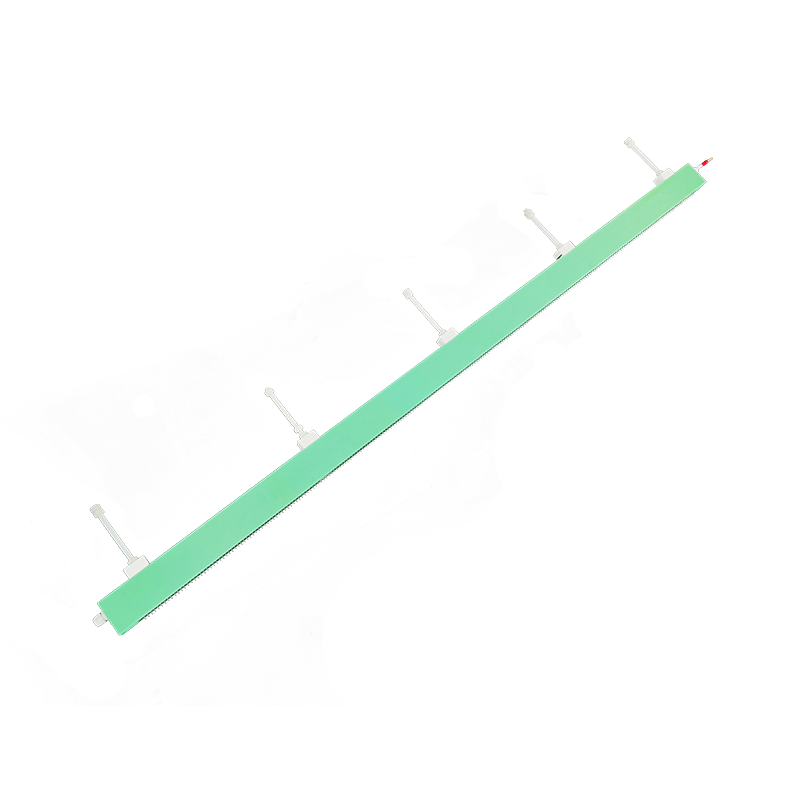
Multiple spinneret electrospinning systems are increasingly used for large-scale production of carbon nanotube composite fibers. These systems require multiple high voltage outputs, each connected to a separate spinneret, or a single high voltage output distributed to multiple spinnerets through a distribution network. The power supply must be capable of maintaining stable voltage at each spinneret despite variations in the individual jet currents. Current limiting resistors are often placed in series with each spinneret to ensure balanced current distribution and to prevent one spinneret from drawing excessive current at the expense of others.
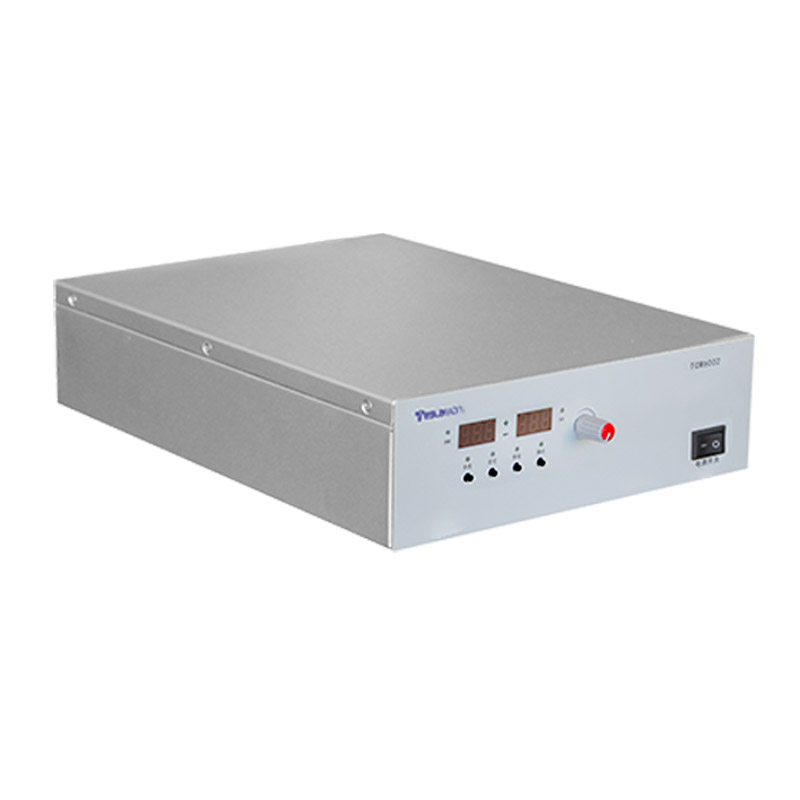
The control interface of the electrospinning high voltage power supply must be compatible with the overall process control system. The voltage setpoint, current limit, and monitoring functions must be accessible through analog or digital communication interfaces. The power supply must provide real-time feedback on the output voltage and current, enabling the process control system to monitor the electrospinning stability and to detect faults such as jet breakup or clogging. The data logging capability of the power supply is valuable for process optimization and quality assurance in production environments.
The safety features of the electrospinning high voltage power supply are essential for protecting operators and equipment. The power supply must include overcurrent protection, overvoltage protection, and arc detection circuits that automatically shut down the output in the event of a fault. The output must be discharged through internal bleed resistors when the power supply is turned off, ensuring that the high voltage capacitors are safely discharged within a specified time. The interlock system must prevent the high voltage from being enabled when the electrospinning chamber door is open or when other safety conditions are not met.
The development of advanced power supply topologies specifically optimized for electrospinning applications continues to advance the capabilities of carbon nanotube composite fiber production. High-frequency resonant converters offer advantages in terms of size, efficiency, and output voltage quality compared to traditional line-frequency designs. The use of digital control enables precise regulation of the output voltage and current, as well as the implementation of advanced features such as voltage ramping, pulse mode operation, and automatic fault recovery. These advances are enabling the production of carbon nanotube composite fibers with improved properties and greater consistency, supporting the commercialization of these advanced materials in a wide range of applications.