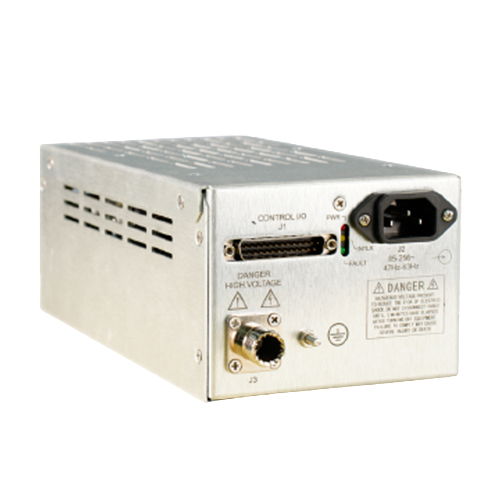
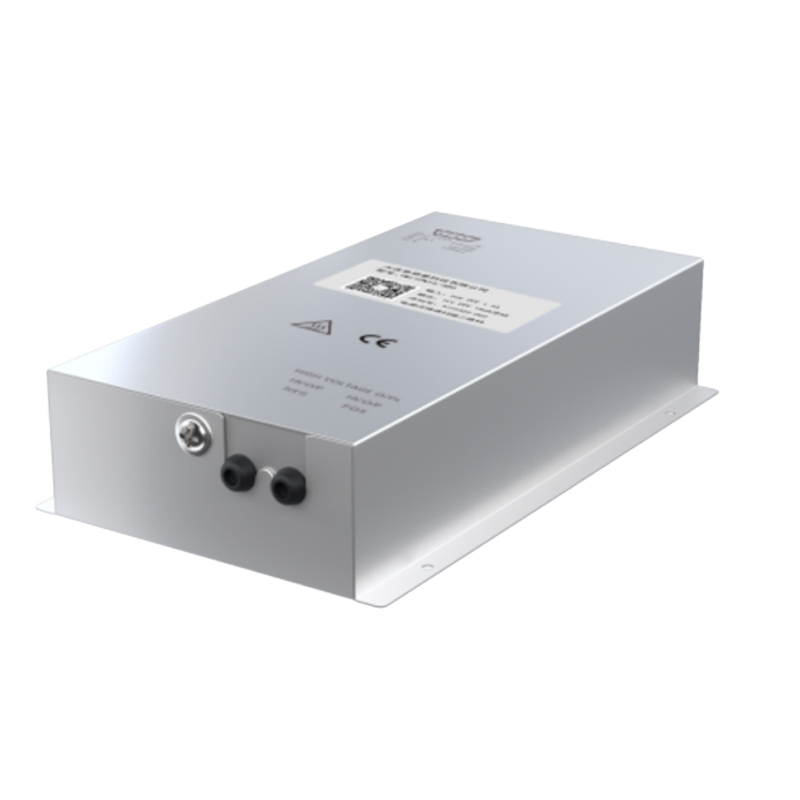
Dynamic Load Adaptability and Efficiency Optimization of High Voltage Power Supply for Radar System
Radar systems require high voltage power supplies to operate transmitter components including magnetrons, klystrons, and solid state power amplifiers. The radar operation imposes dynamic load conditions on the power supply as the transmitter cycles between transmit and receive modes, and as the pulse parameters change for different operating modes. Dynamic load adaptability enables the power supply to maintain stable output despite these load variations, while efficiency optimization reduces power consumption and thermal stress during the varying operating conditions.
Radar transmitters operate in pulsed mode, transmitting high power pulses during the transmit interval and consuming minimal power during the receive interval. The pulse repetition frequency determines the timing of the transmit and receive intervals, with typical frequencies ranging from hundreds of hertz to tens of kilohertz depending on the radar application. The duty cycle, the fraction of time spent transmitting, ranges from less than one percent for long range search radars to tens of percent for some tracking radars.
The high voltage power supply must respond to the pulsed load demand, delivering high current during transmit pulses and minimal current during receive intervals. The load transition from low to high current occurs rapidly at the start of each transmit pulse, and the transition from high to low current occurs at the end of each pulse. The power supply output must remain stable during these transitions, maintaining the required voltage despite the sudden load changes.
Load transient response characterizes the power supply ability to maintain voltage during load changes. When the load current increases suddenly, the output voltage tends to drop as the power supply cannot instantly increase the current delivery. The voltage drop depends on the power supply output impedance and the control loop response. Faster control loops and lower output impedance reduce the voltage drop. When the load current decreases suddenly, the output voltage tends to rise as the power supply continues delivering current that is no longer needed. The voltage rise depends on the energy stored in the output capacitance and the control loop response.
Output capacitance buffers the voltage during load transients. The capacitance stores energy that can be released during current increases, reducing the voltage drop. The capacitance also absorbs energy during current decreases, reducing the voltage rise. Larger capacitance provides better buffering but increases the power supply size and may affect other characteristics. The capacitance selection must balance transient performance against other requirements.
Control loop design for dynamic loads must provide fast response while maintaining stability. The loop bandwidth determines the response speed, with higher bandwidth enabling faster response to load changes. However, high bandwidth may cause instability if the loop gain is excessive at frequencies where phase shift accumulates. The loop design must achieve adequate bandwidth for the load transient requirements while maintaining stability margins.
Feedforward control can improve the transient response by anticipating load changes. If the radar system provides advance indication of impending transmit pulses, the power supply can prepare for the load increase before it occurs. The feedforward action can precharge the output capacitance or adjust the control parameters, reducing the transient voltage deviation. Feedforward requires coordination between the radar system and the power supply control.
Efficiency optimization for pulsed operation considers the varying power delivery throughout the pulse cycle. During transmit pulses, the power supply delivers high power to the transmitter, and the efficiency at high power determines the energy consumption during transmission. During receive intervals, the power supply delivers minimal power, and the efficiency at low power determines the standby energy consumption. The overall efficiency depends on both high power and low power efficiency, weighted by the duty cycle.
Efficiency at high power depends on the converter topology and the component selection. Switching converters have efficiency that varies with operating point, often having optimal efficiency at a specific fraction of rated power. Operating at the optimal point maximizes efficiency, but the radar transmitter may require operation at other points. The converter design can optimize efficiency at the expected operating points for the specific radar application.
Efficiency at low power presents different challenges. Many switching converters have reduced efficiency at light load, as the fixed losses from switching, control circuits, and magnetic components become significant relative to the delivered power. Light load efficiency improvement techniques include reducing switching frequency, disabling phases in multiphase converters, and using low power modes for control circuits. These techniques reduce the standby power consumption during receive intervals.
Energy recovery from the transmitter during pulse decay can improve overall efficiency. Some transmitter types return energy to the power supply during the pulse decay, as the stored energy in the transmitter circuits is released. The power supply can capture this returned energy rather than dissipating it, improving the overall energy efficiency. Energy recovery requires bidirectional power capability or specific circuit configurations.
Thermal management for pulsed operation must handle the peak power dissipation during transmit pulses while managing the average thermal load. The peak dissipation may be much higher than the average, causing temperature spikes during pulses. The thermal design must ensure that peak temperatures remain within component ratings. The average thermal load determines the cooling requirements for sustained operation.
Power supply sizing for radar applications must accommodate the peak power requirements while considering the duty cycle. The peak power during transmit pulses may exceed the average power by orders of magnitude. The power supply must deliver the peak power without exceeding ratings, but may be sized for the average power if adequate thermal management handles the peak thermal stress. The sizing optimization reduces cost and size while meeting performance requirements.