Power Consumption Optimization of High Voltage Discharge Power Supply for Gas Purification System of Excimer Laser
Excimer lasers generate ultraviolet light through electrical discharge in gas mixtures containing rare gases and halogens. The gas mixture degrades during operation as halogen species react with contaminants and materials, requiring periodic gas refresh or purification. Gas purification systems use high voltage discharge to dissociate contaminants or regenerate active species, extending the gas lifetime. Power consumption optimization reduces the energy cost of gas purification while maintaining effective purification performance.
Excimer lasers operate by exciting gas molecules to form excited dimers that emit ultraviolet light when they decay. The gas mixtures include krypton fluoride for 248 nanometer emission, argon fluoride for 193 nanometer emission, and other combinations for different wavelengths. The halogen component, fluorine or chlorine, is reactive and can degrade through reactions with contaminants, materials, and impurities.
Gas degradation mechanisms include halogen depletion through reaction with contaminants, formation of stable compounds that do not participate in the laser cycle, and accumulation of impurities from materials and seals. The degradation reduces the laser output power and stability, eventually requiring gas replacement. Gas purification can reverse some degradation mechanisms, extending the useful gas lifetime.
Gas purification systems use various methods including discharge purification, catalytic purification, and filtration. Discharge purification applies high voltage to create plasma in the gas volume, dissociating contaminants and regenerating active species. The plasma chemistry breaks down stable compounds and releases halogen atoms that can recombine into active species. The purification effectiveness depends on the discharge parameters and the gas composition.
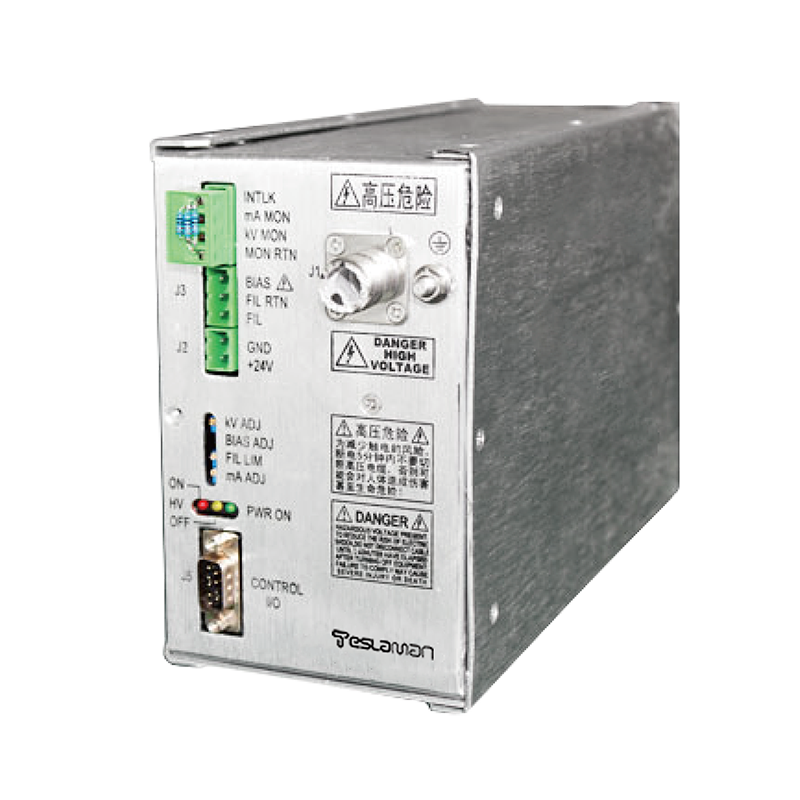
The high voltage discharge power supply provides the electrical energy for the purification plasma. The discharge may use DC, pulsed, or RF excitation depending on the purification design. The voltage determines the electric field strength and the plasma characteristics. The current determines the power input and the plasma intensity. The discharge parameters affect the purification efficiency and the power consumption.
Power consumption for gas purification includes the electrical power for the discharge and any auxiliary power for cooling, control, and gas handling. The discharge power equals the product of voltage and current. Higher power produces more intense plasma that may purify faster or more completely, but consumes more energy. The power optimization must balance purification effectiveness against energy consumption.
Purification efficiency, the fraction of contaminants removed per unit energy input, determines the energy cost of purification. Higher efficiency removes more contamination with less energy. The efficiency depends on the discharge parameters, the gas composition, the contaminant types, and the purification system geometry. Optimization of these factors improves efficiency.
Discharge voltage optimization finds the voltage that provides the best purification efficiency. Higher voltages create stronger plasma with more energetic electrons that can dissociate more contaminants. However, excessive voltage may waste energy in processes that do not contribute to purification, such as heating or inefficient ionization. The optimal voltage provides adequate plasma intensity without excessive waste.
Discharge current optimization finds the current that provides adequate purification rate without excessive power consumption. Higher current increases the plasma density and the purification rate, but also increases power consumption. The current must be sufficient to achieve the required purification within the available time, but not excessive to waste energy.
Pulse parameters for pulsed discharge purification affect the efficiency. The pulse energy determines the plasma intensity per pulse. The pulse frequency determines the average power and the purification rate. The pulse duration affects the plasma evolution and the chemical processes. The pulse parameters must be optimized for the specific purification requirements.
Timing of purification operation affects the overall energy consumption. Purification can operate continuously, periodically, or on demand. Continuous purification maintains gas quality constantly but consumes energy continuously. Periodic purification operates at intervals, maintaining adequate gas quality with lower average power. Demand based purification operates when gas quality indicators show degradation, minimizing unnecessary operation.
Integration with laser operation schedules purification to minimize impact on laser availability. Purification may operate during laser idle periods, using otherwise unused time for gas maintenance. The scheduling must ensure that purification completes before the laser needs to operate, maintaining gas quality without delaying laser operation.
Monitoring of gas quality enables demand based purification operation. Gas quality sensors measure parameters such as halogen concentration, contaminant levels, or laser output stability. The monitoring data indicate when purification is needed, triggering purification operation only when necessary. Demand based operation reduces unnecessary purification and saves energy.
Lifetime extension from purification reduces the overall gas consumption and the gas replacement cost. The energy cost of purification must be weighed against the cost of gas replacement. If purification energy cost is lower than gas replacement cost, purification provides economic benefit. The optimization must consider both energy costs and gas costs.