Adaptive High-Voltage Fields for Electrostatic Flocking on Irregular Substrates
Electrostatic flocking is a versatile process used to create velvet-like surfaces on a wide range of products, from automotive trim to clothing labels. The process involves cutting short fibers, or flock, and applying them to an adhesive-coated substrate under the influence of a high-voltage electric field. The field aligns the fibers and accelerates them towards the substrate, embedding them vertically in the adhesive. For flat substrates, this is a straightforward process. However, for irregular, three-dimensional objects, creating a uniform field that results in a consistent, high-quality flocked surface is a significant challenge. After fifty years in high-voltage engineering, I have learned that the solution lies in adaptive, multi-electrode high-voltage systems that can shape the electric field to the contours of the part.
The physics of electrostatic flocking is based on charging. The flock fibers are typically coated with a material that allows them to accept a charge. They are introduced into a high-voltage field, often by a vibrating feeder or a roller, where they become charged. The electrostatic force then propels them along the field lines towards the grounded or oppositely charged substrate, which is coated with adhesive. The fibers ideally embed themselves with their long axis perpendicular to the surface, creating a dense, uniform pile.
On a flat substrate with a parallel plate electrode configuration, the field is uniform, and the fibers all travel in straight, parallel lines. The result is a perfectly vertical pile. On an irregular substrate, such as a curved automotive dashboard component, a single, flat electrode above the part creates a non-uniform field. The field lines are densest at the points closest to the electrode, and sparse in recessed areas. Fibers will be attracted preferentially to the high points, leaving the recesses sparsely flocked. This results in a poor-quality, non-uniform finish.
The solution is to use a multi-electrode array. Instead of a single, large electrode, the system employs an array of smaller, individually controllable electrodes that conform to the general shape of the part, or are positioned around it. By adjusting the voltage on each electrode, we can shape the electric field to be more uniform across the complex surface. For example, electrodes near a recess can be set to a higher voltage to draw more fibers into that area, while electrodes near a protrusion can be set to a lower voltage to prevent over-flocking. This is an adaptive, real-time control problem.
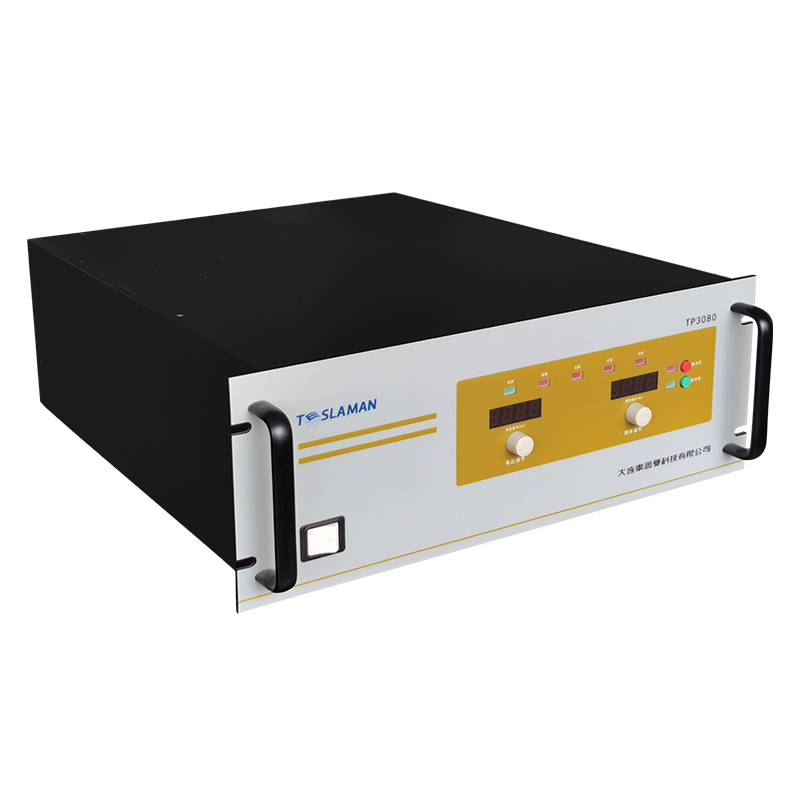
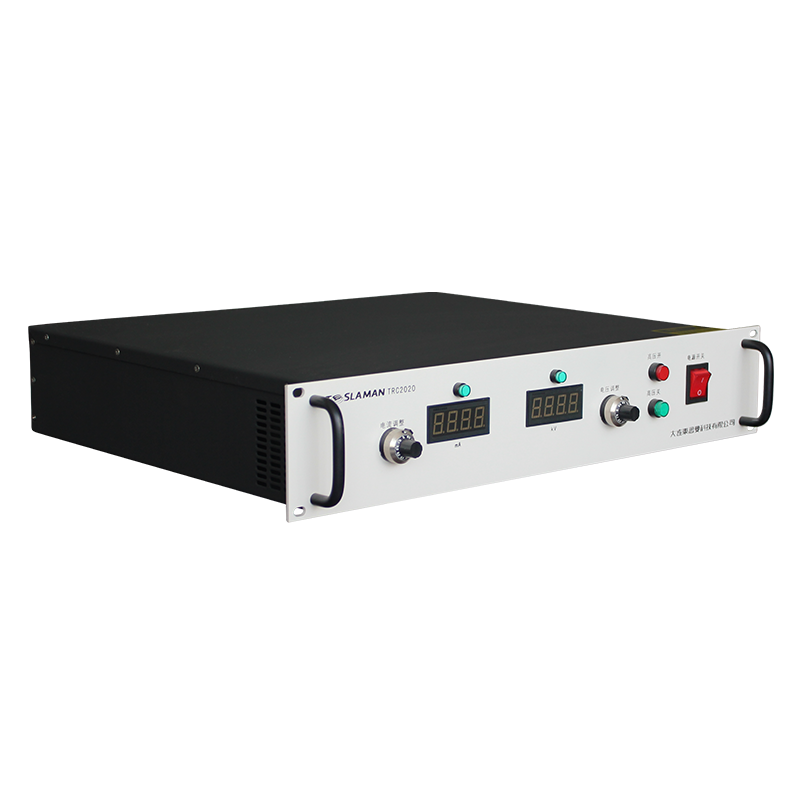
The high-voltage power supply for such a system must be a multi-channel device. It requires dozens or even hundreds of independent, programmable high-voltage outputs, each capable of delivering the necessary current to charge the flock and create the field. The voltage on each channel must be independently adjustable, typically in the range of 20 to 100 kilovolts, and must be stable and free of ripple. The channels must be synchronised to ensure that the field pattern is stable during the flocking process.
The control system for this adaptive field requires feedback. This feedback can come from optical sensors that monitor the density of the flock on the part in real-time. A camera or a line of sensors can detect areas that are under-flocked or over-flocked. This information is fed into a control algorithm that adjusts the voltage on the corresponding electrodes to correct the defect. For example, if a dark spot (indicating low flock density) is detected in a recess, the algorithm increases the voltage on the electrodes directly above that recess, drawing more fibers into the area. This closed-loop control can correct for variations in the part's geometry, the flock's chargeability, and environmental conditions.
Another layer of complexity is added by the motion of the part. In a production line, the part may be moving on a conveyor under the electrode array. The adaptive field must move with the part. This requires a predictive control system that knows the position of the part and can map the desired voltage pattern onto the moving object. The high-voltage outputs must be switched and modulated rapidly as different sections of the part pass under different electrodes.
The electrodes themselves must be designed with care. They must be shaped to avoid sharp points that could cause corona discharge, which would waste power and could damage the fibers. They must be insulated to prevent arcing to the part or to each other. The high-voltage cabling to the electrodes must be carefully routed and shielded to prevent crosstalk between channels, which would distort the field.
Furthermore, the process must be safe. The high voltages involved present a significant shock hazard. The entire flocking chamber must be interlocked to prevent access when the high voltage is on. The power supplies must have fast-acting overcurrent protection to shut down in the event of an arc. The system must also manage the flammable dust created by the flock fibers, requiring explosion-proof designs and proper ventilation.
In conclusion, electrostatic flocking on irregular substrates is a sophisticated process that has been transformed by adaptive high-voltage technology. The transition from a single, static electrode to a multi-channel, feedback-controlled array has made it possible to achieve uniform, high-quality finishes on complex 3D parts. This is a prime example of how high-voltage engineering has moved beyond simple power delivery to become a precision tool for shaping electric fields in space and time, enabling new manufacturing capabilities and improving product quality across a wide range of industries.