Plasma Emission Spectroscopy Monitoring of High Voltage Power Supply for Reactive Sputtering Deposition of Titanium Nitride Thin Films
Reactive sputtering deposits compound films by sputtering metal targets in reactive gas atmospheres. Titanium nitride films are deposited by sputtering titanium targets in nitrogen containing atmospheres. The plasma conditions during reactive sputtering affect the film composition and properties. Plasma emission spectroscopy monitoring provides real time information about the plasma state, enabling control of the high voltage power supply to optimize the deposition.
Titanium nitride films have applications in hard coatings, decorative coatings, and diffusion barriers. The film properties depend on the composition, the structure, and the deposition conditions. Stoichiometric titanium nitride has optimal hardness and corrosion resistance. Off stoichiometric compositions have different properties. The deposition must achieve the desired composition and structure.
Reactive sputtering involves complex plasma chemistry. The titanium atoms sputtered from the target react with nitrogen in the plasma or at the substrate to form titanium nitride. The reaction efficiency depends on the nitrogen availability, the plasma conditions, and the surface conditions. The process must balance the titanium sputtering rate and the nitrogen reactivity.
Target poisoning affects the reactive sputtering process. Nitrogen can react with the titanium target surface, forming a titanium nitride layer on the target. The poisoned target has different sputtering characteristics than pure titanium, affecting the deposition rate and the film composition. The target poisoning state must be controlled for consistent deposition.
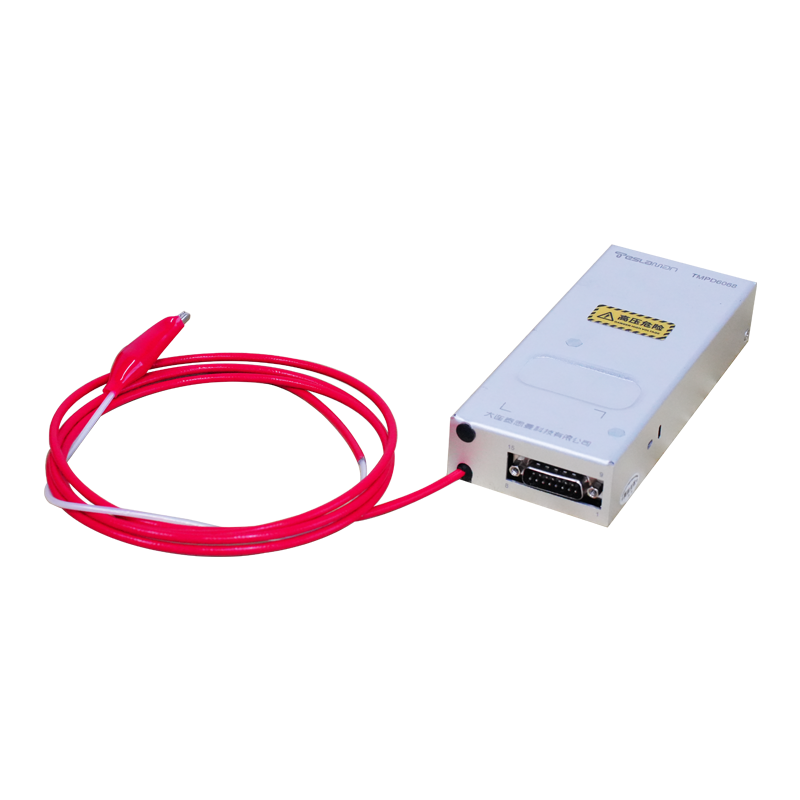
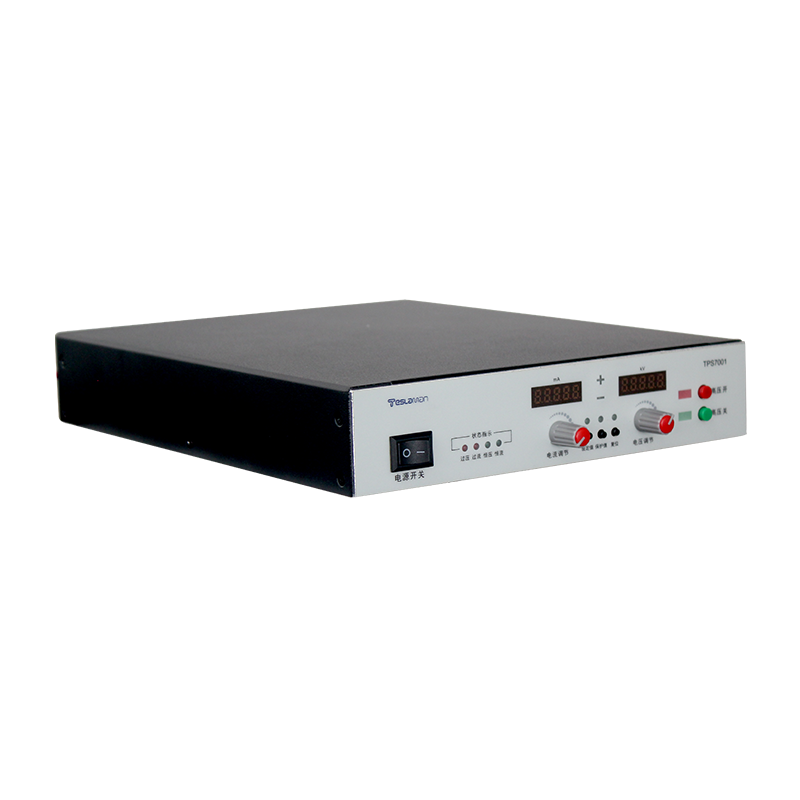
The high voltage power supply provides the plasma power for sputtering. The power determines the sputtering rate, with higher power producing higher titanium flux. The voltage affects the plasma characteristics and the ion energy. The power must be controlled to achieve the desired deposition rate while maintaining appropriate plasma conditions.
Plasma emission spectroscopy analyzes the light emitted by the plasma. The plasma contains excited atoms and ions that emit characteristic wavelengths when they relax. The emission spectrum reveals the plasma composition and the excitation conditions. Titanium atoms and ions emit specific wavelengths that indicate their presence and concentration. Nitrogen species emit wavelengths that indicate the nitrogen state.
Optical emission monitoring tracks specific wavelengths that indicate the plasma state. Titanium emission lines indicate the titanium density in the plasma. Nitrogen emission lines indicate the nitrogen density. The ratio of titanium to nitrogen emission indicates the composition balance. The monitoring provides real time feedback for process control.
Hysteresis in reactive sputtering causes the process to have different operating points depending on the history. As nitrogen flow increases, the process transitions from metallic mode to poisoned mode. As nitrogen flow decreases, the transition occurs at a different point, creating a hysteresis loop. The hysteresis complicates the process control.
Process control using plasma emission maintains the desired operating point within the hysteresis region. The emission signals indicate the current operating state. The control adjusts the power or the gas flow to maintain the target state. The emission based control enables stable operation in the transition region where optimal film composition occurs.
Power adjustment based on emission feedback modulates the high voltage power supply to maintain the plasma state. If titanium emission is too high, indicating excess titanium, the power can be reduced to decrease the sputtering rate. If titanium emission is too low, indicating insufficient titanium, the power can be increased. The power control complements the gas flow control for comprehensive process management.
Voltage waveform effects on plasma emission affect the monitoring interpretation. Different voltage waveforms produce different plasma excitation conditions. DC voltage produces continuous plasma with steady emission. Pulsed voltage produces transient plasma with time varying emission. The monitoring must account for the waveform effects to correctly interpret the emission signals.
Emission signal processing extracts the relevant information from the plasma emission. Spectrometers separate the emission into wavelength components. Detectors measure the intensity at specific wavelengths. Signal processing calculates ratios, trends, or other parameters that indicate the plasma state. The processing must provide accurate, timely information for control.
Calibration of emission signals relates the measured intensities to the plasma composition. The calibration uses known conditions to establish the relationship between emission and composition. The calibration accounts for the optical system characteristics and the plasma geometry. The calibrated signals provide quantitative composition information.
Integration with deposition equipment coordinates the emission monitoring with the overall deposition system. The monitoring data feed into the system controller for process adjustment. The integration enables automated control that maintains optimal deposition conditions. The monitoring provides quality assurance through continuous process verification.