Slow Extraction Beam Quality Analysis of Injection High Voltage Power Supply for Heavy Ion Cancer Therapy Accelerator
Heavy ion cancer therapy uses accelerated ions to destroy tumor cells through precise dose deposition. The ions are accelerated to high energy in a synchrotron and extracted slowly for controlled irradiation. The injection high voltage power supply provides the initial ion energy for acceleration. Slow extraction beam quality affects the therapy precision and the dose distribution.
Heavy ion therapy offers advantages over conventional radiation therapy. Heavy ions such as carbon have superior dose localization, depositing most dose at the tumor depth with minimal dose to surrounding tissue. The ions cause dense ionization that is more effective at killing tumor cells. The precision enables treatment of tumors near critical structures.
Synchrotron acceleration injects ions at low energy, then accelerates them through multiple orbits. The injection energy determines the initial orbit parameters. The ions are accelerated by RF cavities that add energy each orbit. The acceleration continues until the ions reach the therapy energy, typically hundreds of megaelectronvolts.
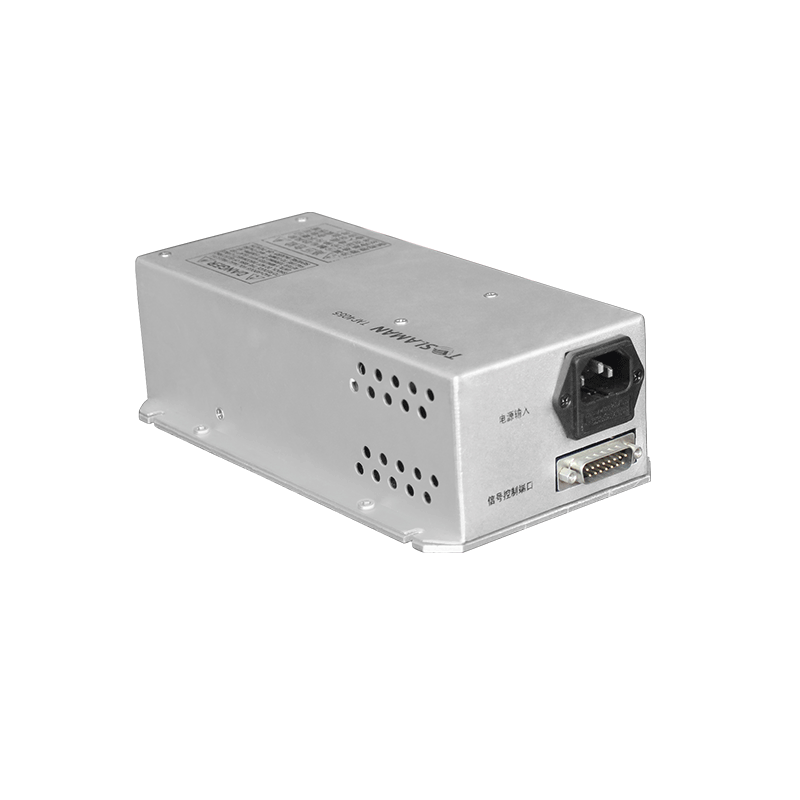
The injection high voltage power supply provides the voltage for the initial ion acceleration. The injection voltage determines the initial ion energy. The voltage must be stable and precise for consistent injection conditions. The injection quality affects the subsequent acceleration and the final beam quality.
Slow extraction controls the ion release from the synchrotron over extended time. The extraction uses electrostatic or magnetic fields that gradually deflect ions out of the stable orbit region. The slow extraction enables continuous beam delivery for therapy. The extraction rate determines the beam intensity for irradiation.
Beam quality for therapy includes the energy precision, the beam size, and the beam stability. The energy precision determines the dose deposition depth. The beam size determines the irradiation resolution. The stability determines the dose consistency. All quality parameters must meet therapy requirements.
Injection effects on beam quality propagate through the acceleration cycle. Injection energy variations cause final energy variations. Injection position variations cause final position variations. Injection timing variations cause extraction timing variations. The injection must be precise to achieve precise final beam.
Slow extraction parameters affect the beam quality during extraction. The extraction field strength determines the extraction rate. The field shape determines the beam trajectory during extraction. The extraction must be controlled to maintain beam quality while providing the required intensity.
Beam emittance, the measure of beam size and divergence, affects the therapy precision. Lower emittance enables smaller beam spots for precise irradiation. The injection and extraction must maintain low emittance throughout the acceleration cycle. Emittance growth from scattering or other effects degrades the beam quality.
Energy spread in the beam affects the dose deposition precision. Narrower energy spread produces sharper dose deposition at the tumor depth. The injection and acceleration must minimize energy spread. RF voltage and timing control affect the energy spread.
Beam current stability during extraction affects the dose rate consistency. The extraction must provide stable current for consistent irradiation. Current variations cause dose rate variations that affect the treatment. The extraction control must maintain stable current.
Beam position stability during extraction affects the targeting accuracy. The beam must reach the target position consistently. Position variations cause targeting errors. The extraction and beam transport must maintain position stability.
Beam monitoring during extraction measures the quality parameters. Energy measurement monitors the beam energy. Position measurement monitors the beam position. Current measurement monitors the beam intensity. The monitoring enables detection of quality deviations and feedback for correction.
Quality assurance verifies that the beam quality meets therapy requirements. Regular measurements of beam parameters confirm the quality. The verification ensures that the therapy system delivers precise treatment. The quality assurance must cover all relevant parameters.
Integration with therapy control coordinates the beam delivery with the treatment planning. The injection and extraction must provide the beam parameters specified by the treatment plan. The integration enables automated treatment delivery that follows the planned irradiation.