In-situ Diagnosis of Plasma Evolution for High Voltage Spark Power Supply in Laser Induced Breakdown Spectroscopy
Laser induced breakdown spectroscopy has established itself as a powerful analytical technique for elemental analysis across diverse applications ranging from industrial process monitoring to planetary exploration. The technique employs focused laser pulses to generate plasma on the sample surface, and the emitted light from the plasma contains spectral signatures of the constituent elements. High voltage spark power supplies can enhance plasma generation and stability, particularly for challenging samples or specific analytical requirements. Understanding the plasma evolution dynamics through in-situ diagnosis enables optimization of both the laser parameters and the high voltage spark characteristics for improved analytical performance.
The fundamental process of laser induced breakdown involves focusing a high-energy laser pulse onto the sample surface, creating intense localized heating that vaporizes and ionizes the sample material. The resulting plasma expands rapidly, emitting characteristic radiation as the excited atoms and ions relax to lower energy states. The plasma evolution proceeds through distinct phases including initial breakdown, plasma expansion, cooling, and recombination, each with different spectral emission characteristics.
High voltage spark assistance can enhance the laser induced breakdown process through multiple mechanisms. The spark can pre-ionize the ambient gas above the sample surface, reducing the threshold for laser breakdown and enabling more consistent plasma initiation. The spark can also contribute additional energy to the plasma, potentially enhancing emission intensity and extending plasma lifetime. The synchronization between the laser pulse and the spark discharge critically determines the nature and extent of these enhancement effects.
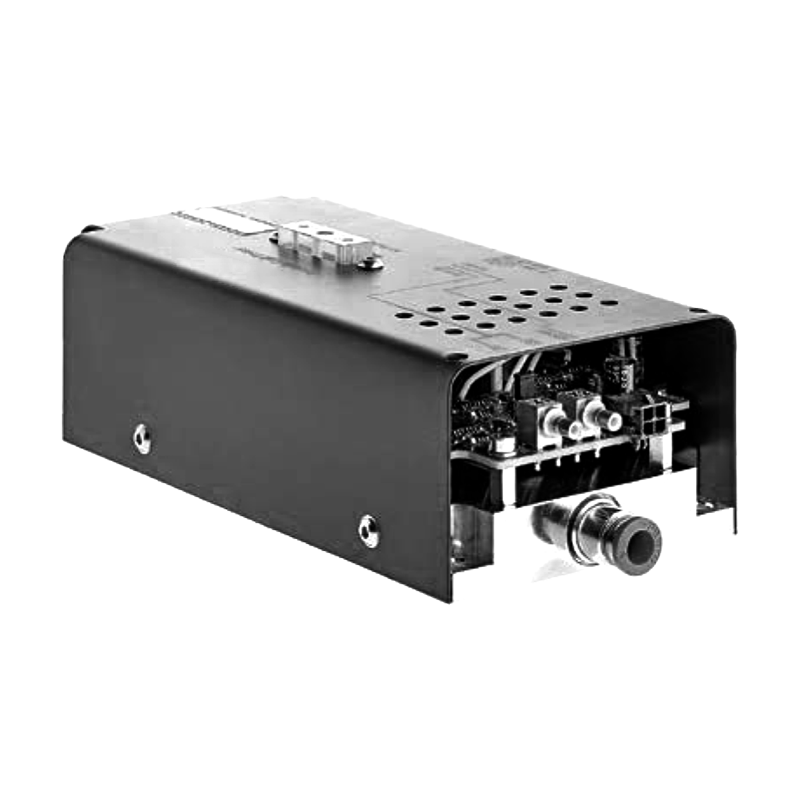
The high voltage spark power supply must generate rapid discharges with precise timing control relative to the laser pulse. The spark gap geometry, electrode materials, and ambient conditions determine the discharge characteristics. The power supply must provide sufficient voltage to achieve reliable breakdown across the spark gap while enabling precise control of the discharge timing and energy. Typical spark voltages range from several kilovolts to tens of kilovolts depending on the gap geometry and ambient pressure.
In-situ diagnosis of plasma evolution requires specialized diagnostic techniques capable of capturing the rapid dynamics of laser induced plasmas. Time-resolved spectroscopy measures the spectral emission at specific time delays after plasma initiation, revealing the evolution of emission characteristics throughout the plasma lifetime. Fast gating of spectroscopic detectors enables isolation of emission from specific plasma phases, optimizing the signal for analytical purposes.
Imaging diagnostics provide spatial information about plasma structure and evolution. High-speed cameras with appropriate framing rates can capture images of the expanding plasma at different times after initiation. Shadowgraphy and interferometry techniques reveal the density distribution and shock wave propagation associated with plasma expansion. These imaging methods complement spectroscopic measurements to provide comprehensive understanding of plasma dynamics.
Electrical diagnostics of the spark discharge characterize the electrical energy delivered to the plasma and the timing relationships. Current probes measure the discharge current waveform, revealing the peak current, duration, and energy deposition. Voltage probes measure the spark gap voltage throughout the discharge process. The electrical measurements correlate with plasma characteristics to establish relationships between spark parameters and plasma behavior.
The timing synchronization between the laser pulse and spark discharge significantly influences the plasma enhancement effects. Pre-spark discharges that occur before the laser pulse can pre-ionize the ambient gas and reduce the laser breakdown threshold. Simultaneous spark and laser pulses can combine the energy contributions from both sources. Post-spark discharges that occur after laser plasma initiation can extend the plasma lifetime and enhance late-stage emission. The optimal timing depends on the specific analytical objectives and sample characteristics.
The spark discharge energy affects the plasma characteristics through its contribution to the total energy deposited in the plasma. Higher spark energies can produce more intense and longer-lived plasmas, potentially improving analytical sensitivity. However, excessive spark energy may cause sample damage, increased background emission, or other undesirable effects. Optimization of spark energy balances analytical performance against sample integrity and measurement quality.
The ambient gas composition and pressure influence both the spark discharge and the laser plasma characteristics. Different gases have different breakdown voltages, ionization potentials, and spectral emission characteristics. The ambient pressure affects the spark gap breakdown voltage and the plasma expansion dynamics. Optimization of ambient conditions can enhance analytical performance for specific applications.
Sample properties significantly influence the laser plasma characteristics and the effectiveness of spark assistance. Different sample materials have different absorption characteristics, vaporization thresholds, and elemental compositions. The surface condition, including roughness, contamination, and oxidation state, affects the laser-sample interaction. The spark assistance parameters must be optimized for the specific sample types being analyzed.
Repetition rate considerations affect both the plasma dynamics and the practical throughput of analytical measurements. Single-pulse measurements capture plasma evolution from individual laser-spark events. Double-pulse or multi-pulse configurations can enhance plasma characteristics through cumulative effects from successive pulses. The repetition rate must be compatible with the recovery time of the plasma generation system and the data acquisition capability.
Spectral analysis of plasma emission reveals the elemental composition and concentration information that constitutes the analytical output of laser induced breakdown spectroscopy. The spectral lines from different elements appear at characteristic wavelengths with intensities proportional to the elemental concentrations. Calibration procedures establish the relationships between spectral intensities and concentrations for quantitative analysis. The plasma evolution dynamics affect the optimal timing for spectral measurement.
Background emission from the plasma continuum can interfere with analytical line emission, particularly during early plasma phases when the continuum intensity is high. Time-resolved measurement at appropriate delays can reduce background interference by capturing emission during plasma phases where the continuum has decayed while line emission persists. The spark assistance parameters influence the background characteristics and the optimal measurement timing.
Spatial heterogeneity of the plasma affects the reproducibility of analytical measurements. The plasma emission varies spatially due to temperature gradients, density variations, and non-uniform distribution of sample material. Spatial averaging through appropriate optical collection or multiple measurements improves reproducibility. The spark assistance can potentially improve plasma homogeneity through additional energy input and extended plasma lifetime.
Calibration and standardization procedures for spark-assisted laser induced breakdown spectroscopy must account for the additional parameters introduced by the spark discharge. The spark timing, energy, and geometry affect the analytical signals and must be controlled consistently. Calibration standards with known compositions enable establishment of quantitative relationships for analytical applications.
Integration with analytical systems requires coordination between the laser, spark power supply, and spectroscopic detection systems. Timing controllers synchronize the laser pulse, spark discharge, and detector gating to achieve the desired measurement sequence. Data acquisition systems capture and process the spectral information for analytical output. Automated systems enable high-throughput analysis with consistent measurement parameters.
Continued advancement in laser induced breakdown spectroscopy drives ongoing development of spark assistance technology and plasma diagnostics. Better understanding of plasma physics enables more effective optimization of measurement parameters. Advanced diagnostic techniques provide deeper insight into plasma evolution dynamics. Integration with machine learning and artificial intelligence enables automated optimization and interpretation. These developments continue to expand the capabilities and applications of laser induced breakdown spectroscopy for elemental analysis.