Crystallization Process Control of High Voltage Power Supply for Perovskite Solar Cell Blade Coating Preparation
Perovskite solar cells have emerged as a revolutionary photovoltaic technology with exceptional efficiency potential and low-cost manufacturing prospects. The blade coating technique represents a scalable deposition method suitable for large-area perovskite film production. The crystallization process during film formation critically determines the film quality and resulting solar cell performance. High voltage electric field application during blade coating can influence crystallization dynamics through electrohydrodynamic effects, enabling process control for optimized film characteristics.
The fundamental process of perovskite solar cell fabrication involves depositing a thin film of perovskite material onto a substrate, followed by crystallization to form the active photovoltaic layer. The perovskite material, typically an organic-inorganic hybrid compound such as methylammonium lead iodide, exhibits exceptional light absorption and charge transport properties when properly crystallized. The film quality, including crystallinity, grain size, and defect density, directly impacts the solar cell efficiency and stability.
Blade coating deposition employs a moving blade that spreads a solution of perovskite precursor materials across the substrate surface. The blade geometry, speed, and gap determine the wet film thickness and uniformity. The solution composition, including solvent type, concentration, and additives, affects the coating behavior and subsequent crystallization. The process parameters must be optimized for reproducible production of high-quality perovskite films.
Crystallization of perovskite films proceeds through nucleation and growth processes that determine the final film morphology. Rapid crystallization can produce small grains with high defect density, reducing solar cell performance. Slow crystallization can produce larger grains but may cause incomplete coverage or non-uniform thickness. The crystallization kinetics depend on solvent evaporation rate, temperature, and the presence of nucleation sites.
High voltage electric field application during blade coating can influence crystallization through multiple mechanisms. The electric field can induce charge separation in the precursor solution, creating electrohydrodynamic flows that affect solute distribution. The field can align polar molecules or charged species, potentially influencing nucleation orientation and crystal growth direction. The field can also affect solvent evaporation through electrostatic forces on evaporating molecules.
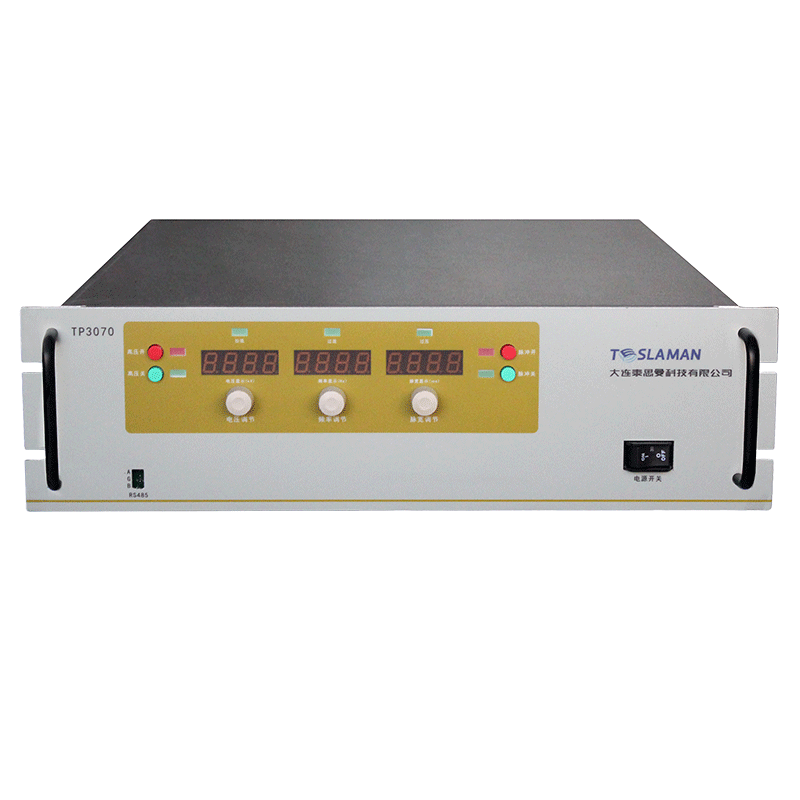
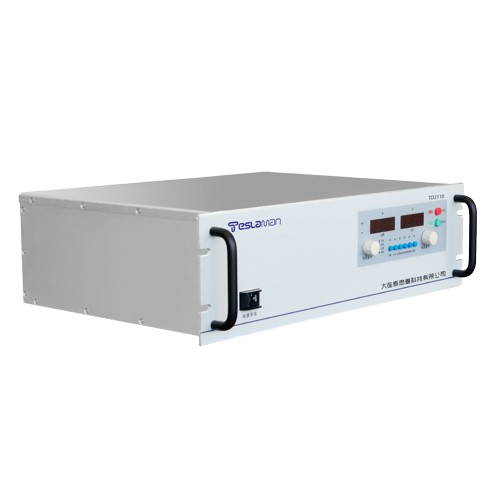
The high voltage power supply for crystallization control must provide appropriate field strength with precise timing relative to the coating process. The voltage level determines the electric field strength in the coating region, typically requiring several kilovolts to achieve significant effects. The voltage application timing relative to blade movement and solvent evaporation determines the influence on crystallization stages. The power supply must enable flexible voltage profiles synchronized with the coating process.
Electrode configuration for electric field application during blade coating requires careful design to achieve appropriate field distribution. Parallel plate electrodes above and below the coating region can generate uniform vertical fields. Side electrodes can generate horizontal fields that influence lateral transport. The electrode geometry must accommodate the blade movement and substrate handling without interfering with the coating process.
The electric field effects on nucleation can influence the density and distribution of nucleation sites. Field-induced charge separation can create localized regions of enhanced supersaturation that promote nucleation. Field alignment of precursor molecules can influence the orientation of nucleating crystals. The nucleation control enables optimization of grain density and orientation for improved film quality.
Crystal growth modification through electric field effects can influence grain size and morphology. Electrohydrodynamic flows can redistribute solute during growth, affecting growth rates in different directions. Field alignment can influence growth orientation, potentially promoting preferred crystal orientations for improved charge transport. The growth control enables optimization of grain characteristics.
Solvent evaporation effects from electric field application can influence crystallization timing and kinetics. Electrostatic forces on evaporating molecules can enhance evaporation rate, accelerating crystallization. The enhanced evaporation can be beneficial for achieving rapid crystallization with appropriate grain characteristics. The evaporation control must be balanced against other crystallization parameters.
Temperature effects interact with electric field application to influence crystallization dynamics. Temperature affects solvent evaporation rate, precursor solubility, and crystal growth kinetics. The combination of temperature control and electric field application provides multiple parameters for crystallization optimization. The process design must coordinate both parameters for synergistic effects.
Solution composition effects on electric field response depend on the electrical properties of the precursor materials. Solutions with higher ionic conductivity respond more strongly to electric field application. Polar solvents and solutes exhibit stronger field alignment effects. The solution formulation must be designed for appropriate electric field response while maintaining other coating and crystallization requirements.
Process monitoring during electric field assisted blade coating provides information for quality control and process optimization. Optical monitoring of film formation reveals crystallization progression and film uniformity. Electrical monitoring of current flow during field application provides information about solution properties and coating behavior. The monitoring data enables real-time process adjustment and quality verification.
Scale-up considerations for electric field assisted blade coating require attention to field uniformity across larger coating areas. The electrode design must maintain consistent field strength across the entire coating width. The power supply must provide sufficient voltage and current for the larger electrode area. The process parameters must be optimized for the specific scale of production.
Safety considerations for high voltage application during blade coating include protection against electrical hazards and prevention of process disruption. The high voltage electrodes must be isolated from personnel access. Current limiting prevents excessive power dissipation that could cause heating or arcing. Interlock systems disable high voltage when coating equipment is accessed.
Integration with production systems requires coordination between the high voltage application and other coating process controls. The voltage timing must be synchronized with blade movement, substrate handling, and environmental control. Process control systems must incorporate the electric field parameters into the overall process recipe. Data logging enables traceability and quality management.
Characterization of perovskite films produced with electric field assistance reveals the effects on film quality and solar cell performance. Microscopy examination shows grain size, morphology, and coverage characteristics. X-ray diffraction analysis reveals crystallinity and crystal orientation. Solar cell testing measures efficiency, stability, and other performance parameters. The characterization results guide optimization of electric field parameters.
Continued advancement in perovskite solar cell manufacturing drives ongoing development of electric field assisted crystallization control. Better understanding of electrohydrodynamic effects enables more precise parameter optimization. Advanced power supply technology provides improved control over field application. Integration with in-situ monitoring enables adaptive process control. These developments continue to advance the manufacturing technology for high-performance perovskite solar cells.