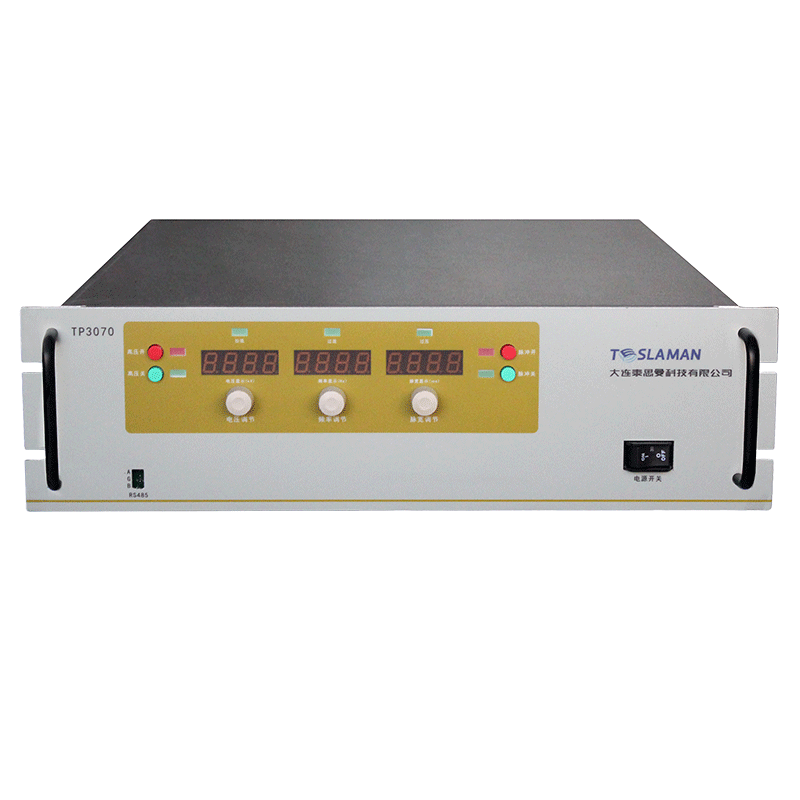
Mechanism of Pulse Waveform Effect on Ceramic Layer Performance for High Voltage Micro-Arc Oxidation Power Supply
Micro-arc oxidation has emerged as an advanced surface treatment technology for producing ceramic coatings on light metal substrates, particularly aluminum, magnesium, and titanium alloys. The process employs high voltage pulses to generate micro-arc discharges in an electrolyte bath, converting the metal surface into a hard, wear-resistant ceramic layer. The pulse waveform characteristics significantly influence the coating formation process and the resulting ceramic layer properties, making waveform optimization essential for achieving desired coating performance.
The fundamental mechanism of micro-arc oxidation involves electrical discharge phenomena at the metal-electrolyte interface. When high voltage is applied, an insulating oxide layer initially forms on the metal surface through conventional anodization. As the oxide layer grows and the voltage increases, localized breakdown events occur at weak points in the oxide layer, creating micro-arc discharges. These discharges generate high local temperatures that promote further oxide formation and structural transformation into ceramic phases.
The ceramic layer formation proceeds through cycles of oxide growth, breakdown, and regeneration that build the coating layer progressively. Each discharge event contributes to coating growth and modification of coating structure. The discharge characteristics, including energy, duration, and spatial distribution, determine the nature of coating formation. The pulse waveform controls these discharge characteristics and thereby influences coating properties.
Pulse voltage amplitude determines the energy available for discharge events and the breakdown characteristics of the oxide layer. Higher voltages provide more energy for discharge events, potentially producing more intense plasma conditions and higher local temperatures. The voltage must exceed the breakdown threshold of the existing oxide layer to sustain the micro-arc process. The voltage level affects the coating growth rate and the ceramic phase formation.
Pulse duration affects the discharge lifetime and the energy deposition during each discharge event. Longer pulses sustain discharges for extended periods, potentially producing more extensive local heating and oxide conversion. Shorter pulses produce brief discharges with more limited energy deposition. The pulse duration influences the thermal cycles experienced by the coating and substrate, affecting coating structure and potential thermal damage.
Pulse frequency affects the discharge repetition rate and the temporal spacing between discharge events. Higher frequencies produce more frequent discharges, potentially increasing coating growth rate. Lower frequencies provide more time between discharges for thermal dissipation and electrolyte replenishment. The frequency influences the thermal management of the process and the continuity of coating formation.
Pulse waveform shape affects the voltage rise characteristics and the discharge initiation dynamics. Square wave pulses provide rapid voltage rise that may produce different discharge initiation than ramped waveforms. Bipolar pulses with alternating polarity may produce different discharge characteristics than unipolar pulses. The waveform shape influences the discharge behavior and the resulting coating formation.
Duty cycle characteristics affect the balance between active discharge periods and rest periods. Higher duty cycles provide more continuous discharge activity, potentially increasing coating growth rate. Lower duty cycles provide more rest time for thermal dissipation and electrolyte recovery. The duty cycle influences the thermal and chemical dynamics of the process.
Coating thickness growth depends on the cumulative effect of discharge events over the processing duration. The growth rate depends on the pulse parameters that determine the energy and frequency of discharge events. The coating thickness must be controlled to meet application requirements while avoiding excessive processing time or coating defects.
Coating porosity characteristics result from the discharge events that create localized regions of intense activity surrounded by less affected regions. The discharge characteristics influence the size, distribution, and connectivity of pores in the ceramic layer. The porosity affects the coating properties including hardness, wear resistance, and corrosion resistance. The pulse waveform must be optimized for appropriate porosity characteristics.
Coating hardness results from the ceramic phase formation during discharge events. The high local temperatures promote formation of hard crystalline phases such as alpha-alumina in aluminum coatings. The discharge energy and thermal conditions influence the phase composition and hardness. The pulse waveform must promote formation of hard phases while avoiding thermal damage.
Coating adhesion to the substrate depends on the interface formation during the coating process. The discharge events affect the interface region where the ceramic layer bonds to the metal substrate. Excessive discharge energy can damage the interface and reduce adhesion. The pulse waveform must maintain appropriate interface conditions for strong adhesion.
Surface roughness of the ceramic coating results from the discharge events that create localized features on the coating surface. The discharge characteristics influence the surface texture and roughness. The roughness affects the coating appearance and tribological behavior. The pulse waveform must be optimized for appropriate surface characteristics.
Electrolyte composition interacts with pulse waveform effects to influence coating formation. The electrolyte provides the chemical environment for oxide formation and ceramic phase development. The electrolyte conductivity affects the discharge characteristics. The electrolyte temperature affects the thermal dynamics. The pulse waveform optimization must account for the specific electrolyte characteristics.
Substrate material characteristics affect the coating formation and the optimal pulse waveform. Different metals have different oxidation characteristics and ceramic phase formation. The substrate alloy composition affects the coating composition and properties. The pulse waveform must be optimized for the specific substrate material.
Thermal management during micro-arc oxidation requires consideration of the heat generation from discharge events and the heat dissipation through the electrolyte and substrate. Excessive heat accumulation can cause thermal damage to the coating or substrate. The pulse waveform must provide appropriate thermal management through discharge energy and frequency control.
Process monitoring during micro-arc oxidation provides information for waveform optimization and process control. Electrical monitoring of voltage and current reveals the discharge characteristics. Optical monitoring of discharge activity provides visual information about the process. Temperature monitoring reveals thermal conditions. The monitoring data enables waveform adjustment for optimal coating formation.
Application requirements for ceramic coatings vary across different uses, requiring waveform optimization for specific performance objectives. Wear resistance applications require hard, dense coatings with appropriate tribological properties. Corrosion resistance applications require coatings with appropriate porosity and barrier characteristics. Thermal protection applications require coatings with appropriate thermal properties. The waveform must be optimized for the specific application requirements.
Continued advancement in micro-arc oxidation technology drives ongoing development of pulse waveform optimization. Better understanding of discharge mechanisms enables more precise waveform design. Advanced power supply technology provides improved waveform control. Integration with process monitoring enables adaptive waveform adjustment. These developments continue to advance the capabilities of micro-arc oxidation for producing high-performance ceramic coatings.