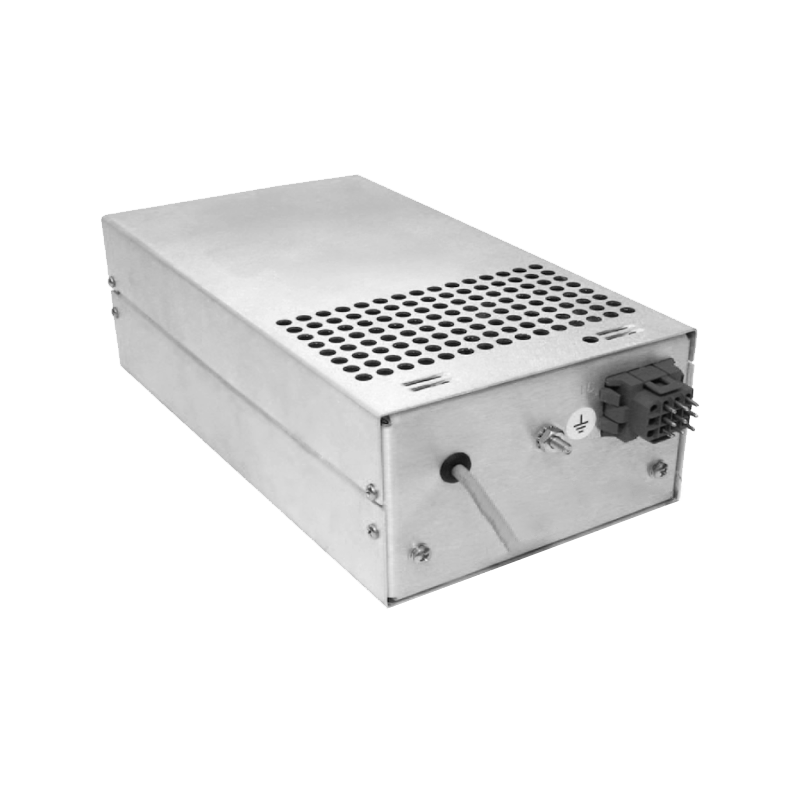
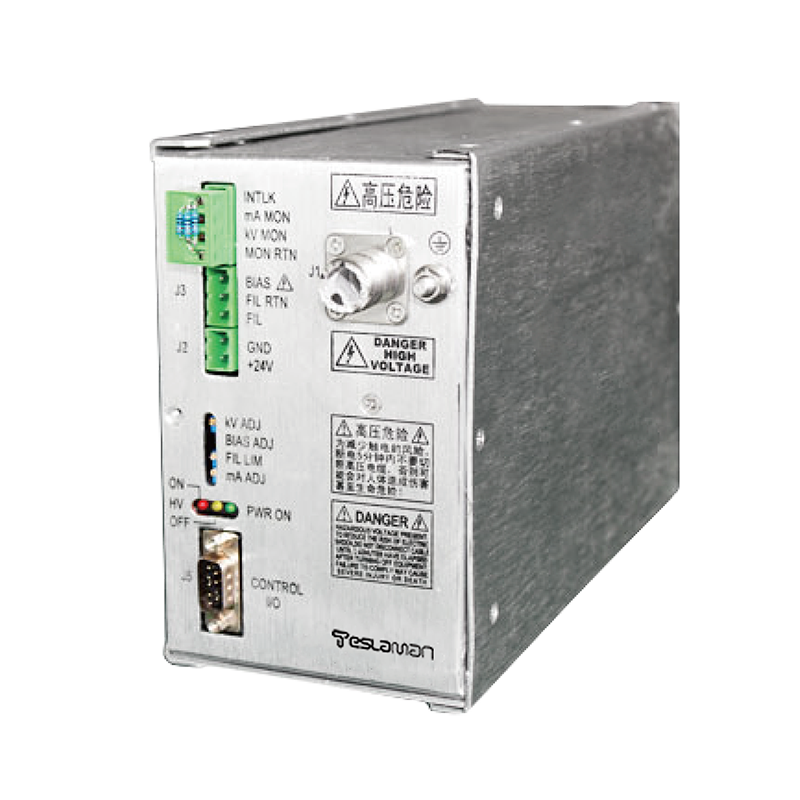
Electric Field and Flow Field Collaborative Control for Multi-Needle Centrifugal Electrostatic Spinning High Voltage Power Supply
Centrifugal electrostatic spinning has emerged as an advanced manufacturing technique for nanofiber production that synergistically combines centrifugal force and electrostatic force for enhanced fiber formation. Multi-needle configurations substantially increase production throughput by enabling simultaneous fiber generation from multiple spinnerets arranged across the spinning apparatus. The high voltage power supply generates the electric fields that charge and accelerate polymer solutions while the centrifugal rotation provides additional mechanical stretching forces. Collaborative control of electric field and flow field parameters enables optimization of fiber characteristics and production efficiency.
The fundamental principle of centrifugal electrostatic spinning involves simultaneous application of electrostatic and centrifugal forces to polymer solutions for fiber formation. The electric field charges the polymer solution emerging from spinnerets, creating charged jets that accelerate toward collection surfaces under electrostatic force. The centrifugal rotation of the spinning apparatus provides additional outward acceleration that enhances jet stretching and fiber formation. The combination of forces enables production of finer fibers with improved uniformity compared to either force alone.
Multi-needle configurations distribute multiple spinnerets across the rotating spinning apparatus for increased production capacity. Each needle produces individual fiber jets that contribute to the overall fiber output. The needle arrangement affects electric field distribution, flow field patterns, and consequently fiber characteristics across the array. The multi-needle design must maintain consistent fiber quality across all spinnerets while achieving high throughput.
Electric field distribution in multi-needle systems involves complex interactions between the fields generated by individual needles and the collective field pattern. Each needle acts as a field emission source that creates local electric field concentration. The fields from neighboring needles interact constructively or destructively depending on spacing and voltage configuration. The cumulative field pattern affects jet initiation, stability, and fiber formation at each needle location.
Flow field dynamics in centrifugal systems involve the movement of polymer solution through the needle array under centrifugal acceleration. The centrifugal rotation creates outward acceleration that drives solution flow from the central reservoir through the needles. The flow rate at each needle depends on the radial position, rotation speed, and needle geometry. Uniform flow distribution across the needle array is essential for consistent fiber production.
Collaborative control coordination involves simultaneous management of electric field parameters and flow field parameters for optimized fiber formation. The applied voltage determines the electric field strength that affects jet charging and acceleration. The rotation speed determines the centrifugal acceleration that affects solution flow and jet stretching. The coordinated adjustment of both parameters enables synergistic effects that cannot be achieved by optimizing either parameter alone.
Voltage optimization for multi-needle systems involves selecting appropriate voltage levels for the needle configuration and polymer characteristics. Higher voltages provide stronger electric fields that enhance jet charging and acceleration, potentially producing finer fibers through increased stretching. However, excessive voltage may cause electrical discharge, jet instability, or non-uniform field distribution across the needle array. The voltage must be optimized for stable operation and consistent fiber quality.
Rotation speed optimization involves selecting appropriate centrifugal acceleration for the polymer solution and desired fiber characteristics. Higher rotation speeds provide stronger centrifugal forces that enhance solution flow and jet stretching, potentially improving fiber fineness and uniformity. However, excessive rotation speed may cause solution overflow from needles, spinneret instability, or excessive mechanical stress on the apparatus. The rotation speed must balance fiber quality against system stability.
Needle arrangement effects on field and flow distributions depend on the geometric configuration of the needle array. Needle spacing affects field interactions between neighboring needles and flow distribution across the array. Needle positioning relative to the collection surface affects field geometry and fiber deposition patterns. The arrangement must be designed for uniform field and flow distribution across all needles.
Field uniformity requirements across the needle array directly impact fiber consistency across the production output. Uniform electric fields enable similar jet behavior and fiber characteristics from all needles. Non-uniform fields cause variations in jet stability, fiber diameter, and fiber morphology across the array. Field uniformity optimization may involve needle arrangement adjustments, voltage balancing, or auxiliary electrode configurations.
Flow uniformity requirements across the needle array affect production consistency and fiber quality. Uniform solution flow rates enable similar fiber production from all needles. Non-uniform flow causes variations in fiber diameter, production rate, and potentially fiber morphology across the array. Flow uniformity optimization may involve reservoir design, needle selection, or rotation speed adjustment.
Polymer solution characteristics influence both electric field response and flow behavior in centrifugal electrostatic spinning. Solution viscosity affects flow through needles, jet formation, and fiber stretching. Solution conductivity affects charging behavior, electric field response, and jet stability. Solution surface tension affects jet initiation and stability. The solution properties must be optimized for both electrostatic and centrifugal effects.
Fiber diameter control involves coordinating electric field and centrifugal parameters to achieve target fiber dimensions. Higher combined forces through increased voltage or rotation speed generally produce finer fibers through enhanced stretching. Lower forces produce thicker fibers with potentially different morphology. The parameter coordination must achieve consistent fiber diameters within specified tolerances.
Fiber morphology control involves coordinating parameters to achieve desired fiber structure and surface characteristics. The fiber solidification process depends on solvent evaporation during jet travel from needle to collector. The force balance affects jet whipping, stretching, and solidification dynamics. Different parameter combinations may produce smooth, porous, or beaded fiber morphologies. The coordination must target specific morphological characteristics.
Production efficiency optimization involves maximizing fiber output while maintaining quality specifications. The throughput depends on needle count, flow rate per needle, and fiber collection rate. Higher throughput may be achieved through more needles, higher flow rates, or faster collection. However, efficiency gains must not compromise fiber quality or system stability. The optimization must balance throughput against quality requirements.
System stability requirements involve maintaining reliable operation during production runs. Electrical stability requires maintaining appropriate field distributions without discharge or breakdown. Mechanical stability requires maintaining smooth rotation without vibration or imbalance. Solution stability requires maintaining consistent viscosity and conductivity during extended operation. The system must operate reliably for practical production durations.
Testing and verification of collaborative control performance require evaluation of fiber characteristics and production metrics under various parameter combinations. Fiber diameter testing verifies size distribution and uniformity across the needle array. Fiber morphology testing verifies surface and structural characteristics. Production rate testing verifies throughput and efficiency. The testing program must verify control effectiveness for production requirements.
Integration with fiber collection systems involves coordinating spinning parameters with collection surface configuration. Collector geometry affects field distribution and fiber deposition patterns. Collector movement affects fiber alignment and mat formation. The integration must enable consistent fiber collection for downstream processing.
Continued advancement in nanofiber production technology drives ongoing development of collaborative control methods. Better understanding of electric and flow field interactions enables more precise parameter optimization. Advanced control algorithms provide improved coordination capability for complex parameter relationships. Integration with real-time monitoring enables adaptive control during production. These developments continue advancing the capabilities of multi-needle centrifugal electrostatic spinning systems.