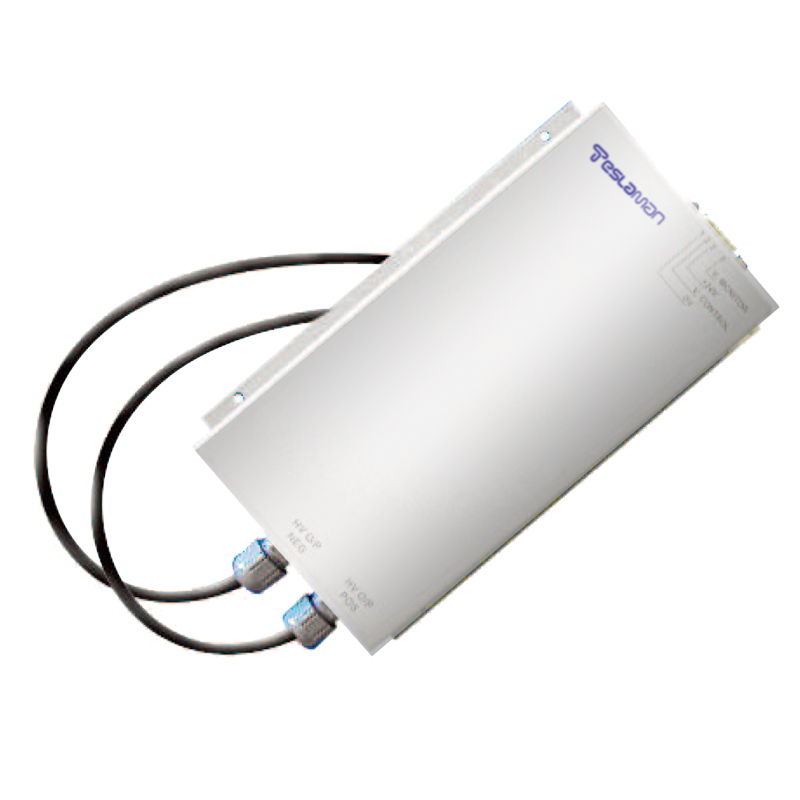
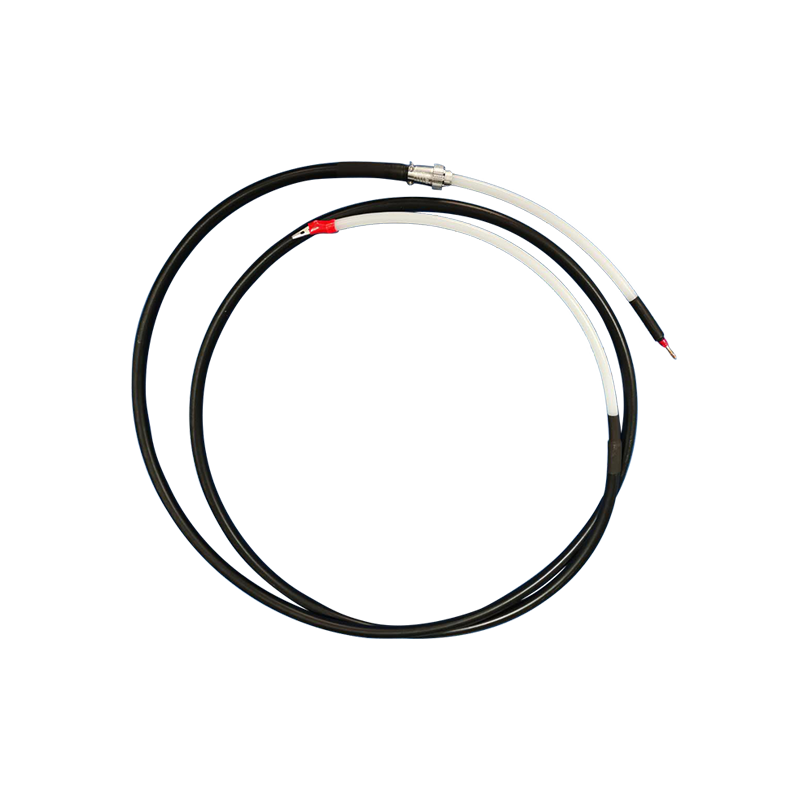
320kV Programmable High Voltage Power Supply for Intelligent Identification of Partial Discharge Patterns in High Voltage Cable Accessories
High voltage cable accessories including terminations, joints, and connectors are critical components that connect cable segments and interface cables with equipment. Partial discharge activity in cable accessories indicates localized insulation defects that can progress to complete insulation failure. Intelligent identification of partial discharge patterns enables defect classification and severity assessment for maintenance planning and failure prevention. Programmable high voltage power supplies enable controlled voltage application for comprehensive partial discharge investigation.
The fundamental principle of partial discharge detection involves applying voltage to insulation and detecting electrical signals from localized discharge events. Partial discharges occur at defects where electric field concentration exceeds local breakdown threshold. Discharge events produce electrical pulses that can be detected through various measurement techniques. The pattern characteristics indicate defect type and severity.
Partial discharge pattern identification involves analyzing discharge signal characteristics to determine defect type. Different defect types produce different discharge patterns through distinct physical mechanisms. Pattern recognition algorithms classify patterns into defect categories. The identification enables appropriate maintenance response.
High voltage application for partial discharge testing must stress insulation sufficiently to induce discharge activity at defect locations. The voltage must exceed discharge inception voltage at defects while remaining below complete breakdown threshold. The voltage level must be appropriate for detecting relevant discharge activity.
320kV voltage capability enables testing of high voltage cable accessories at appropriate stress levels. Cable accessories rated for high voltage systems require high test voltages for meaningful discharge evaluation. The voltage range enables testing across substantial accessory voltage ratings.
Programmable voltage control enables systematic voltage variation for comprehensive discharge investigation. Voltage ramping identifies discharge inception voltage thresholds. Voltage stepping evaluates discharge behavior at different stress levels. Voltage cycling evaluates discharge stability over time. The programmability enables thorough investigation.
Voltage waveform control for partial discharge testing involves selecting appropriate voltage types for defect detection. AC voltage tests evaluate discharge behavior under alternating field conditions. DC voltage tests evaluate discharge behavior under steady field conditions. Impulse voltage tests evaluate discharge behavior under transient conditions. The waveform must be appropriate for detection objectives.
Partial discharge detection systems measure electrical signals from discharge events. Electrical detection measures current or voltage pulses from discharges. Ultrasonic detection measures acoustic signals from discharges. Optical detection measures light emission from discharges. The detection must be sensitive for comprehensive pattern capture.
Pattern analysis algorithms extract characteristics from detected discharge signals for classification. Time-domain analysis examines pulse timing and repetition patterns. Frequency-domain analysis examines spectral characteristics of discharge signals. Statistical analysis examines distribution characteristics of discharge parameters. The analysis must provide classification capability.
Defect types in cable accessories include various mechanisms with different discharge patterns. Void defects produce discharge patterns with specific pulse characteristics. Surface defects produce different patterns reflecting surface discharge mechanisms. Delamination defects produce patterns reflecting interface discharge behavior. The pattern recognition must distinguish defect types.
Severity assessment from discharge patterns involves estimating defect progression stage and failure risk. Higher discharge magnitude indicates more severe defect activity. Higher discharge repetition rate indicates more active defect progression. Pattern evolution indicates defect development trajectory. The assessment must evaluate failure risk.
Voltage level effects on discharge patterns involve pattern changes with increasing stress levels. Discharge inception marks initial defect activity appearance. Pattern changes with voltage increase may indicate defect progression. Pattern stability with voltage increase may indicate stable defects. The voltage effects must be understood for accurate assessment.
Environmental effects on discharge patterns include influences from temperature and humidity. Temperature affects insulation characteristics and discharge behavior. Humidity affects surface discharge characteristics. The environmental effects must be controlled or compensated.
Testing duration for pattern identification must be sufficient for comprehensive pattern capture. Short duration tests may miss intermittent discharge patterns. Extended duration tests capture more complete pattern characteristics. The duration must be appropriate for pattern identification requirements.
Integration with diagnostic systems involves coordinating voltage control with discharge detection and analysis. Voltage application must synchronize with detection system operation. Analysis algorithms must incorporate voltage level information. The integration enables comprehensive diagnosis.
Testing and verification of pattern identification require evaluation with known defects. Defect simulation tests verify pattern recognition with simulated defects. Field tests verify identification with actual accessory defects. Accuracy testing verifies correct classification performance. The testing must establish confidence in identification capability.
Continued advancement in cable diagnostics drives ongoing development of partial discharge identification systems. More sophisticated algorithms enable more accurate pattern classification. Real-time identification enables immediate assessment during testing. Integration with maintenance planning enables automated risk assessment. These developments continue advancing the capabilities of cable accessory diagnosis.