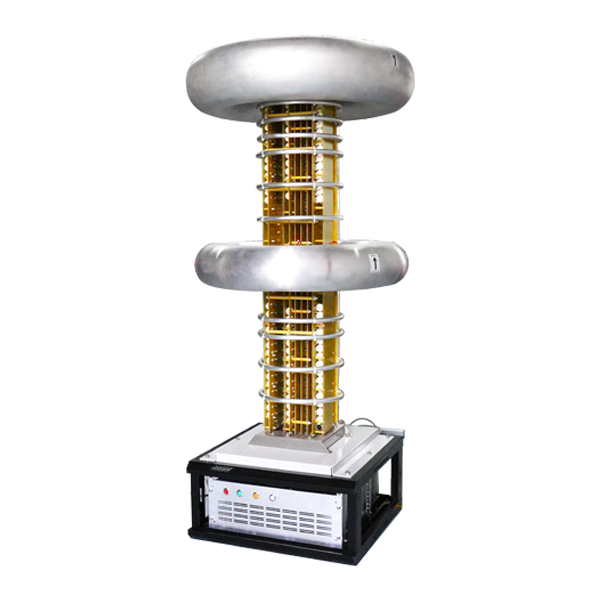
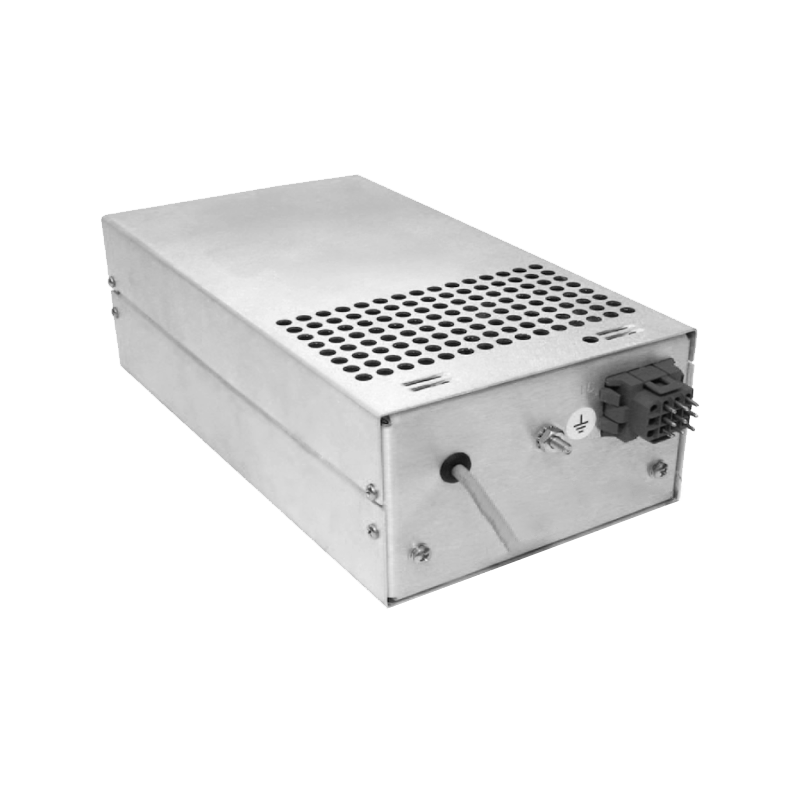
320kV High Voltage Power Supply Power Supply Optimization in Microchannel Plate Detector
Microchannel plate detectors serve as high-gain electron multipliers in diverse applications including imaging systems, particle detectors, and photon-counting devices. The high voltage power supply providing bias voltage to the microchannel plate assembly critically influences detector performance parameters including gain, resolution, timing characteristics, and operational lifetime. Power supply optimization addresses the specific requirements of microchannel plate operation while maximizing detector performance and reliability, directly affecting measurement accuracy in scientific and industrial applications.
The microchannel plate structure consists of millions of microscopic channels, each functioning as an independent electron multiplier. Secondary electrons emitted from the channel walls by incident electrons accelerate through the applied electric field, striking the walls and producing additional secondary electrons. This multiplication process results in gains of thousands to millions from a single plate. The gain depends strongly on the applied voltage, typically following an exponential relationship with voltage over the normal operating range. Precise voltage control thus enables precise gain control, essential for quantitative measurements. The gain-voltage relationship must be characterized for each plate type and operating voltage range.
Voltage distribution across the microchannel plate assembly determines the electric field configuration within the channels. Single microchannel plates require a single high voltage supply, with the input and output faces at different potentials. Chevron or Z-stack configurations using two or three plates in series require multiple voltage levels with precise ratios to achieve uniform gain across the stack. The power supply system must maintain these voltage ratios despite varying load conditions and temperature fluctuations. Ratio stability of one percent or better ensures consistent gain and resolution across the detector area. The ratio stability requirement derives from overall detector resolution specifications.
The resistance of the microchannel plate itself draws current from the high voltage supply, with typical plate resistances in the range of hundreds of megohms to gigohms. This bias current establishes the operating point of the plate and provides charge replenishment for the multiplication process. The power supply must deliver this current while maintaining voltage accuracy. Current measurement provides indication of plate condition, as resistance changes can indicate contamination, degradation, or temperature effects. Power supplies designed for microchannel plate operation include precision current measurement circuits capable of resolving nanoampere-level currents. Current measurement accuracy enables detection of gradual plate degradation.
Noise and ripple on the high voltage supply directly affect detector performance. Voltage fluctuations modulate the gain of the microchannel plate, causing gain variations that degrade energy resolution in spectroscopy applications and amplitude resolution in imaging applications. The power supply must exhibit extremely low noise and ripple at frequencies relevant to the detector bandwidth. Low-frequency noise and drift cause gain instability over time, while higher-frequency ripple can couple into the detector signal chain. Ripple specifications below 0.01 percent of output voltage are typical for precision detector applications. Noise spectral characterization enables prediction of detector resolution effects.
Transient response characteristics become important in applications where the high voltage is modulated or gated. Pulsed detector operation may require rapid voltage changes to enable gating functions or to control detector gain in synchrony with signal sources. The power supply must achieve stable voltage quickly after commanded changes, with minimal overshoot or ringing. The output capacitance and the impedance of the distribution network determine the fundamental limits on response time. Active regulation can improve response time but must be designed to avoid instability when driving the capacitive load presented by the microchannel plate assembly. Response time testing must cover all expected operating conditions.
Temperature effects on microchannel plate performance necessitate careful thermal management. The resistance of the lead glass used in microchannel plates typically decreases with increasing temperature, following a negative temperature coefficient characteristic. This resistance change affects both the bias current and the gain characteristics. Operating temperature variations of tens of degrees can cause significant resistance changes. The power supply voltage regulation can compensate for some temperature effects, but thermal management of the detector assembly may also be required for applications with demanding stability requirements. Temperature coefficient characterization enables prediction of thermal effects.
Space charge effects limit the maximum current available from microchannel plates at high gains and high count rates. As the output current approaches the bias current, the electric field within the channels becomes distorted, reducing gain and causing non-linear response. The power supply bias current thus determines the maximum linear output current available. Applications requiring high count rates may operate at lower gain to increase available output current, while applications requiring single-particle sensitivity operate at higher gain with corresponding count rate limitations. The bias current selection must balance gain and count rate requirements.
Distribution of high voltage to multiple microchannel plates and associated electrodes requires careful attention to impedance and isolation. The voltage divider networks distributing bias to different electrodes must provide stable voltage ratios while drawing minimal current from the main supply. Decoupling capacitors filter high-frequency noise from the supply lines while presenting low impedance at signal frequencies. The physical layout of the distribution network affects susceptibility to external interference and crosstalk between detector channels. Distribution network optimization must consider both electrical performance and mechanical constraints.
Protection circuits safeguard both the power supply and the microchannel plate from damage during fault conditions. Current limiting prevents excessive current flow that could damage the plate or cause excessive heating. Overvoltage protection prevents voltage from exceeding safe limits for the plate and associated components. Arc detection responds to internal discharges that can occur if contaminants or defects create localized low-resistance paths. The protection system must balance sensitivity to genuine faults with immunity to transient conditions that do not threaten equipment safety. Protection system testing must verify correct operation under all fault conditions.
Lifetime optimization for microchannel plates involves managing the accumulated charge extracted from the plate during operation. The secondary emission characteristics of the channel walls gradually degrade with use, eventually limiting achievable gain. Operating at lower gain and lower bias current extends plate lifetime but reduces signal amplitude and may affect detection efficiency. The power supply can support lifetime optimization through precise gain control that maintains minimum necessary gain rather than excessive gain, and through monitoring of bias current trends that indicate approaching end of life. Lifetime prediction models enable scheduling of plate replacement before performance degradation affects measurements.