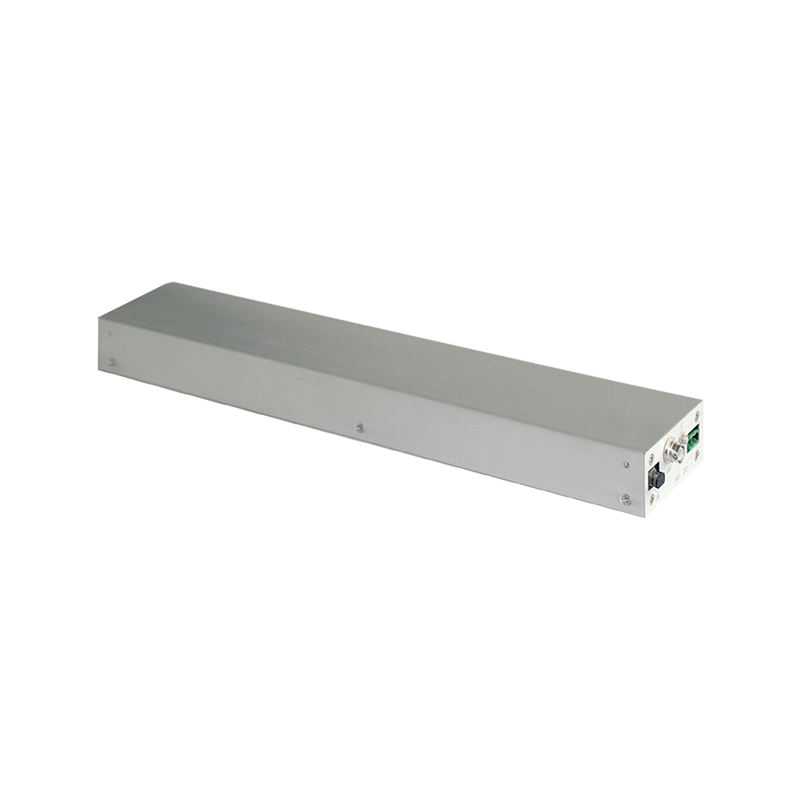
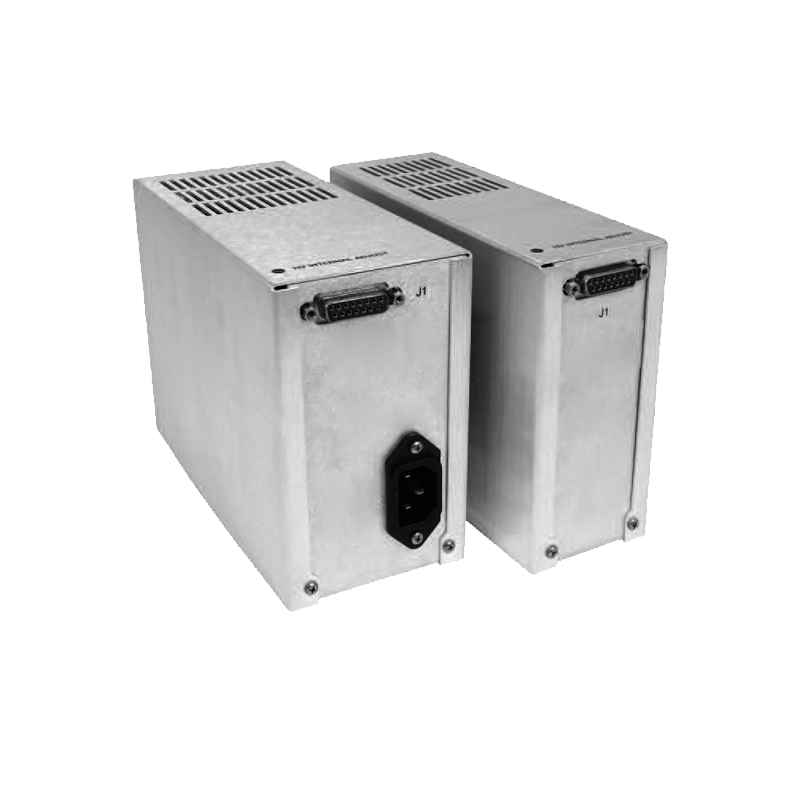
Low Ripple High Voltage Power Supply Key Role in Lithography Machine Light Source Excimer Laser
Excimer lasers serve as essential light sources for deep ultraviolet lithography systems used in semiconductor manufacturing. These gas lasers generate coherent light at wavelengths including 248 nanometers from krypton fluoride and 193 nanometers from argon fluoride, enabling patterning of features beyond the resolution limits of longer wavelength sources. The high voltage power supply powering the laser discharge must exhibit exceptionally low ripple characteristics to maintain stable laser output power and wavelength, directly affecting lithographic imaging quality and semiconductor device yield.
The excimer laser discharge mechanism involves high voltage electrical discharge through a gas mixture containing rare gas halides. The discharge creates excited molecules that emit ultraviolet light upon relaxation. The discharge stability directly determines laser output characteristics including pulse energy, pulse duration, and wavelength stability. Voltage ripple on the discharge power supply causes variations in discharge conditions that translate into laser output fluctuations. For lithography applications requiring dose accuracy better than one percent, discharge stability must be correspondingly precise, placing stringent requirements on power supply ripple performance.
Voltage ripple effects on excimer laser operation occur through multiple mechanisms. Instantaneous voltage variations during the discharge affect the discharge characteristics including electron temperature, ionization rate, and excimer molecule formation rate. These effects cause pulse-to-pulse energy variations that affect exposure dose uniformity. Lower frequency voltage drift causes gradual changes in average pulse energy that may require periodic recalibration during wafer lots. Wavelength stability also depends on discharge conditions, with voltage variations causing wavelength shifts that affect image formation. The relationship between voltage stability and laser performance must be characterized through empirical testing to establish power supply specifications.
Ripple specifications for excimer laser power supplies typically require ripple below 0.1 percent of output voltage at frequencies relevant to laser operation. This corresponds to sub-kilovolt ripple for power supplies operating at tens of kilovolts. Achieving such low ripple requires careful attention to power supply design including regulation topology, filter design, and component selection. Linear regulation stages following switching preregulators achieve the lowest ripple levels, though with efficiency penalties compared to switching-only designs. The filter design must achieve required ripple attenuation at all frequencies present in the switching harmonics while maintaining adequate response time for voltage changes. Filter component selection must account for voltage ratings and stability over time and temperature.
The discharge load characteristics in excimer lasers present unique challenges for power supply regulation. The discharge behaves as a highly nonlinear load with negative dynamic resistance over portions of the operating characteristic. Once breakdown occurs, current increases while voltage drops, requiring the power supply to maintain stable operation with this inverted response. Current regulation rather than voltage regulation may provide more stable operation for some laser designs. The power supply must limit current during the discharge to prevent damage to electrodes or the laser vessel. Current limiting response must be fast enough to limit energy delivery during the brief discharge pulse. Load characterization guides selection of appropriate regulation mode and parameters.
Pulse repetition rates in lithography excimer lasers typically range from hundreds of hertz to several kilohertz. The power supply must recharge the pulse-forming network between pulses while maintaining stable voltage at the start of each pulse. The recharge time available depends on the repetition rate, with higher rates requiring faster recharge capability. The power supply must deliver sufficient average power to maintain the pulse energy at the required rate. Ripple at the repetition frequency and its harmonics can couple into laser operation, causing systematic pulse energy variations that may affect wafer exposure uniformity. Power supply design must minimize ripple components at critical frequencies related to laser operation.
Thermal management in high voltage power supplies affects ripple performance through temperature effects on component characteristics. Capacitor values and equivalent series resistance change with temperature, affecting filter performance. Semiconductor device characteristics change with temperature, affecting regulation loop gain and stability. Temperature gradients across components can cause differential changes that degrade performance. Thermal design must maintain adequate temperature uniformity and absolute temperature control to preserve ripple performance. Temperature monitoring and thermal protection prevent operation at temperatures where performance would be degraded or reliability compromised.
Electromagnetic compatibility requirements become stringent for power supplies operating in lithography environments. The laser discharge generates substantial electromagnetic interference that can affect nearby electronics. The power supply must operate reliably in this environment while not generating interference that could affect other lithography system components. Shielding, filtering, and careful layout practices enable compliant operation. Immunity testing verifies operation in the presence of expected interference levels. Emission testing verifies that the power supply does not create interference above applicable limits. EMC design must account for the specific environment of semiconductor fabrication facilities with their unique interference characteristics.
Reliability requirements for lithography laser power supplies exceed typical industrial requirements due to the high cost of lithography tool downtime. Power supply failures can halt semiconductor production, costing substantial revenue per hour of downtime. High-reliability design practices including component derating, thermal management, and quality control during manufacturing help achieve required reliability. Accelerated life testing verifies reliability predictions based on component failure rate models. Redundant power supply configurations provide backup capability to maintain operation despite failures. Predictive maintenance based on condition monitoring enables scheduled maintenance during planned tool downtime rather than unplanned failures during production.
Service and maintenance considerations affect total cost of ownership for lithography facilities. Power supply components with limited lifetimes, particularly capacitors and fans, require periodic replacement to maintain reliability. Maintenance scheduling must minimize impact on tool availability while preventing failures that would cause unplanned downtime. Modular power supply designs enable rapid replacement of failed or maintenance-due modules, minimizing service time. Documentation and training support service personnel in maintaining power supplies properly. Spare parts availability and service contracts provide additional support for maintaining system availability. Long-term support capability must be considered in power supply vendor selection given the multi-decade service life of lithography tools.
Calibration and monitoring systems verify power supply performance during operation. Voltage and current measurements with traceable calibration enable verification that power supply parameters remain within specifications. Ripple monitoring tracks filter effectiveness and identifies degradation before it affects laser performance. Trend analysis of power supply parameters supports predictive maintenance by identifying gradual changes that may indicate developing problems. Integration of power supply monitoring with lithography tool diagnostics enables comprehensive system health assessment. Calibration and monitoring data documentation supports quality management systems required for semiconductor manufacturing.