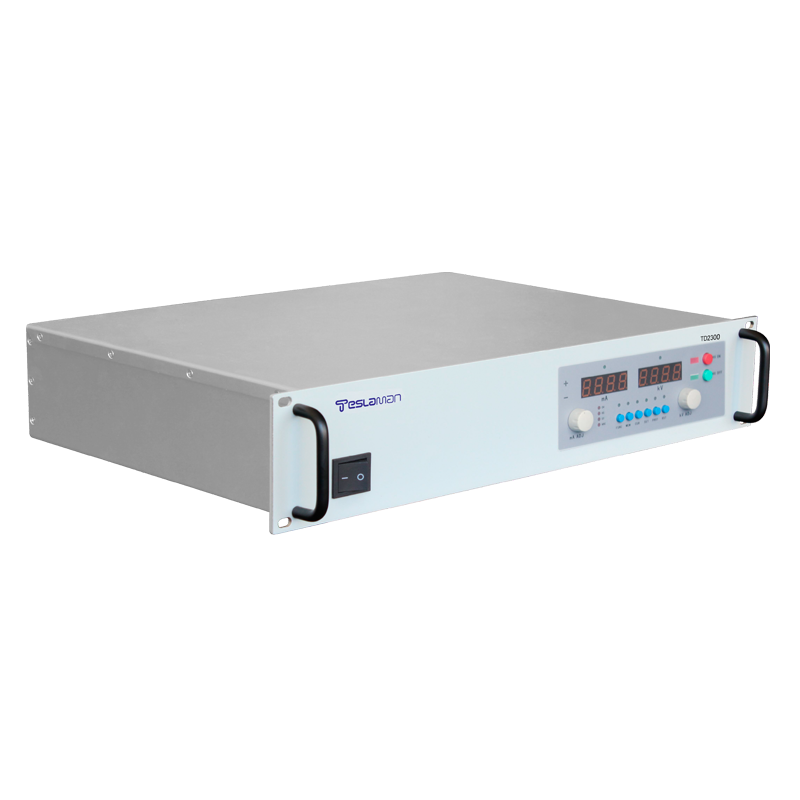
Vacuum Coating High Voltage Power Supply Pulse Mode Influence Mechanism on Thin Film Quality
Vacuum coating processes utilize high voltage power supplies in various configurations including magnetron sputtering, cathodic arc deposition, and plasma-enhanced chemical vapor deposition. Pulse mode operation of these power supplies has emerged as a critical technology for controlling plasma characteristics, ion energies, and thin film properties. Understanding the influence mechanisms of pulse parameters on film quality enables optimization of coating processes for demanding applications in optics, electronics, and tribology, where film properties including density, stress, microstructure, and composition directly determine product performance.
Pulse mode operation fundamentally changes plasma characteristics compared to continuous DC operation. During the active pulse phase, high instantaneous power creates dense plasma with high ionization fraction. The ions generated during this phase gain energy from the electric field and bombard the growing film with energies sufficient to affect film structure and properties. During the off phase, the plasma decays but does not completely extinguish, enabling rapid reignition when the next pulse begins. This modulated plasma creates unique conditions that can produce films with superior properties compared to DC operation, including higher density, lower roughness, and reduced intrinsic stress.
Ion bombardment energy represents a key mechanism through which pulse mode affects film quality. Ions accelerated from the plasma to the substrate gain energy proportional to the instantaneous voltage. In DC operation, ions arrive with a narrow energy distribution around the sheath potential. In pulse mode, ions arrive throughout the pulse cycle with varying energies determined by the instantaneous voltage. The ion energy distribution thus reflects the voltage waveform, enabling control of ion bombardment through pulse shape design. Higher energy bombardment promotes dense film structure through knock-on effects that fill voids and eliminate columnar growth. Excessive energy can cause damage or preferential sputtering of lighter elements, making optimization critical.
Pulse frequency influences plasma density and ion bombardment characteristics. Higher frequencies provide more frequent plasma excitation with less decay between pulses, maintaining higher average plasma density. The duty cycle at a given frequency determines the average power relative to peak power. Higher duty cycles provide more average power but reduce the peak-to-average ratio that creates the beneficial effects of pulsed operation. The optimal frequency and duty cycle depend on the specific coating material, process pressure, and desired film properties. Empirical optimization through systematic variation of pulse parameters identifies optimal conditions for specific applications.
Rise time and fall time of voltage pulses affect plasma ignition and extinction dynamics. Fast rise times create rapid field increases that promote efficient breakdown and ionization. Slow rise times may result in inefficient plasma initiation with reduced ion current. Fall times affect plasma decay characteristics, with slower decay allowing more complete plasma relaxation between pulses. The transition dynamics influence ion energy distribution and plasma chemistry. Rise time requirements typically fall in the range of tens to hundreds of nanoseconds, depending on the application. Power supply design must achieve these rise times while managing electromagnetic interference from fast transitions.
Pulse waveform shape provides additional control over plasma characteristics beyond simple rectangular pulses. Ramp-up waveforms gradually increase voltage during the pulse, creating different ionization dynamics than abrupt voltage application. Bipolar pulses with positive and negative phases enable charge neutralization for insulating targets and provide additional control over ion bombardment. The positive phase in bipolar operation attracts electrons to the target, neutralizing positive charge accumulation that would otherwise cause arcing. Complex waveforms generated by programmable power supplies enable optimization for specific materials and applications. Waveform design requires understanding of how different waveform features affect plasma physics.
Arc handling in pulsed power supplies protects both the target and the growing film from arc damage. Arcs are transient plasma instabilities that cause intense localized current flow, potentially damaging targets and degrading film quality through incorporation of particulates. Pulsed operation inherently reduces arc duration compared to DC operation, as arcs are terminated at the end of each pulse. Additional arc detection and suppression systems can rapidly extinguish arcs that occur during the pulse. Arc suppression typically involves briefly reversing voltage or reducing voltage to zero upon arc detection. Arc detection sensitivity must balance rapid response against false triggering on normal plasma fluctuations. Arc statistics monitoring provides diagnostic information about target condition and process stability.
Plasma chemistry effects in reactive sputtering processes respond to pulse mode characteristics. Reactive sputtering deposits compound films from metallic targets in reactive gas atmospheres. The target surface condition varies between metallic and compound states depending on the balance between reactive gas adsorption and sputter removal. Pulse mode affects this balance through modulation of sputtering rate and plasma chemistry. The time-varying plasma creates periodic conditions that can promote stable operation in regimes where DC operation would exhibit hysteresis or instability. Process control systems for reactive sputtering must account for pulse mode effects on plasma chemistry and target poisoning characteristics.
Substrate temperature evolution during pulsed deposition affects film microstructure and stress. The time-averaged power determines the average substrate heating, while the peak power during pulses can cause transient surface heating. These thermal transients can affect surface mobility of adatoms and thus film structure. Pulsed deposition at the same average power as DC deposition can produce different film properties due to these thermal effects. Substrate temperature monitoring during pulsed processes reveals thermal transients that may affect film quality. Thermal modeling enables prediction of surface temperature evolution during pulsed operation.
Film stress control through pulse mode optimization addresses a critical requirement for many applications. Excessive intrinsic stress can cause film delamination or substrate deformation. Pulsed operation can produce films with lower stress than DC operation through modification of ion bombardment characteristics. The combination of ion peening effects that compress the film and thermal cycling effects that can relieve stress creates complex stress evolution during deposition. Stress measurement through wafer curvature or X-ray diffraction enables optimization of pulse parameters for stress control. Process windows that produce acceptable stress while maintaining other film properties must be identified through systematic characterization.
Deposition rate and target utilization considerations affect process economics for industrial coating. Pulsed operation typically produces lower deposition rates than DC operation at the same average power due to reduced time-averaged sputtering. However, the improved film quality and reduced defect density may justify the rate penalty for demanding applications. Target utilization may improve with pulsed operation due to more uniform erosion across the target surface. Economic analysis must account for all factors including deposition rate, film quality, target utilization, and process stability. Power supply efficiency also affects process economics through energy consumption and thermal management requirements.
Multi-source configurations where multiple targets operate simultaneously require coordination of pulse timing. Alternating pulse timing between sources can reduce plasma interaction and improve control of composition in alloy or multilayer films. Synchronized timing may be beneficial for specific processes where plasma interaction is desired. The coordination requirements must be identified for specific multi-source processes. Power supply systems must provide appropriate synchronization capabilities including adjustable phase relationships between channels. Timing jitter and drift must be characterized to ensure consistent operation of coordinated sources.