Polarity-Switchable High Voltage Power Supply Applications in Electrostatic Flocking and Spraying Switching
Electrostatic flocking and spraying processes utilize high voltage electric fields to accelerate and direct charged particles toward substrate surfaces, creating uniform coatings with high transfer efficiency. Many industrial applications require flexibility between positive and negative polarity operation to accommodate different materials, process conditions, and substrate characteristics. Polarity-switchable high voltage power supplies provide this flexibility through designs that can reverse output polarity rapidly and reliably, enabling versatile electrostatic coating operations. Polarity flexibility enables optimization across diverse coating applications.
Electrostatic flocking deposits short fiber materials onto adhesive-coated substrates to create velvet-like surfaces for automotive interiors, carpet manufacturing, and decorative applications. The process charges fiber particles in a high voltage field, causing them to align perpendicular to the substrate surface during deposition. The electric field orientation, determined by power supply polarity, affects fiber charging characteristics, alignment quality, and deposition density. Positive polarity operation may provide optimal results for some fiber materials while negative polarity works better for others, making polarity flexibility valuable for facilities processing multiple fiber types. Polarity optimization improves flocking quality and efficiency.
Electrostatic spraying of liquid coatings charges paint or powder particles that follow electric field lines toward grounded workpieces. Particle charging mechanisms differ between positive and negative polarity operation. Corona charging with negative polarity typically provides higher efficiency for many coating materials due to electron emission characteristics. However, positive polarity operation may be required for certain materials, substrate types, or regulatory requirements concerning ozone generation. The ability to select optimal polarity for each coating application improves finish quality and transfer efficiency. Polarity selection affects coating efficiency and quality.
Rapid polarity switching capability enables processes that alternate between positive and negative voltage during single coating operations. Such switching can improve coating uniformity by reversing particle trajectories, causing particles to approach the substrate from different directions. Alternating polarity also addresses issues with charge accumulation on insulating substrates that might otherwise deflect incoming particles. Switching frequencies ranging from several hertz to hundreds of hertz enable these process enhancements while maintaining deposition efficiency. Polarity switching enables advanced coating processes.
Power supply design for polarity-switchable operation must address challenges not present in fixed-polarity designs. Output circuit architecture must accommodate current flow in both directions while maintaining voltage regulation accuracy. Rectifier configurations must provide bidirectional conduction or be duplicated for each polarity. Energy stored in output capacitance must be safely dissipated or recycled during polarity transitions. These design considerations affect cost, complexity, and performance of polarity-switchable supplies. Design challenges require careful engineering solutions.
Switching speed requirements influence power supply architecture selection. Electromechanical polarity reversal using contactors or relays provides simple implementation but limits switching speed to cycles requiring hundreds of milliseconds or longer. Electronic polarity reversal using solid-state switches enables switching within milliseconds or microseconds depending on circuit configuration. Application requirements for switching frequency and speed determine appropriate implementation approaches. Speed requirements drive architecture selection.
Output stability following polarity transitions affects coating process continuity. Voltage must re-establish stable regulation quickly after each transition to maintain consistent deposition conditions. Control system design must account for the transient conditions during polarity reversal and provide fast settling to stable output. Settling time specifications typically require output stabilization within specified tolerances within tens of milliseconds following polarity commands. Stability after switching affects process quality.
Current handling during polarity transitions requires careful design consideration. The load presented by electrostatic coating processes varies with particle charging and field conditions. During polarity reversal, the power supply must manage energy flow that may include load capacitance discharging through the supply output. Current limiting and energy absorption circuits protect power supply components during these transient conditions while enabling rapid completion of the polarity transition. Current handling during transitions protects equipment.
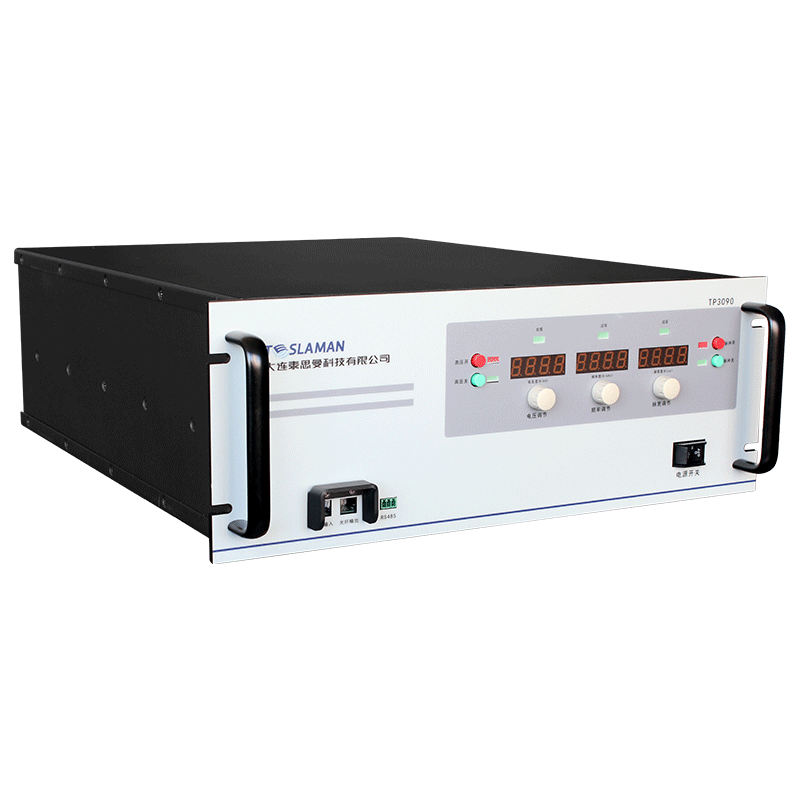
Control interface design for polarity-switchable supplies must provide clear indication of current polarity status and straightforward selection of desired polarity. Manual control through polarity selector switches suits applications where polarity changes occur infrequently. Remote control through digital interfaces enables automated polarity selection as part of process recipes. Status indicators showing active polarity, voltage level, and operational status support operator monitoring of coating processes. Control interface design affects operational efficiency.
Safety considerations for polarity-switchable supplies must address potential hazards specific to polarity reversal operations. Operators must clearly understand the active polarity and resulting electric field orientation before approaching the coating area. Interlock systems should prevent polarity changes during coating operations where unexpected field reversal could affect process quality or personnel safety. Grounding and discharge provisions must account for stored energy in both polarity states. Safety design protects personnel and processes.
Application-specific optimization of polarity switching parameters improves coating results for particular materials and substrates. Process development determines optimal polarity, switching frequency, and transition characteristics for specific coating requirements. Power supply flexibility in adjusting these parameters enables fine-tuning that optimizes coating quality and deposition efficiency. Documentation of optimized parameters supports process reproducibility across production shifts and facility locations. Parameter optimization improves process performance.
Maintenance considerations for polarity-switchable supplies include inspection of switching components subjected to the electrical stress of frequent polarity transitions. Contact life in electromechanical switching devices limits the number of switching cycles before replacement. Semiconductor switches in electronic polarity reversal circuits may degrade with accumulated stress from transient conditions during switching. Condition monitoring approaches identify developing problems before they cause failures that interrupt production. Maintenance planning ensures reliable operation.
The expanding applications of electrostatic coating technology continue to drive requirements for more capable polarity-switchable power supplies. Higher switching speeds, improved stability, and enhanced reliability all benefit coating processes that leverage polarity flexibility. Power supply designs optimized for these applications deliver the performance that enables advanced electrostatic coating processes across diverse industrial applications. Continued development of polarity-switchable technology enables advancing coating capabilities. The automotive industry increasingly adopts electrostatic coating processes for improved finish quality and environmental compliance, creating demand for versatile power supplies. Manufacturers of consumer products similarly benefit from the efficiency improvements that electrostatic coating provides when supported by appropriately configured high voltage power supplies. The combination of environmental benefits, improved finish quality, and material cost savings drives continued growth in electrostatic coating applications worldwide.