Standard Rack-Mount High Voltage Power Supply Module Expansion in Distributed Systems
Distributed high voltage power architectures have emerged as essential infrastructure for large-scale scientific facilities, industrial processes, and research installations requiring multiple high voltage sources coordinated across significant physical distances. Standard rack-mount high voltage power supply modules provide the building blocks for these distributed systems, enabling scalable expansion and simplified maintenance while maintaining the precision and reliability required for demanding applications.
The concept of distributed high voltage power systems addresses the challenges of delivering precise high voltage to multiple load locations while minimizing transmission losses and electromagnetic interference. Centralized high voltage generation requires long cable runs that introduce parasitic capacitance, inductance, and resistance. Distributed architectures place power generation close to each load, reducing transmission distances and enabling optimized power delivery to each location.
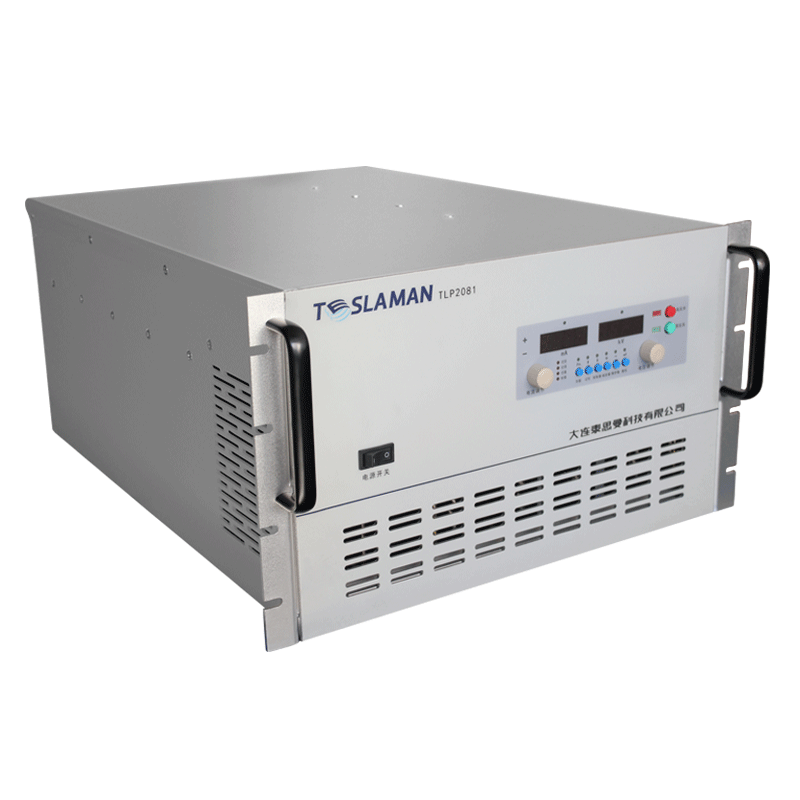
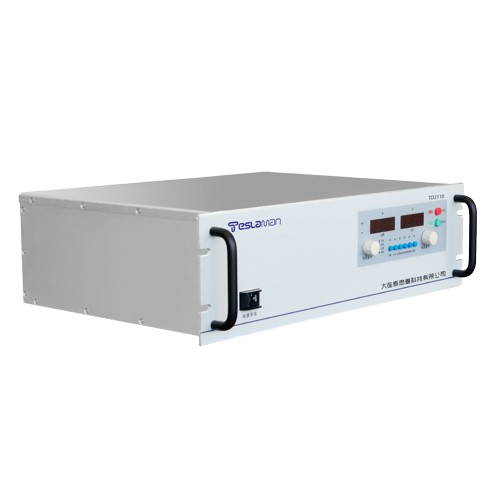
Standard rack-mount form factors enable straightforward integration into existing facility infrastructure including standard equipment racks, cooling systems, and cable management systems. The 19-inch rack standard provides a universal mounting configuration compatible with facilities worldwide. Rack-mount high voltage modules typically occupy 1U to 3U of vertical space, enabling dense packing of multiple modules within a single equipment rack.
Modular expansion capability allows system capacity to grow incrementally as requirements evolve. Additional rack-mount modules can be installed as new high voltage loads are added to the system. This scalability avoids the upfront investment in oversized centralized systems and enables matching of power supply capacity to actual load requirements. Modular expansion also simplifies budgeting for multi-phase facility development projects.
Interconnection standards for rack-mount high voltage modules facilitate system integration and ensure compatibility between modules from different manufacturers or different generations. Standardized communication interfaces, control protocols, and power connections enable modules to be combined into coordinated systems. Common interfaces include Ethernet, RS-485, and analog control signals for different levels of integration complexity.
Control system architecture in distributed high voltage systems ranges from autonomous module operation to fully coordinated multi-module systems. Autonomous operation simplifies system design but limits the ability to optimize overall system performance. Coordinated control enables optimization across multiple modules but requires sophisticated control systems and communication infrastructure. Modern distributed systems increasingly adopt network-based control architectures enabling both autonomous operation and coordinated optimization.
Synchronization capabilities in rack-mount modules enable precise timing relationships between multiple high voltage outputs. Applications including pulsed power systems, particle accelerators, and time-of-flight instruments require synchronized operation of multiple high voltage sources. Standardized trigger inputs and outputs enable precise timing coordination across distributed modules. Synchronization accuracy determines the ultimate timing resolution achievable in the complete system.
Redundancy configurations improve system reliability by providing backup high voltage capacity in case of module failure. N+1 redundancy adds one spare module for every N active modules, enabling continued operation during module maintenance or failure. Hot-swap capabilities allow module replacement without powering down the complete system. Distributed architectures with redundant modules achieve higher overall availability than centralized systems with single high voltage sources.
Load sharing between parallel modules enables higher total current capacity than available from individual modules. Current sharing accuracy determines how equally the load distributes among parallel modules. Passive current sharing relies on module output impedance characteristics. Active current sharing uses communication between modules to optimize load distribution. High-performance distributed systems achieve load sharing accuracy better than 5 percent across the full operating range.
Thermal management in rack-mount high voltage modules must accommodate dense installation configurations where multiple modules operate in proximity. Forced-air cooling through front-to-back or side-to-side airflow paths maintains safe operating temperatures within rack installations. Thermal design must account for the complete rack configuration, not just individual module performance. Computational fluid dynamics analysis optimizes airflow patterns and cooling system sizing for specific installation configurations.
Electromagnetic compatibility in dense rack installations requires attention to both emission control and susceptibility protection. Multiple high voltage switching circuits operating in proximity can create electromagnetic interference conditions more severe than standalone module operation. Proper grounding, shielding, and filtering maintain electromagnetic compatibility in distributed rack configurations. System-level electromagnetic compatibility testing validates performance in the actual installation configuration.
Maintenance accessibility in rack-mount configurations affects system uptime and service costs. Front-panel access to controls, indicators, and connections simplifies routine operation and monitoring. Rear-panel connections may require rack access for maintenance activities. Module-level repair enables rapid restoration through replacement of failed modules, followed by repair of the failed module at a service facility. Standardized module designs ensure spare modules are available when needed.
Remote monitoring capabilities enable comprehensive supervision of distributed high voltage systems from centralized control locations. Network-based monitoring provides real-time visibility into module status, output parameters, and alarm conditions. Historical data logging supports trend analysis and predictive maintenance activities. Remote monitoring reduces the need for local operator presence and enables management of distributed systems from a single location.
Firmware standardization across module populations simplifies system management and ensures consistent behavior throughout the distributed system. Common firmware versions enable uniform feature sets and bug fixes across all modules. Centralized firmware update capabilities enable efficient deployment of new firmware versions to all modules in the system. Firmware version tracking ensures all modules remain compatible and supported.
System integration procedures for distributed high voltage systems require careful attention to grounding, shielding, and cable routing. Ground loops between distributed modules can inject noise into sensitive circuits. Shielded cables and proper grounding practices prevent interference coupling. System integration documentation guides installation activities and ensures the complete system meets performance specifications.
The economic advantages of standard rack-mount modular systems include reduced engineering effort for system design, simplified procurement through standard specifications, and lower maintenance costs through module interchangeability. System designers can specify standard modules rather than designing custom power supplies for each application. Procurement benefits from competition among multiple suppliers offering compatible modules. Maintenance activities benefit from spare module availability and simplified repair procedures.
Environmental specifications for rack-mount modules define the operating conditions under which performance is guaranteed. Temperature ranges, humidity limits, and altitude restrictions define the envelope of suitable applications. Industrial-grade modules typically offer wider environmental ranges than laboratory-grade modules. Environmental specifications must match the actual installation conditions to ensure reliable operation.
Installation procedures for rack-mount high voltage modules include safety considerations specific to high voltage equipment. Proper grounding, interlock connections, and warning labels ensure safe operation. Installation documentation guides technicians through proper procedures. Training requirements ensure that personnel understand the hazards and proper handling of high voltage equipment.
Configuration management for distributed high voltage systems ensures consistent operation across multiple modules. Configuration files define operating parameters, alarm thresholds, and control settings. Centralized configuration management enables consistent deployment across multiple systems. Version control of configuration files tracks changes and enables rollback if problems occur.