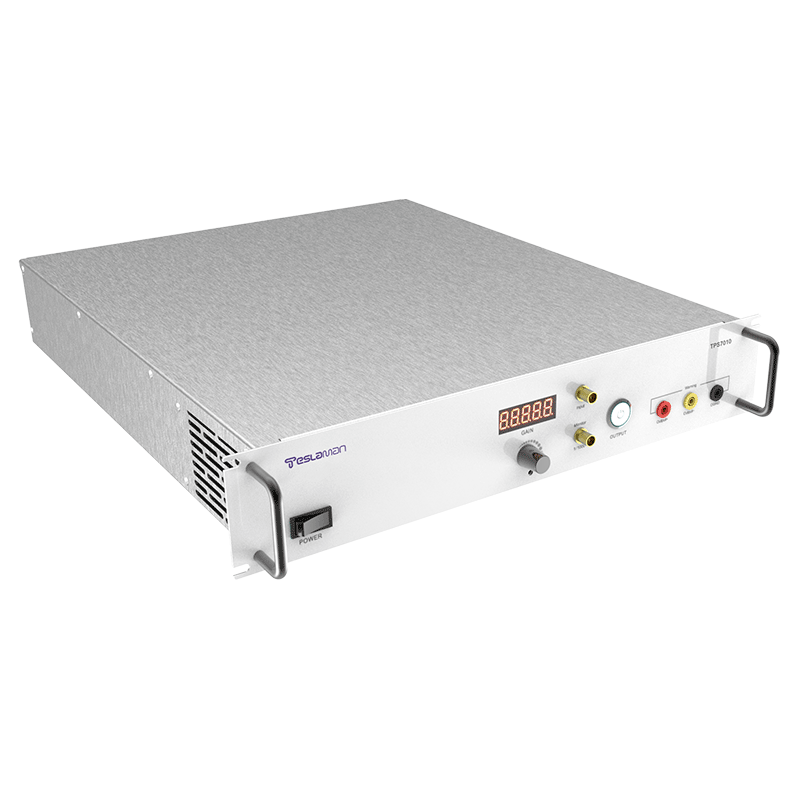
Research Neutron Source High Voltage Power Supply Stable Operation in Material Activation Analysis
Research neutron sources employing high voltage acceleration systems enable material activation analysis techniques capable of detecting and quantifying elements at trace concentrations. The high voltage power supply driving these acceleration systems determines neutron production stability, flux intensity, and ultimately analytical precision. Understanding power supply requirements specific to research neutron sources enables optimal system design for analytical applications requiring stable neutron flux over extended measurement periods. Activation analysis provides unique capabilities for non-destructive elemental analysis across diverse sample types and concentration ranges. The technique finds applications in environmental monitoring, forensic analysis, and materials characterization.
Neutron generation in research sources typically employs deuterium-deuterium or deuterium-tritium fusion reactions initiated by accelerated ion beams. Deuterium ions accelerated to energies of 50 to 300 kiloelectronvolts impinge on targets containing deuterium or tritium, producing neutrons with energies of approximately 2.5 or 14 megaelectronvolts respectively. The high voltage power supply providing acceleration potential directly determines ion energy and consequently neutron yield and energy characteristics. Neutron energy affects activation cross-sections and interference patterns in analytical measurements. The fusion reaction efficiency depends strongly on ion energy near threshold energies.
Voltage stability requirements for research neutron sources derive from the relationship between acceleration voltage and neutron yield. Neutron yield varies nonlinearly with ion energy, with yield sensitivity increasing at lower energies near reaction thresholds. Near threshold energies, voltage variations of one percent produce yield variations exceeding 10 percent, while at higher energies yield sensitivity reduces to approximately 2 percent per percent voltage variation. Most applications require voltage stability better than 0.5 percent to achieve neutron flux stability adequate for analytical measurements. Stability must be maintained across thermal variations, component aging, and input power fluctuations. Voltage stability directly affects analytical precision and accuracy.
Long-term stability extends beyond voltage regulation to encompass drift characteristics over hours of continuous operation. Activation analysis sequences often span many hours, requiring stable neutron flux throughout measurement periods. Power supply designs for research neutron sources achieve drift below 0.1 percent per hour, enabling continuous operation for eight hours or more without recalibration. This stability requires careful thermal management, as component temperature changes cause voltage drift through multiple mechanisms. Drift performance determines the maximum analytical sequence duration without recalibration interruptions. Long-term stability enables extended measurements for trace element analysis.
Current capability requirements depend on ion source characteristics and desired neutron yield. Research neutron sources typically operate with beam currents ranging from tens of microamperes to several milliamperes. Higher beam currents increase neutron yield proportionally but also increase target heating and erosion rates. Power supplies must deliver the required current while maintaining voltage regulation, typically necessitating output impedances below one kilohm to maintain regulation under varying beam current conditions. Current stability affects beam optics and consequently target spot characteristics. Current delivery capability must account for load variations during operation.
Ripple and noise specifications for research neutron source power supplies address effects on ion beam characteristics. High-frequency voltage ripple modulates ion energy during acceleration, causing energy spread in the accelerated beam. This energy spread affects neutron yield and energy distribution, potentially degrading analytical precision. Power supply designs achieve ripple below 0.1 percent root-mean-square to minimize beam energy spread and maintain neutron flux stability. Ripple must be minimized across all frequencies affecting beam transport. Ripple specifications derive from beam energy spread requirements for analytical precision.
Protection systems for research neutron source power supplies must address unique fault conditions. High voltage arcs within accelerator columns occur occasionally, particularly during system startup or after extended idle periods. Current limitation during arcs prevents damage to accelerator components and ion sources. Fast protection response, typically within microseconds, limits energy deposition in arcs, preventing insulator damage and target contamination. Protection systems must distinguish between normal operational transients and genuine fault conditions. Protection system design must balance equipment safety against operational continuity.
Insulation requirements for research neutron source high voltage systems exceed those of most industrial applications. Voltages exceeding 100 kilovolts demand exceptional insulation designs providing adequate creepage and clearance distances. Vacuum insulation offers advantages for highest voltage systems, though vacuum systems introduce complexity and maintenance requirements. Pressurized gas insulation using sulfur hexafluoride or similar gases provides excellent dielectric strength in more compact configurations. Insulation system design must account for both normal operating voltages and transient overvoltages during switching events. Insulation reliability directly affects system availability.
Control interfaces for research neutron sources enable precise flux adjustment and monitoring. Voltage setpoint control determines ion energy, while current measurement enables beam current monitoring. Integrating these measurements enables calculation of neutron yield based on known reaction cross-sections. Modern systems implement digital interfaces providing remote control and monitoring capability essential for radiation safety compliance. Control systems must enable safe operation while providing sufficient flexibility for optimization of analytical measurements. Control interface design affects both safety and analytical capability.
Radiation environment considerations affect power supply component selection and placement. Components located near accelerator targets experience neutron and gamma radiation potentially causing degradation. Semiconductor devices are particularly susceptible to radiation damage, with total dose limits typically ranging from tens to hundreds of kilorads. Locating sensitive electronics remote from radiation sources, behind shielding, or selecting radiation-hardened components addresses these challenges. Radiation exposure also affects insulation materials and mechanical components over equipment lifetime. Radiation effects must be considered in component selection and system design.
Maintenance procedures for research neutron source power supplies emphasize safety due to radiation environment and high voltage hazards. Formal lockout-tagout procedures prevent accidental high voltage application during maintenance activities. Radiation surveys ensure safe conditions before personnel access to shielded enclosures. Regular maintenance intervals, typically quarterly for high voltage components, prevent degradation accumulation that could cause failures during critical analytical sequences. Maintenance scheduling must coordinate with facility operations to minimize impact on analytical service availability. Maintenance procedures must satisfy both safety and reliability requirements.
Thermal management of power supplies for research neutron sources requires careful engineering. Conversion efficiencies of 90 to 95 percent leave 5 to 10 percent of input power dissipated as heat. Forced-air cooling suffices for moderate power levels, while water cooling enables compact designs for higher power installations. Cooling system reliability directly impacts overall system availability, as thermal overload shutdowns interrupt analytical sequences. Thermal design must account for limited accessibility within radiation shielding enclosures. Thermal management design affects both reliability and maintainability.