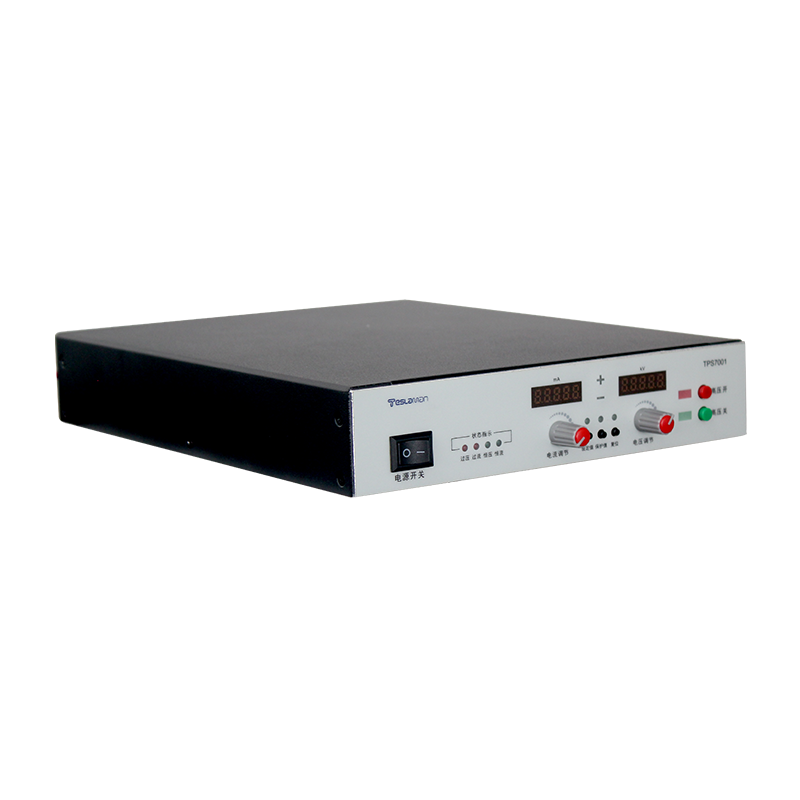
Standard Rack-Mount High Voltage Power Supply Remote Monitoring in Industrial IoT
Standard rack-mount high voltage power supplies have evolved to incorporate sophisticated remote monitoring capabilities essential for modern industrial internet of things applications. These integration features enable comprehensive process control, predictive maintenance, and quality assurance across distributed manufacturing operations. Understanding the architecture and implementation of remote monitoring systems for rack-mount high voltage power supplies supports effective deployment in industrial environments. Connected power supplies enable data-driven optimization of manufacturing processes.
Remote monitoring functionality begins with comprehensive parameter measurement within the power supply enclosure. Voltage output, current output, internal temperatures, and auxiliary status signals require conversion to digital format for transmission to monitoring systems. High-resolution analog-to-digital converters with appropriate isolation barriers digitize analog parameters while maintaining safety isolation between high voltage circuits and communication interfaces. Sampling rates and resolution specifications determine the accuracy and timeliness of monitoring data. Accurate measurement enables effective monitoring and control.
Communication interface selection depends on the industrial network architecture and integration requirements of the specific application. Ethernet interfaces provide high bandwidth and standard protocol support for complex manufacturing execution systems. Serial interfaces such as RS-485 enable simple, reliable communication over longer distances in electrically noisy environments. Fieldbus protocols integrate power supply monitoring into comprehensive process control networks without requiring dedicated monitoring infrastructure. Wireless interfaces enable monitoring in locations where wired connections are impractical or cost-prohibitive. Flexible interface options simplify system integration.
Data acquisition and transmission timing determines the latency between parameter measurement and monitoring system visibility. Real-time applications requiring immediate fault detection demand low-latency communication with continuous parameter streaming. Statistical monitoring applications may tolerate higher latency with periodic parameter reporting. Buffer management within the power supply communication controller accommodates communication delays without losing critical parameter updates. Appropriate timing parameters optimize performance for specific application requirements.
Alarm management functionality enables automatic notification when monitored parameters exceed acceptable ranges. Threshold comparison against configured limits triggers alarm states that can initiate corrective action or operator notification. Priority classification of alarms enables appropriate response prioritization for different fault severity levels. History logging of alarm events supports post-incident analysis and maintenance planning. Integration with facility alarm systems ensures appropriate escalation for critical conditions. Effective alarm management enables rapid response to abnormal conditions.
Security considerations for remote monitoring of high voltage power supplies reflect the potential consequences of unauthorized access or control. Industrial control system security standards provide frameworks for protecting monitoring communication from cyber threats. Authentication mechanisms verify that connected systems are authorized to access monitoring data. Encryption protects data transmission from interception or modification. Access control limits monitoring and configuration capabilities to authorized personnel. Robust security protects both equipment and processes from cyber threats.
Diagnostic capabilities embedded within rack-mount power supplies support predictive maintenance and troubleshooting activities. Trending of internal parameters such as capacitor charging current or transformer temperature enables prediction of component degradation before functional failure occurs. Self-test routines verify proper operation of safety interlocks and protection features without requiring external test equipment. Diagnostic data accessible through remote monitoring interfaces enables maintenance personnel to assess equipment condition and plan interventions. Predictive maintenance reduces unplanned downtime and maintenance costs.
Configuration management through remote interfaces enables parameter adjustment without physical access to the power supply front panel. Voltage and current setpoint adjustment through secured communication links supports process optimization and recipe changes. Limits and alarm threshold configuration ensures that remote adjustments remain within safe operating boundaries. Audit logging of configuration changes provides accountability and supports troubleshooting of process variations. Remote configuration capability enhances operational flexibility.
Integration with supervisory control and data acquisition systems enables power supply monitoring within comprehensive manufacturing control architectures. Standard communication protocols and data formats simplify integration with various SCADA platforms. Tag naming conventions and data structures consistent with facility standards enable incorporation of power supply data into existing displays and reports. Real-time parameter access supports automated process control algorithms that adjust power supply operation based on upstream and downstream process conditions. SCADA integration enables comprehensive process visibility.
Reliability of the monitoring system itself affects overall system dependability since monitoring failures may prevent detection of power supply malfunctions. Redundant communication paths provide backup routes when primary communication links fail. Watchdog timers detect communication failures and initiate local protective responses. Heartbeat signals enable monitoring systems to detect loss of communication with individual power supplies. Fail-safe default actions maintain safe power supply operation when communication is lost. Monitoring system reliability preserves overall system safety.
Environmental specifications for rack-mount power supplies with remote monitoring must accommodate industrial operating conditions. Temperature, humidity, vibration, and electromagnetic compatibility requirements vary with the specific application environment. Rack-mount enclosures provide physical protection and thermal management suitable for installation in industrial equipment rooms. Cooling requirements and clearances ensure reliable operation within the rack enclosure environment. Environmental hardening ensures reliable operation in industrial conditions.
Maintenance procedures for remote monitoring systems include regular verification of communication integrity and alarm functionality. Communication loopback tests verify that transmitted data reaches the monitoring system accurately and promptly. Alarm simulation tests confirm that threshold detection and notification functions operate correctly. Calibration verification of measured parameters ensures accuracy of monitoring data. Documentation of maintenance activities supports regulatory compliance and quality management system requirements. Comprehensive maintenance preserves monitoring system reliability.
The integration of automatic brightness control systems in modern night vision equipment requires coordination between the power supply and image processing electronics. The power supply must respond rapidly to control signals that adjust voltage based on scene illumination conditions. Fast settling characteristics enable smooth brightness transitions without visible artifacts. Accurate voltage control across the adjustment range ensures consistent image quality. Coordination between power supply dynamics and control algorithm parameters optimizes overall system performance.
Environmental sealing of night vision equipment housings protects sensitive components from moisture, dust, and contamination encountered in field operations. Hermetic sealing of power supply compartments prevents humidity ingress that could cause insulation degradation or electrical leakage. Desiccant materials within sealed enclosures absorb residual moisture that might penetrate during manufacturing or maintenance. Regular inspection and replacement of seals and desiccants maintains protection effectiveness throughout equipment lifetime. Environmental protection measures significantly impact equipment reliability in demanding operational environments.