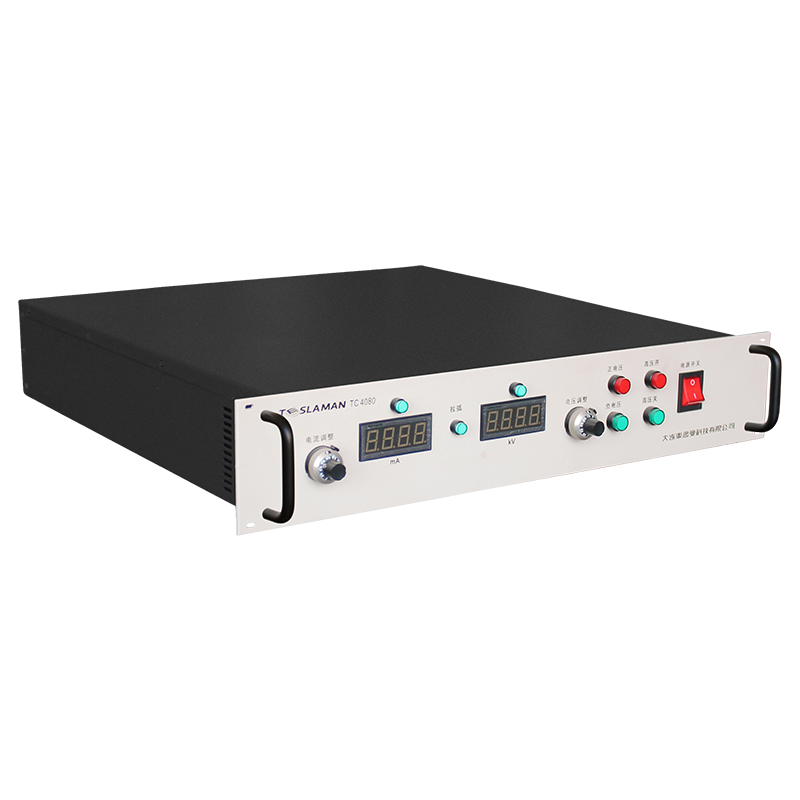
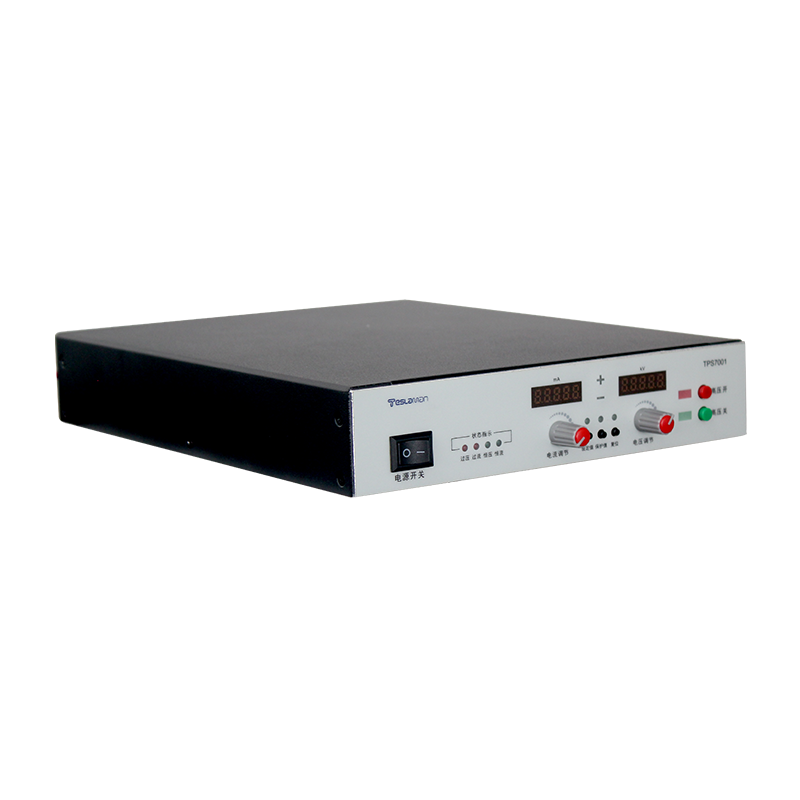
Positive-Negative Switching High Voltage Power Supply Flexibility in Laboratory Electrostatic Simulation Device
The ability to switch between positive and negative output polarity represents a significant advantage in laboratory electrostatic simulation applications. Many electrostatic phenomena exhibit polarity-dependent behavior, and the capability to investigate these effects with a single power supply greatly enhances experimental flexibility. Over decades of work with high voltage systems in university laboratories, the value of polarity switching capability has become evident across numerous research domains. The positive-negative switching high voltage power supply enables researchers to explore a wide range of electrostatic phenomena without the need for multiple dedicated power supplies.
The design of a polarity-switching high voltage power supply requires careful consideration of the output stage topology. The simplest approach uses a mechanical switch that reverses the connection of the output terminals to the high voltage source. However, mechanical switches have limited lifetime and cannot be switched under load without arcing. More sophisticated designs employ solid-state switching elements such as insulated gate bipolar transistors arranged in an H-bridge configuration. The solid-state approach enables rapid polarity reversal under full load conditions and can be controlled electronically for integration into automated experimental systems.
The control system for polarity switching must manage the transition between output polarities without causing voltage transients that could damage the experiment. The switching sequence typically involves ramping the output voltage to zero, reversing the polarity configuration, and then ramping to the new set point. The ramp rate must be controlled to prevent overshoot and to maintain the integrity of the experimental setup. The control system should also provide status indications that confirm the polarity state before the experiment is initiated.
Electrostatic simulation devices that benefit from polarity switching include particle precipitators, electrostatic separators, and electric field exposure chambers. In particle precipitation studies, the efficiency of particle collection depends on the polarity of the collection electrode relative to the particle charge. Both positive and negative corona discharges are used in different precipitation applications, and the ability to switch between them with the same power supply enables direct comparison of the two modes under identical conditions.
Electrostatic separation of materials relies on the differential charging of particles in an electric field. The polarity of the applied voltage determines which materials are attracted to each electrode. Laboratory-scale electrostatic separators used for research into recycling processes and mineral beneficiation require the flexibility to operate with either polarity. The high voltage power supply must provide stable output at both polarities to maintain consistent separation efficiency. The switching capability allows researchers to optimize the separation process for different material combinations without reconfiguring the experimental setup.
Electric field exposure chambers used for biological research require precise control of the field polarity and magnitude. The effects of electric fields on biological systems can depend on the field polarity, with some cellular processes responding differently to positive and negative fields. The polarity switching capability enables researchers to investigate these polarity-dependent effects systematically. The high voltage power supply must provide clean DC output at both polarities without AC ripple that could confuse the experimental results.
The voltage measurement system must be configured to provide accurate readings regardless of the output polarity. The voltage divider used for feedback and monitoring must be designed for bipolar operation, typically using a resistive divider with the low side referenced to ground through a precision resistor. The measurement electronics must be protected from the high voltage while providing the accuracy required for the experiment. The calibration of the measurement system should be verified at both polarities to ensure consistent accuracy.
The current measurement capability must also accommodate both polarities. The current sensing element, typically a series resistor or a Hall effect sensor, must provide accurate readings for current flowing in either direction. The signal conditioning electronics must handle the polarity reversal and provide the control system with the correct sign information. The current measurement range should be selectable to accommodate different experimental conditions, from low-current corona discharge studies to higher-current electrostatic precipitation research.
The output connector and cable arrangement must be designed for safe polarity switching. The high voltage connector should be keyed to prevent incorrect connections, and the cable should be clearly marked to indicate the polarity. The output filtering capacitors must be rated for bipolar operation, as the voltage across them reverses when the polarity is switched. The discharge resistors must be connected to ensure safe discharge of the output capacitance regardless of the polarity state.
The protection circuits in the polarity-switching power supply must function correctly for both polarities. The overcurrent protection must detect faults in either polarity and respond appropriately. The overvoltage protection must prevent the output from exceeding the safe limits for the connected experiment. The protection settings should be independently configurable for each polarity, as the experimental requirements may differ between positive and negative operation.
The stability of the output voltage after polarity switching is critical for experiments that require extended periods of stable field application. The power supply must reach the set point voltage and maintain it within the specified tolerance after the polarity transition. The settling time should be as short as possible to minimize the interruption to the experiment. The control loop parameters may need to be optimized differently for positive and negative operation due to differences in the load characteristics at each polarity.
Electromagnetic interference generated by the polarity switching process must be controlled to prevent interference with sensitive measurement equipment in the laboratory. The switching transients can generate broadband noise that couples into nearby instruments through conducted and radiated paths. The power supply design should include filtering at the output to suppress switching transients and shielding to contain radiated emissions. The switching frequency and timing should be coordinated with the experimental measurements to avoid interference during critical data acquisition periods.
The positive-negative switching high voltage power supply represents a versatile tool for laboratory electrostatic simulation that enables a wide range of experiments with a single instrument. The flexibility provided by polarity switching capability allows researchers to investigate electrostatic phenomena more efficiently and comprehensively than would be possible with fixed-polarity power supplies. The continued development of switching technology and control systems will further enhance the capabilities of these instruments for future research applications.