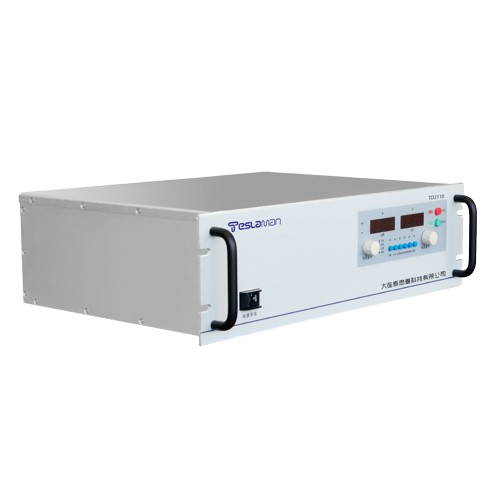
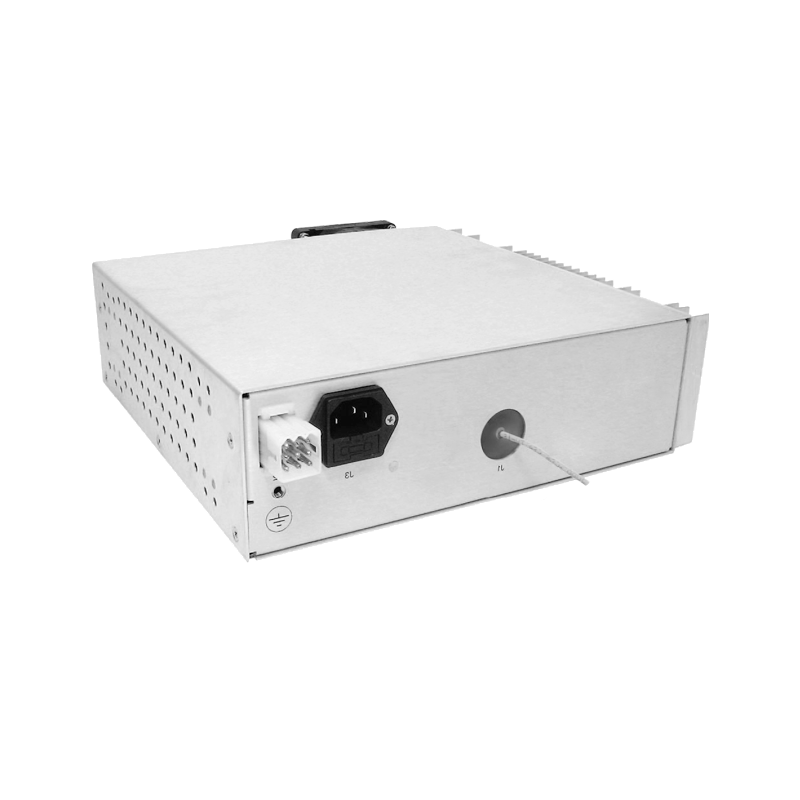
Excimer Laser High Voltage Power Supply Synchronization in Laser Annealing Equipment
Excimer lasers have become indispensable tools in semiconductor manufacturing, particularly for laser annealing applications that require precise thermal processing of thin films and device structures. The high voltage power supply that drives the excimer laser discharge must provide precisely timed, high-voltage pulses with exceptional synchronization accuracy to achieve the desired annealing results. Laser annealing offers distinct advantages over conventional thermal annealing methods, including localized heating, minimal thermal budget, and compatibility with temperature-sensitive substrates such as display glass and flexible polymer materials.
An excimer laser generates ultraviolet light through the electrical excitation of a mixture of rare gas and halogen molecules. The laser medium typically consists of xenon chloride, krypton fluoride, or argon fluoride, each producing a characteristic wavelength in the ultraviolet spectrum. The electrical discharge that excites the laser gas is initiated by a high voltage pulse applied across the laser electrodes. The high voltage power supply must deliver pulses with rise times of tens of nanoseconds, peak voltages of 20 to 40 kilovolts, and pulse energies of several hundred millijoules to achieve efficient laser operation.
The synchronization requirements for excimer laser high voltage power supplies in annealing applications are exceptionally demanding. The laser pulse must be precisely timed relative to the motion of the substrate or the scanning optics to achieve uniform annealing across the entire treatment area. Timing jitter between successive laser pulses must be maintained below a few nanoseconds to ensure consistent energy delivery to each location on the substrate. The power supply must incorporate low-jitter trigger circuits and stable timing references to achieve the required synchronization accuracy.
Pulse-to-pulse energy stability is another critical parameter for excimer laser annealing systems. The high voltage power supply must deliver consistent energy to the laser discharge for every pulse, with energy variations typically less than 1 percent from pulse to pulse. This stability requirement places stringent demands on the power supply charging circuit, the switching components, and the trigger timing. Variations in the charging voltage or the trigger timing result in changes in the laser output energy, which translates into non-uniform annealing temperature across the processed area.
The repetition rate of the excimer laser determines the throughput of the annealing system. Modern excimer laser annealing systems operate at repetition rates from a few hundred hertz to several kilohertz. The high voltage power supply must charge the storage capacitors to the operating voltage within the interval between laser pulses, which can be as short as a few hundred microseconds for high repetition rate operation. The power supply charging circuit must be capable of delivering the required charging current without excessive heating or voltage overshoot.
Two common approaches to high voltage power supply design for excimer lasers are the capacitor charging topology and the pulse-forming network topology. In the capacitor charging approach, a high voltage power supply charges a storage capacitor bank to the desired voltage, and a fast switching element such as a thyratron or a solid-state switch discharges the capacitor through the laser electrodes. The pulse-forming network approach uses a network of inductors and capacitors to shape the discharge pulse for optimal laser efficiency. Both approaches require careful design to achieve the voltage, current, and timing requirements for stable laser operation.
The switching element in the excimer laser high voltage power supply must handle the high peak currents and fast rise times required for efficient laser excitation. Thyratron switches have been used traditionally for this application, offering high peak current capability and fast switching speeds. However, solid-state switches based on insulated-gate bipolar transistors or silicon carbide metal-oxide-semiconductor field-effect transistors are increasingly replacing thyratrons in modern designs, offering longer lifetime, greater reliability, and improved pulse-to-pulse repeatability. The selection of the switching element affects the overall performance and maintenance requirements of the laser system.
Thermal management in excimer laser high voltage power supplies is essential for maintaining stable operation over extended production runs. The power supply components dissipate significant heat during high repetition rate operation, and this heat must be efficiently removed to prevent performance degradation or component failure. Liquid cooling systems are commonly used for high power excimer laser power supplies, providing effective heat removal from the switching elements, charging circuits, and pulse-forming components. The cooling system must maintain stable component temperatures to minimize thermal drift in the power supply output characteristics.
The interaction between the high voltage power supply and the laser gas mixture affects the long-term stability of the laser output. The gas mixture in the laser chamber degrades over time due to chemical reactions and contamination, requiring periodic gas replacement or regeneration. The power supply must compensate for changes in the gas mixture by adjusting the charging voltage to maintain constant laser output energy. Feedback control systems that monitor the laser output energy and adjust the power supply voltage in real time provide automatic compensation for gas degradation, extending the operating interval between gas changes.
Electromagnetic interference generated by the excimer laser high voltage power supply can affect the operation of nearby electronic equipment and the precision measurement systems used in the annealing process. The fast voltage and current transients associated with the laser discharge produce significant electromagnetic emissions across a wide frequency range. The power supply must be designed with comprehensive electromagnetic shielding and filtering to contain these emissions within acceptable limits. Proper grounding of the power supply enclosure and the laser system is essential for minimizing electromagnetic interference.
Safety systems in excimer laser high voltage power supplies must protect operators from the hazards of high voltage and ultraviolet radiation. The power supply enclosure must be interlocked to prevent access when high voltage is present. The laser system must include beam shutters and enclosure interlocks that prevent accidental exposure to the ultraviolet laser beam. The high voltage capacitors must be equipped with bleed resistors that safely discharge the stored energy when the power is removed. These safety systems must be designed to fail-safe operation, ensuring that the laser cannot fire when the safety interlocks are not satisfied.
The maintenance requirements for excimer laser high voltage power supplies include regular inspection of high voltage components, cleaning of insulating surfaces, and replacement of consumable components such as thyratrons or solid-state switches. The preventive maintenance schedule should be based on the operating hours and the pulse count accumulated by the laser system. Proper maintenance is essential for maintaining the synchronization accuracy and energy stability required for high-quality laser annealing results.
Laser annealing applications in semiconductor manufacturing require precise control of the annealing temperature and the melt depth in the processed material. The excimer laser pulse duration, typically 20 to 50 nanoseconds, is short enough to melt the surface layer of the material without significant heat diffusion into the underlying substrate. The high voltage power supply synchronization determines the timing of the laser pulse relative to the substrate position, ensuring that each area receives the correct number of pulses at the correct energy density. The annealing process parameters, including the laser fluence, the number of pulses, and the overlap between successive pulses, are optimized for each specific application.
The development of advanced excimer laser annealing systems for next-generation semiconductor devices drives the demand for high voltage power supplies with higher performance and greater reliability. The trend toward larger substrate sizes in flat panel display manufacturing and the introduction of new device architectures such as three-dimensional integrated circuits require laser annealing systems with larger processing areas and higher throughput. Correspondingly, the high voltage power supplies for these systems must deliver higher pulse energies and repetition rates while maintaining the synchronization accuracy and energy stability required for uniform annealing.
In conclusion, the high voltage power supply is a critical component in excimer laser annealing equipment, determining the timing accuracy, energy stability, and reliability of the laser output. The synchronization of the power supply pulses with the substrate handling system is essential for achieving uniform annealing results across the processed area. Advances in high voltage power supply technology continue to improve the performance and capabilities of excimer laser annealing systems, supporting the development of advanced semiconductor devices and display technologies.