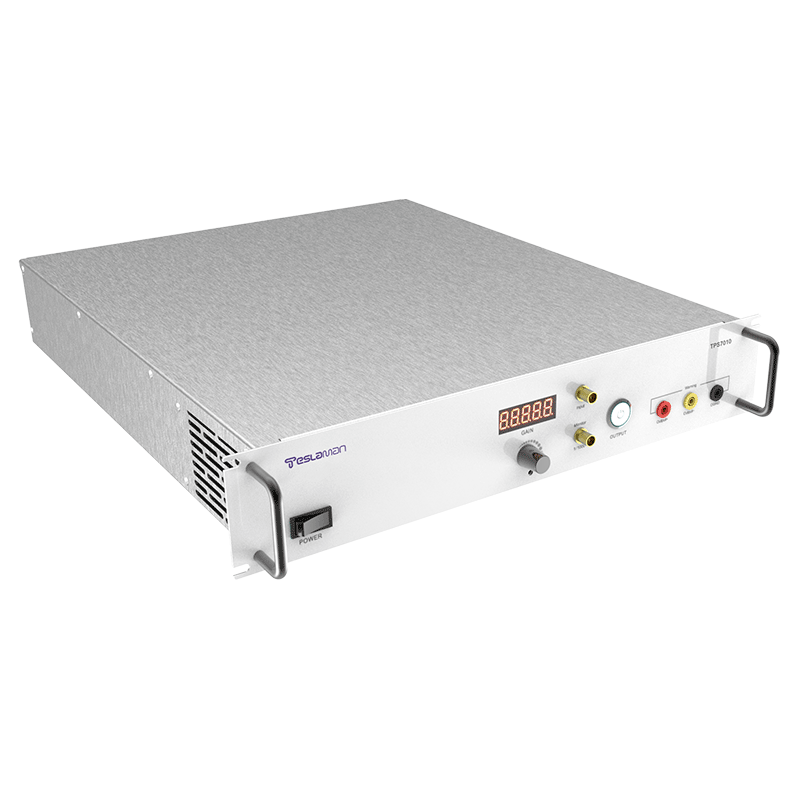
Electron Beam System High Voltage Power Supply Power Supply in Vacuum Electronic Device Manufacturing
Electron beam systems are essential tools in the manufacturing of vacuum electronic devices, providing the precise material processing capabilities required for fabricating components with critical dimensions and specifications. The high voltage power supply that drives the electron beam column must deliver exceptional stability, precision, and reliability to support the demanding requirements of vacuum electronic device manufacturing. Vacuum electronic devices including traveling wave tubes, klystrons, magnetrons, and gyrotrons require electron beam systems for various manufacturing steps such as welding, drilling, annealing, and surface treatment.
The electron beam system generates a focused beam of high energy electrons that can be precisely directed to the target location on the workpiece. The electron beam is produced by an electron gun, where electrons are emitted from a cathode and accelerated to high energy by a high voltage electric field. The high voltage power supply provides the accelerating voltage, typically ranging from 30 to 200 kilovolts for vacuum electronic device manufacturing applications. The beam current, controlled by the gun bias voltage and the cathode temperature, ranges from a few microamperes for fine machining to several milliamperes for welding applications.
The stability of the accelerating voltage is critical for maintaining the focus and the positioning accuracy of the electron beam. Variations in the accelerating voltage cause changes in the electron energy and the beam spot size, affecting the precision of the material processing operation. The high voltage power supply must maintain the accelerating voltage within plus or minus 0.01 percent of the set value to achieve the required processing accuracy. The voltage stability must be maintained over the full range of beam current and operating conditions.
The beam current stability is equally important for consistent processing results. The high voltage power supply must provide a stable beam current without drift or fluctuation over the processing duration. The current stability should be better than 0.1 percent of the set value for most manufacturing applications. The power supply control system must compensate for changes in the cathode emission characteristics and the vacuum conditions that can affect the beam current. The beam current measurement must be accurate and reliable for process monitoring and control.
The electron beam column includes focusing and deflection coils that direct the beam to the target location. The power supplies for these coils must be coordinated with the main high voltage power supply to maintain the beam alignment and focus throughout the processing operation. The focusing coil power supply must provide a stable current to the magnetic lens, with stability better than 0.01 percent to maintain the beam focus. The deflection coil power supply must provide precise positioning of the beam, with resolution better than 1 micrometer for fine machining applications.
The vacuum system in the electron beam equipment must maintain the required pressure level for electron beam generation and propagation. The high voltage power supply must be designed to operate in the vacuum environment, with the high voltage components located inside the vacuum chamber or connected through high voltage vacuum feedthroughs. The insulation of the high voltage components in vacuum must be designed to prevent vacuum breakdown, which can occur at lower voltage levels than atmospheric breakdown due to the absence of gas molecules that provide insulation.
The high voltage feedthroughs that carry the accelerating voltage and the beam current into the vacuum chamber must be designed for reliable operation under high voltage and vacuum conditions. The feedthrough insulation must withstand the operating voltage plus a safety margin, and the vacuum seal must maintain the chamber pressure over the lifetime of the equipment. Ceramic insulators with metalized sealing surfaces provide the required combination of electrical insulation and vacuum integrity. The feedthrough design must include voltage grading to prevent surface flashover.
The cooling system for the electron beam system must remove the heat generated by the electron beam interaction with the workpiece and the power dissipation in the electron gun and the beam column. The high voltage power supply components must be cooled to maintain the operating temperature within the rated limits. The cooling system must be designed to handle the heat load without introducing vibration that could affect the beam positioning accuracy. Liquid cooling systems are commonly used for high power electron beam systems, providing efficient heat removal with minimal vibration.
The control system for the electron beam manufacturing equipment must coordinate the operation of the high voltage power supply, the beam column, the workpiece positioning system, and the process monitoring system. The high voltage power supply must respond to control commands from the system controller within milliseconds, adjusting the voltage and current to meet the requirements of the manufacturing process. The process control system must monitor the beam parameters and adjust the power supply settings to maintain the process within the specified tolerances.
The safety systems in electron beam manufacturing equipment must protect operators from the hazards of high voltage, X-ray radiation, and vacuum system operation. The high voltage power supply enclosure must be interlocked to prevent access when the system is energized. The radiation shielding around the processing chamber must contain the X-rays generated by the electron beam interaction with the workpiece. The vacuum system must include interlocks that prevent the electron beam from operating when the vacuum pressure is too high for safe operation.
The maintenance of the high voltage power supply in electron beam systems includes regular inspection of the high voltage components, cleaning of the insulating surfaces, and replacement of the electron gun cathode and other consumable components. The high voltage power supply must be designed for easy access to the components that require periodic maintenance. The diagnostic features of the power supply, including voltage and current monitoring, temperature sensing, and fault logging, assist in troubleshooting and preventive maintenance planning.
The quality control in vacuum electronic device manufacturing requires precise documentation of the process parameters for each device. The high voltage power supply must provide accurate records of the voltage, current, and processing time for each manufacturing operation. The data recording system must be integrated with the manufacturing execution system to provide traceability of the process parameters for each device. The calibration of the power supply measurements must be verified regularly to ensure the accuracy of the process documentation.
The evolution of vacuum electronic devices toward higher frequencies and higher power levels drives the development of electron beam systems with higher performance capabilities. The high voltage power supplies for these advanced systems must operate at higher voltages and currents with improved stability and precision. The power supply design must address the challenges of higher voltage operation, including insulation coordination, corona suppression, and X-ray shielding. The development of advanced power supply technology supports the continued innovation in vacuum electronic device manufacturing.
In conclusion, the high voltage power supply is a critical component in electron beam systems for vacuum electronic device manufacturing, providing the stable, precisely controlled accelerating voltage required for accurate material processing. The reliability and precision of the power supply directly affect the quality and the consistency of the manufactured devices. The continued development of high voltage power supply technology supports the advancement of vacuum electronic device manufacturing and the development of new device technologies.