Electrostatic Flocking High Voltage Power Supply Voltage Optimization in Functional Coating Textiles
Electrostatic flocking is a well-established technology for applying fine fiber coatings to textile surfaces, creating materials with distinctive tactile and visual properties. The process relies on a high voltage electric field to accelerate and orient fibers as they are deposited onto a grounded substrate. The quality and performance of the flocked coating are intimately tied to the voltage parameters of the power supply, making voltage optimization a critical factor in achieving the desired functional properties. Functional coating textiles produced through electrostatic flocking find applications in automotive interiors, medical textiles, and protective clothing, where the coating must meet specific performance criteria such as abrasion resistance, moisture management, or electromagnetic shielding.
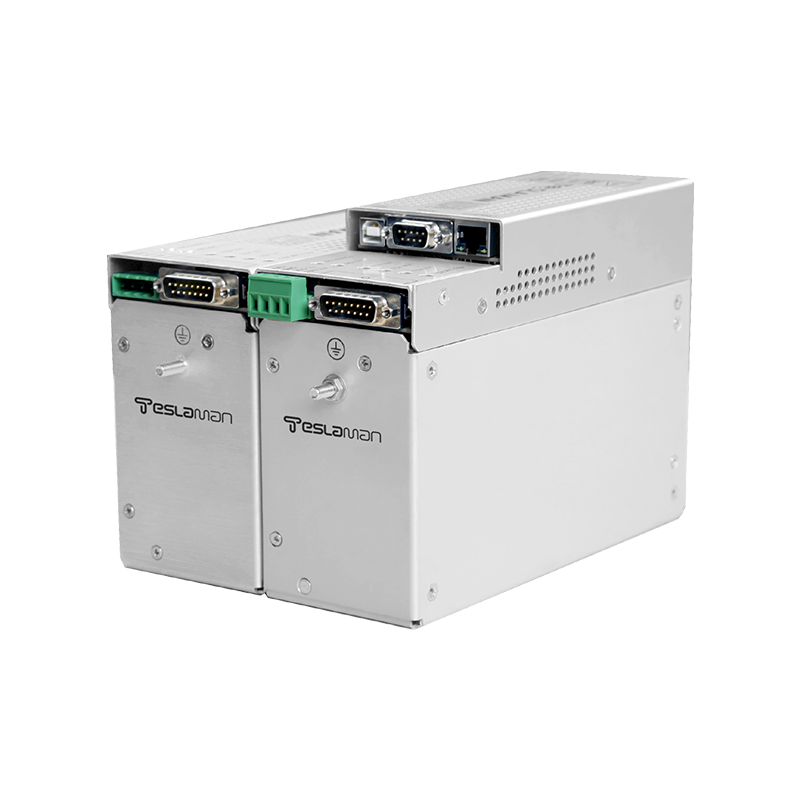
The basic electrostatic flocking setup consists of a high voltage power supply connected to a flocking head, a grounded substrate, and a fiber delivery system. The power supply generates a strong electric field, typically ranging from 50 to 150 kilovolts, between the flocking head and the substrate. When fibers are introduced into this field, they become charged and are accelerated toward the substrate, aligning themselves parallel to the field lines. The voltage magnitude determines the acceleration force on the fibers, which affects the density and orientation of the resulting coating. Higher voltages produce denser coatings with better fiber alignment, while lower voltages allow for more controlled deposition of thinner coatings. The optimal voltage depends on fiber characteristics such as diameter, length, and material, as well as the desired coating properties. For example, nylon fibers with a diameter of three deniers require voltages around 80 to 100 kilovolts for optimal deposition, while finer polyester fibers may require slightly higher voltages for adequate charging and acceleration.
Voltage optimization for functional coatings involves balancing several interrelated parameters. The electric field strength must be sufficient to charge and accelerate all fibers uniformly, but excessive voltage can cause fiber breakage or arcing between the flocking head and substrate. The power supply must provide a stable voltage output with minimal ripple to ensure consistent fiber orientation across the entire coating area. Voltage regulation better than 0.5 percent is typically required to maintain coating uniformity. Advanced power supplies incorporate variable voltage control with programmable ramping functions that allow the voltage to be adjusted during the coating process. This is particularly useful for creating gradient coatings where the density or orientation of fibers varies across the substrate surface. The ramp rate can be adjusted to produce smooth transitions in coating density, which is beneficial for aesthetic applications or for creating areas with different functional properties on the same textile substrate.
The relationship between voltage and coating structure has been extensively studied for different fiber and substrate combinations. For conductive fibers used in electromagnetic shielding textiles, higher voltages in the 100 to 150 kilovolt range are preferred to ensure dense, well-aligned fiber deposition that creates a continuous conductive layer. For absorbent fibers used in medical textiles, moderate voltages of 60 to 80 kilovolts produce coatings with optimal porosity and moisture management properties. The power supply design must accommodate these varying voltage requirements through wide-range voltage adjustment capabilities. Additionally, the power supply must handle the dynamic load created by the moving substrate, with voltage regulation maintained during continuous web speeds of up to several meters per minute. The relationship between voltage and coating quality is not linear, and the power supply must provide precise control at specific operating points to achieve the desired coating characteristics.
Process monitoring and feedback control represent advanced capabilities of modern electrostatic flocking power supplies. In-line sensors measure coating parameters such as thickness, density, and uniformity, providing real-time data to the power supply control system. The control algorithm adjusts the voltage output continuously to compensate for variations in fiber feed rate, substrate speed, or environmental conditions such as humidity that affect fiber charging characteristics. This closed-loop control ensures consistent coating quality throughout production runs. The power supply also includes data logging capabilities that record voltage parameters and corresponding coating quality metrics, providing a historical database for process optimization and quality assurance. These features enable manufacturers to produce functional coating textiles with reliably consistent performance characteristics, meeting the stringent requirements of advanced applications. The integration of machine learning algorithms into the power supply control system can further optimize voltage parameters based on historical performance data, predicting the optimal voltage for each production batch based on fiber and substrate characteristics.
The environmental conditions within the flocking chamber significantly influence the performance of the high voltage power supply and the resulting coating quality. Temperature and humidity affect the dielectric properties of the air between the flocking head and substrate, which in turn influences the electric field distribution and fiber charging efficiency. The power supply incorporates environmental sensors that monitor these conditions and adjust the voltage output to compensate for changes in air dielectric constant. The flocking chamber also includes ionizers that reduce the charge accumulation on the substrate surface, which can repel incoming charged fibers and reduce coating density. The power supply control system coordinates with the ionizer operation to maintain optimum charging conditions throughout the coating process. The management of these environmental factors is essential for achieving consistent coating quality across different production runs and seasonal variations.
The fiber pre-treatment process also interacts with the high voltage power supply performance. Fibers are typically treated with a conductive coating to improve their charging characteristics in the electric field. The effectiveness of this treatment determines the voltage required for optimal deposition, with more conductive fibers requiring lower voltages for adequate acceleration. The power supply must be calibrated for different fiber types and treatment levels, with voltage adjustment capabilities that accommodate the full range of commercially available fibers. Advanced power supplies include fiber characterization routines that measure the charging efficiency of incoming fibers and automatically adjust the output voltage to compensate. This feature reduces the need for manual recalibration when switching between different fiber types, improving production efficiency and reducing scrap material.
The safety considerations for high voltage power supplies in electrostatic flocking environments extend beyond standard electrical safety. The flocking process generates airborne fiber particles that can accumulate on the power supply components, creating potential fire hazards if they come into contact with high voltage conductors. The power supply housing incorporates sealed enclosures with filtered air intake to prevent fiber ingress while maintaining adequate cooling. The high voltage connections are enclosed in insulated conduits that prevent fiber accumulation on exposed conductors. The power supply also includes thermal sensors that monitor the temperature of critical components, initiating shutdown if temperatures exceed safe limits due to fiber accumulation or other factors. These safety features ensure that the electrostatic flocking system can operate continuously without fire risk, maintaining the safety of both personnel and equipment in the production environment.