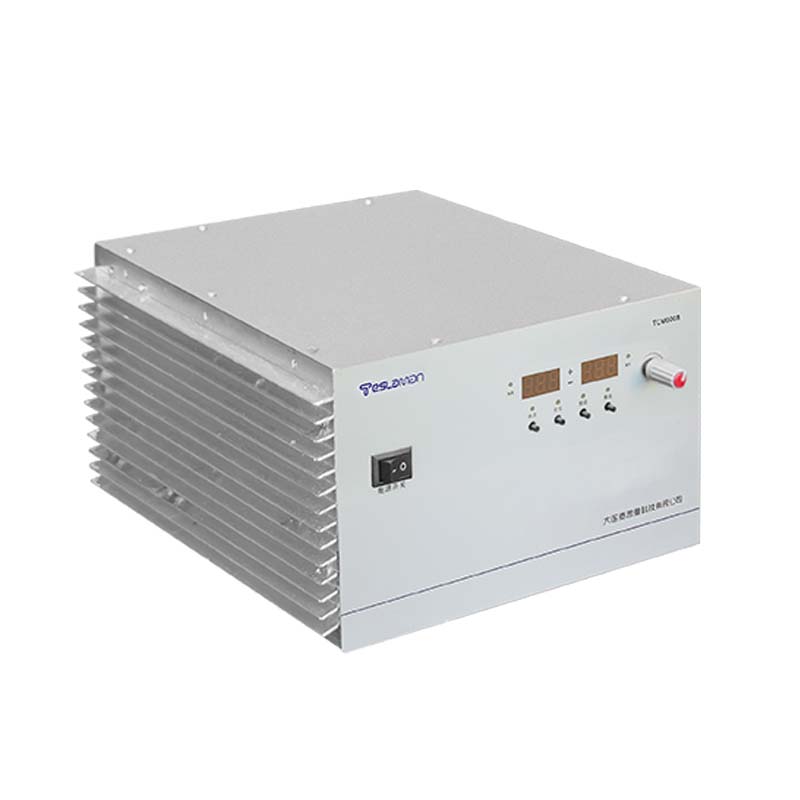
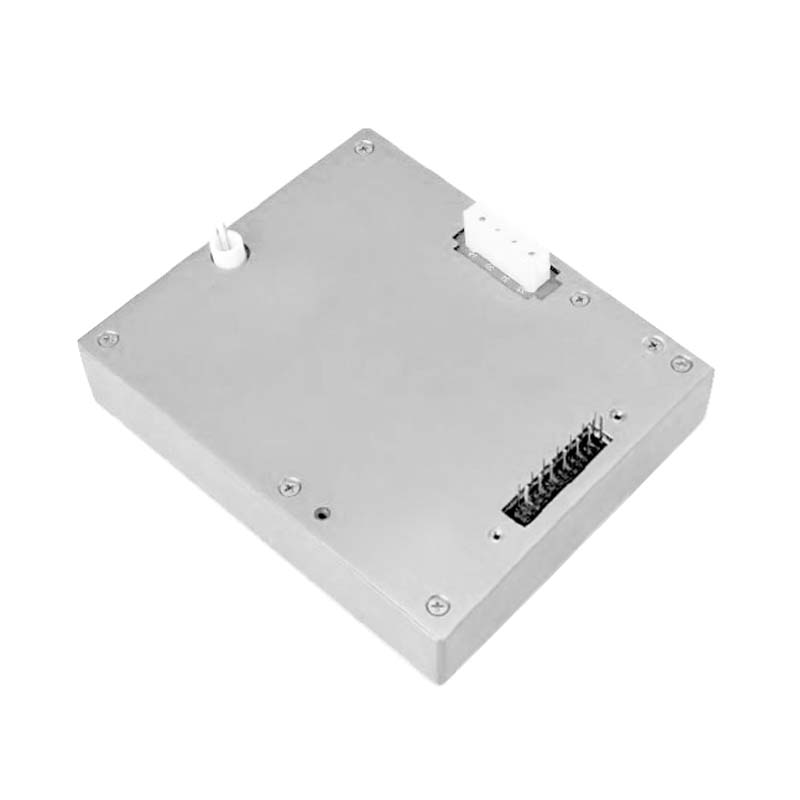
Industrial Detection High Voltage Power Supply Pulse Compression Technology
Industrial detection systems based on pulsed electroacoustic technology have become essential tools for quality inspection across a wide range of manufacturing industries. These systems use high voltage electrical pulses to generate acoustic signals within materials, which are then analyzed to detect defects such as cracks, voids, and delaminations. The core component of these systems is a high voltage power supply that generates precisely shaped voltage pulses, with pulse compression technology enabling the delivery of high peak power while maintaining manageable average power consumption. Pulse compression allows the power supply to store energy during the inter-pulse period and release it in a concentrated pulse, achieving peak powers orders of magnitude higher than the average power rating.
The principle of pulse compression in high voltage power supplies for industrial detection involves storing electrical energy in a resonant network and rapidly discharging it into the load in the form of a compressed pulse. The basic circuit topology typically consists of a charge storage capacitor, a high voltage switching element, and a pulse shaping network. During the charging phase, the capacitor is charged to the full operating voltage at a controlled rate. At the trigger signal, the switching element closes rapidly, allowing the stored energy to discharge through the pulse shaping network into the acoustic transducer. The pulse shaping network, often incorporating pulse forming lines or networks, shapes the discharge into a pulse with the desired duration and waveform. Typical pulse durations for industrial detection range from 50 nanoseconds to several microseconds, with peak voltages ranging from 1 to 20 kilovolts. The energy storage capacitor is typically a high-voltage ceramic or plastic film capacitor with low equivalent series resistance to ensure efficient energy transfer during the discharge phase.
The key challenge in pulse compression technology is achieving rapid and efficient switching of high voltages without causing damage to the switching elements or generating electromagnetic interference that could affect the detection electronics. Semiconductor switches such as insulated gate bipolar transistors and silicon carbide devices are commonly used for high voltage pulse switching, with careful attention to voltage rating, switching speed, and thermal management. The switching circuit incorporates snubber networks that suppress voltage and current transients during the switching process, protecting the semiconductor devices from excessive stress. The pulse compression circuit also addresses the impedance mismatch between the energy storage stage and the load, with impedance transformation networks ensuring maximum energy transfer to the acoustic transducer. The impedance transformation typically uses a quarter-wave transmission line or a resonant transformer that matches the storage capacitor impedance to the transducer impedance at the operating frequency.
Pulse repetition frequency and duty cycle are critical parameters that determine the detection throughput and signal-to-noise ratio of industrial detection systems. The power supply must support variable pulse repetition frequencies, typically ranging from 100 hertz to 100 kilohertz, with adjustable duty cycles from single shot to continuous operation. Higher repetition frequencies improve detection throughput for high-speed production lines, while lower frequencies allow deeper material inspection by providing longer pulse energy. The power supply control system synchronizes pulse generation with the data acquisition system, ensuring that each pulse is generated at the precise time required for signal capture. Advanced systems incorporate adaptive pulse parameter adjustment that modifies pulse duration and voltage based on the material properties being inspected, optimizing detection sensitivity for each specific application. The synchronization accuracy is maintained at the sub-nanosecond level to ensure coherent signal averaging across multiple pulses, which is essential for achieving the high signal-to-noise ratio required for reliable defect detection.
Electromagnetic compatibility represents a significant design challenge for pulsed high voltage power supplies used in industrial detection. The rapid voltage transitions during pulse generation can generate broadband electromagnetic interference that may affect nearby sensitive electronics, including the detection signal processing circuits. Several mitigation strategies are employed: the pulse compression circuit is housed in a fully shielded metal enclosure, high voltage connections use shielded coaxial cables with controlled impedance, and filter circuits attenuate high frequency noise components. The power supply also incorporates gradient electromagnetic shielding layers that provide progressive attenuation of interference at different frequencies. These measures ensure that the high voltage pulse generation does not compromise the performance of the detection system, maintaining the high signal-to-noise ratio required for reliable defect detection in industrial applications. The shielding effectiveness is typically verified through frequency domain measurements to ensure compliance with electromagnetic compatibility standards for industrial equipment.
The thermal management of pulse compression power supplies addresses the unique thermal challenges of pulsed operation. While the average power dissipation may be modest, the peak power during pulses creates localized thermal stress in the switching elements and energy storage components. The snubber circuits that suppress switching transients also dissipate energy as heat, contributing to the total thermal load. Effective heat dissipation is achieved through a combination of heat sinks with high thermal conductivity materials, forced air or liquid cooling for high-power applications, and thermal interface materials that maximize heat transfer from components to heat sinks. Temperature monitoring at critical locations provides early warning of potential thermal issues, allowing adjustment of operating parameters or scheduling of maintenance before component damage occurs. The thermal design must also account for the duty cycle of the pulse compression circuit, with higher duty cycles requiring more aggressive thermal management solutions.
The integration of the pulse compression power supply with the industrial detection system involves coordination with multiple subsystems. The acoustic transducer that converts electrical pulses to acoustic waves requires impedance matching with the power supply output for maximum energy transfer. The data acquisition system must be synchronized with the pulse generation timing to capture the acoustic response signal without aliasing. The signal processing system uses the captured acoustic signals to construct a spatial map of the material under inspection, identifying defects based on variations in acoustic impedance. The power supply control system provides precise timing signals to the data acquisition system and may also supply reference signals for signal averaging and noise reduction. This integrated operation ensures that the industrial detection system achieves optimal inspection performance with reliable defect detection across a wide range of materials and component geometries.
The performance validation of pulse compression power supplies for industrial detection involves testing with reference samples containing known defects. The detection system must demonstrate the ability to detect and accurately characterize defects of various sizes and depths, with detection thresholds meeting the requirements of specific industrial applications. The power supply pulse parameters are optimized for each application based on the material properties and defect size range. Long-term stability testing verifies that pulse characteristics are maintained over extended operating periods, with no degradation in detection performance. Environmental testing exposes the power supply to variations in temperature, humidity, and vibration that may be encountered in industrial environments, ensuring reliable operation under diverse operating conditions. These validation procedures establish the reliability and performance of the pulse compression power supply for demanding industrial detection applications.