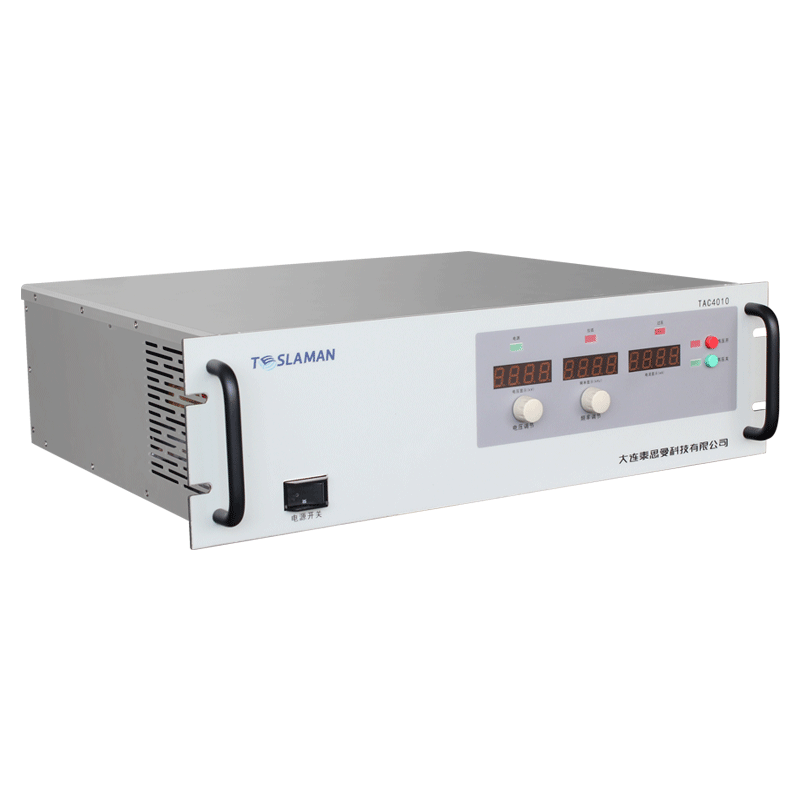
Mass Spectrometer High Voltage Power Supply High Voltage Support in Metabolomics Analysis
Mass spectrometry has evolved into a cornerstone analytical technique in metabolomics research, enabling the comprehensive identification and quantification of metabolites in biological samples. The high voltage power supply constitutes a critical component of mass spectrometer systems, providing the electrical energy required for ion generation, acceleration, and separation. The performance of the high voltage supply directly influences the sensitivity, resolution, and accuracy of metabolomics analyses, making its design and operation paramount for achieving reliable biological insights.
The mass spectrometer typically operates with several high voltage sections, each serving a distinct function in the analytical workflow. The ion source region requires high voltage for ionization of sample molecules, typically through electrospray ionization or matrix-assisted laser desorption ionization. The ion acceleration region applies high electric fields to propel ions into the mass analyzer, while the mass analyzer itself requires precise voltage control for ion separation based on mass-to-charge ratio. The detector region operates with additional high voltage for ion amplification and signal detection. Each of these sections demands independent, stable high voltage regulation to ensure optimal instrument performance.
Metabolomics analysis imposes stringent requirements on mass spectrometer performance, particularly in terms of sensitivity and dynamic range. Biological samples often contain metabolites at concentrations spanning several orders of magnitude, from trace-level signaling molecules to abundant primary metabolites. The high voltage power supply must deliver stable voltage across the full operating range of the mass spectrometer, from low voltage for gentle ionization of fragile molecules to high voltage for efficient acceleration of large biomolecules. Voltage stability better than 0.001 percent per hour is required to ensure consistent ion transmission and detection efficiency across the full mass range.
The electrospray ionization source, commonly used in metabolomics applications, operates at high voltages typically ranging from 1kV to 5kV. The voltage applied to the capillary needle creates an electric field that charges the emerging liquid droplets, leading to the formation of gas-phase ions through a process of repeated evaporation and charge separation. The high voltage power supply for the electrospray source must provide ripple-free voltage with precise control, as even minor voltage variations can affect the ionization efficiency and the charge state distribution of the generated ions. This stability is essential for achieving reproducible metabolomics data across multiple analytical runs.
The ion acceleration and focusing regions of the mass spectrometer require high voltage levels up to 20kV or higher, depending on the instrument design. In time-of-flight mass spectrometers, the acceleration voltage must be maintained at a constant level to ensure accurate mass determination, as the flight time of ions is directly related to their mass-to-charge ratio and the acceleration voltage. Any voltage fluctuation translates directly into mass measurement errors, which are unacceptable for metabolomics analysis where metabolites of similar mass must be distinguished. The high voltage supply for the acceleration region must exhibit exceptional long-term stability and low noise to enable accurate mass measurement.
Quadrupole mass analyzers used in metabolomics require precise voltage scanning capabilities. The quadrupole electrodes operate with a combination of direct current and radio frequency voltages, which must be scanned in a synchronized manner to selectively transmit ions of specific mass-to-charge ratios. The high voltage power supply generates these composite voltage waveforms with high accuracy and reproducibility, ensuring that the mass scan is linear and that the mass calibration remains stable over time. Advanced power supply designs incorporate digital waveform generation and real-time calibration to maintain mass accuracy across the full scanning range.
Tandem mass spectrometry, which is increasingly used in metabolomics for structural elucidation of metabolites, requires additional high voltage capabilities. Collision-induced dissociation involves accelerating precursor ions to high kinetic energies and colliding them with an inert gas to produce fragment ions. The collision cell operates with controlled voltage gradients that determine the collision energy and thus the fragmentation pattern. The high voltage supply for the collision cell must provide precise, adjustable voltage levels with fast switching capability to enable rapid selection of different precursor ions and collision energies during a single analytical run.
The detector system in modern mass spectrometers employs electron multiplier or microchannel plate detectors, which require high voltage for signal amplification. These detectors typically operate at voltages ranging from 1kV to 3kV, with the voltage directly affecting the gain and noise characteristics of the detector. The high voltage supply for the detector must provide ultra-low noise voltage to maximize the signal-to-noise ratio for detection of low-abundance metabolites. Additionally, the detector voltage must remain stable throughout the entire analytical run, as any voltage drift would affect the detector gain and compromise the quantitative accuracy of the analysis.
Thermal management of high voltage power supplies in mass spectrometers represents a significant engineering challenge. The various high voltage sections may have different temperature coefficients, and temperature fluctuations can induce voltage drifts that affect instrument performance. Advanced power supply designs employ temperature-stabilized reference oscillators, thermal compensation circuits, and regulated cooling systems to maintain voltage stability across varying ambient conditions. The thermal management system must also account for the heat generated by the high voltage circuitry, ensuring that component temperatures remain within their specified operating ranges throughout extended analytical runs.
Calibration and validation of the high voltage power supply are essential for maintaining the accuracy and reproducibility of metabolomics data. The mass spectrometer system incorporates calibration routines that verify voltage levels at multiple checkpoints throughout the high voltage chain, comparing actual voltage against reference values. Regular calibration against certified reference materials ensures that the mass scale remains accurate and that the detection efficiency is consistent over time. The calibration data is stored in the instrument's control system and can be accessed for quality control documentation required in metabolomics research.
Recent advancements in high voltage power supply technology have improved mass spectrometer performance for metabolomics applications. Digital control loops with faster response times enable more rapid voltage switching for scan-based experiments. Integration of machine learning algorithms with power supply diagnostics enables proactive identification of voltage drift and compensation for aging effects. Miniaturized high voltage modules have reduced the size and weight of mass spectrometer systems, facilitating the development of portable instruments for metabolomics studies outside traditional laboratory settings.
In conclusion, the high voltage power supply plays a fundamental role in mass spectrometry-based metabolomics analysis, providing the electrical infrastructure for ion generation, acceleration, separation, and detection. Its performance characteristics, including voltage stability, noise level, and scanning capability, directly influence the quality and reliability of metabolomics data. As metabolomics research continues to expand in scope and complexity, the high voltage power supply technology for mass spectrometers will remain at the forefront of analytical innovation, enabling the discovery and quantification of metabolites that advance our understanding of biological systems in health and disease.