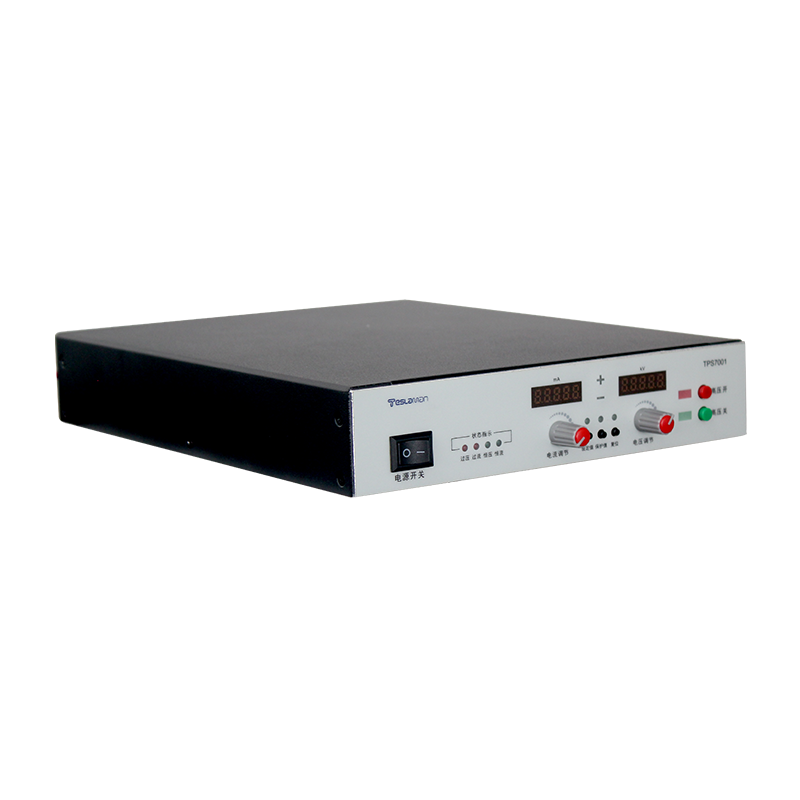
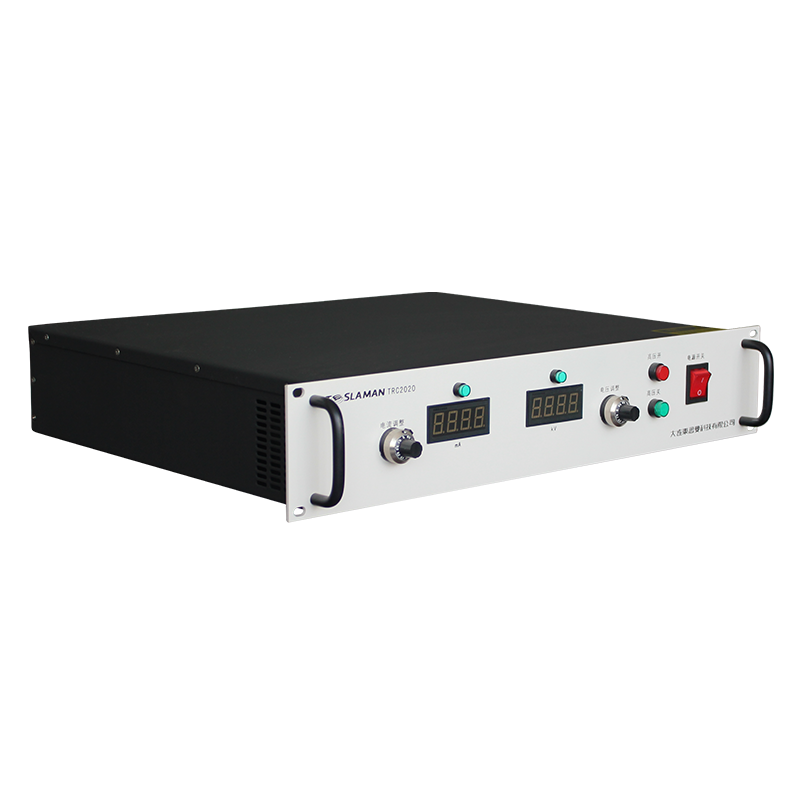
MCP Detector High Voltage Power Supply Dynamic Gain Adjustment
Microchannel plate detectors represent a class of high-performance photon and particle detectors widely used in scientific research, industrial inspection, and analytical instrumentation. The MCP detector operates by converting incoming photons or charged particles into an amplified electrical signal through a cascade of secondary electron emissions within microchannel structures. The high voltage power supply is the critical component that establishes the electric field necessary for electron multiplication, and its dynamic gain adjustment capability enables the detector to operate over a wide range of signal intensities with optimal performance.
The fundamental operation of an MCP detector involves applying a high voltage across the microchannel plate, creating an electric field that accelerates electrons through the microchannel pores. When an incoming photon or particle strikes the MCP input surface, it generates a primary electron through the photoelectric effect or secondary emission. This primary electron is accelerated by the electric field and collides with the channel wall, producing additional secondary electrons. This process repeats multiple times as the electrons travel through the microchannel, resulting in a large amplification of the initial signal. The overall gain of the MCP detector is exponentially dependent on the applied voltage, making precise voltage control essential for accurate signal detection.
The MCP high voltage power supply typically operates in the range of 1kV to 10kV, depending on the detector design and the required gain level. The voltage must be adjustable to enable gain tuning for different signal conditions. Dynamic gain adjustment refers to the ability to change the operating voltage in real-time during detector operation, allowing the detector to adapt to varying signal intensities without manual intervention. This capability is particularly important for applications where the signal level can vary over several orders of magnitude during a single measurement.
The gain of an MCP detector is characterized by the gain-voltage relationship, which follows an exponential curve. At low voltages, the gain is minimal, while at higher voltages, the gain increases rapidly. The dynamic gain adjustment system allows the power supply to operate at different points along this curve, optimizing the gain for the specific signal conditions. For weak signals, higher voltage is applied to increase the gain and improve detectability. For strong signals, lower voltage is used to prevent saturation and maintain linear response.
The dynamic gain adjustment system consists of several key components: a voltage-controlled high voltage output, a gain measurement and feedback loop, and a control algorithm that determines the optimal operating voltage based on the signal conditions. The voltage-controlled output enables rapid adjustment of the MCP operating voltage, with response times typically in the range of milliseconds. The gain measurement system monitors the actual detector gain by measuring the output signal amplitude relative to a known reference signal, providing real-time feedback for the control loop.
The control algorithm for dynamic gain adjustment can be implemented using either analog or digital techniques, with digital approaches offering greater flexibility and precision. Digital control algorithms can be programmed with gain-voltage lookup tables derived from MCP characterization data, enabling accurate gain tuning for specific detector types. More advanced algorithms incorporate adaptive control that learns the gain characteristics of individual detectors and adjusts the voltage control parameters accordingly, compensating for manufacturing variations and long-term drift.
One of the primary applications of dynamic gain adjustment in MCP detectors is in time-correlated single photon counting systems. These systems require precise gain control to maintain the linear relationship between photon arrival time and detector output signal. The dynamic gain adjustment system can compensate for gain variations caused by temperature changes, MCP aging, or voltage drift, ensuring consistent timing resolution over extended measurement periods. This is critical for applications such as fluorescence lifetime imaging and positron annihilation spectroscopy, where accurate timing measurements are essential.
In spectroscopic analysis, dynamic gain adjustment enables the MCP detector to handle the wide dynamic range of signal intensities encountered in Raman spectroscopy, photoelectron spectroscopy, and X-ray fluorescence analysis. Different spectral regions may exhibit significantly different signal intensities, and the ability to adjust the gain dynamically ensures that all spectral features are detected with optimal signal-to-noise ratio. The control system can be programmed to automatically adjust the gain as the spectrometer scans through different wavelength regions, maintaining consistent detection sensitivity across the full spectrum.
Industrial inspection applications of MCP detectors, such as in automated X-ray inspection systems, also benefit from dynamic gain adjustment. Different parts being inspected may have varying thicknesses, densities, and compositions, resulting in different X-ray transmission intensities. The dynamic gain adjustment system can adapt the detector gain based on the measured signal intensity from the current inspection area, ensuring optimal detection sensitivity for each part. This adaptability improves the reliability and accuracy of automated inspection systems in manufacturing environments.
The dynamic gain adjustment capability also extends the useful lifetime of MCP detectors. By operating at lower gain levels when signal conditions permit, the detector can experience reduced electron multiplication rates, leading to less degradation of the MCP microchannel surfaces. This extends the detector lifetime and maintains its performance characteristics over longer periods. The control algorithm can incorporate lifetime optimization strategies that balance gain requirements with detector aging considerations, recommending lower gain operation when signal conditions allow.
The high voltage power supply for MCP detectors with dynamic gain adjustment must incorporate several protective features. Over-voltage protection prevents accidental application of excessive voltage that could damage the MCP structure. Over-current protection limits the current flow through the MCP to safe levels, preventing permanent damage from excessive electron multiplication. Additionally, the power supply must include soft-start and soft-shutdown circuitry that gradually ramps up and down the voltage, avoiding sudden voltage changes that could cause electrical stress to the MCP.
Calibration of the dynamic gain adjustment system is essential for maintaining accurate detector performance. The calibration procedure involves characterizing the gain-voltage relationship for each MCP detector, measuring the gain at multiple voltage points and storing the calibration data in the power supply's memory. The calibration is performed using a reference light source or particle source with known intensity, ensuring that the gain measurements are traceable to national standards. Regular recalibration is necessary to account for MCP aging and long-term drift in the power supply's voltage regulation.
Recent advancements in high voltage power supply technology have enhanced the dynamic gain adjustment capabilities of MCP detectors. Faster voltage switching speeds enable more rapid gain adjustment, supporting applications where signal conditions change rapidly. Higher precision voltage regulation reduces gain fluctuations, improving the stability and reproducibility of detector measurements. Integration of machine learning algorithms with the gain adjustment system has enabled predictive gain optimization, where the algorithm anticipates signal changes and adjusts the gain proactively rather than reactively. These advancements have expanded the applicability of MCP detectors in demanding research and industrial settings.
In conclusion, the dynamic gain adjustment capability of the MCP detector high voltage power supply represents a critical feature that enables versatile and optimized detector performance across a wide range of applications. Its ability to adapt the detector gain to varying signal conditions ensures optimal sensitivity and linearity, extends detector lifetime, and improves measurement accuracy. As MCP detector technology continues to evolve, the dynamic gain adjustment system will remain at the forefront of innovation, supporting the development of advanced detection systems for scientific research, industrial inspection, and analytical chemistry.