Electrostatic Chuck High Voltage Power Supply Adsorption in Precision Optical Component Fixation
The manufacture and processing of precision optical components demand exceptional levels of positioning accuracy and surface quality. Optical elements such as lenses, mirrors, prisms, and optical windows must be held securely during fabrication processes including grinding, polishing, coating, and metrology, without introducing distortion or damage to the optical surfaces. Electrostatic chuck technology, powered by specialized high voltage power supplies, has emerged as a critical solution for the fixation of optical components during these precision manufacturing operations, offering significant advantages over traditional mechanical clamping methods.
An electrostatic chuck operates on the principle of electrostatic attraction between a dielectric surface and a workpiece when a voltage is applied across the chuck electrodes. The chuck consists of a flat ceramic or polymer dielectric layer with embedded electrodes that are connected to a high voltage power supply. When a voltage is applied between the electrodes and the workpiece, electrostatic charges are induced on the opposing surfaces, creating an attractive force that holds the workpiece securely in place. The electrostatic force is distributed uniformly across the contact area, providing gentle but effective holding without the localized stress concentrations associated with mechanical clamping.
There are two primary types of electrostatic chucks used in precision optical component fixation: Coulombic chucks and Johnsen-Rahbek chucks. Coulombic chucks utilize a thick dielectric layer that prevents charge transfer between the electrodes and the workpiece, resulting in purely electrostatic attraction. These chucks provide faster release times and are suitable for applications where residual charge retention is a concern. Johnsen-Rahbek chucks employ a dielectric layer with finite conductivity, allowing a small leakage current to flow. This creates an additional attractive force through the Johnsen-Rahbek effect, which can provide higher holding forces at lower applied voltages.
High voltage power supplies for electrostatic chuck applications must deliver precisely controlled voltages, typically in the range of 1 to 10 kilovolts, with extremely low ripple and noise. The voltage stability directly affects the uniformity of the electrostatic holding force, and any variations in the applied voltage can result in microscopic movements of the optical component during processing, degrading the final surface quality. State-of-the-art power supplies for these applications achieve voltage regulation better than 0.01 percent, ensuring that the holding force remains constant throughout the manufacturing process.
The bipolar nature of electrostatic chuck power supplies is an important feature for precision optical applications. By providing both positive and negative voltage outputs, bipolar power supplies allow for the creation of alternating electrode patterns on the chuck surface, which can improve the uniformity of the electrostatic field and reduce the risk of charge buildup on the optical component. The ability to rapidly switch between voltage polarities also facilitates the release of the optical component after processing, as residual charges can be neutralized by applying opposite polarity voltages.
Current monitoring and limiting capabilities are essential features of electrostatic chuck power supplies. While the chuck operates as a capacitive load during normal operation, the initial application of voltage results in a charging current that must be properly managed. The power supply must be capable of delivering sufficient current to charge the chuck capacitance within a reasonable time while limiting the current to prevent damage to the optical component or the chuck itself. Current limiting also provides protection in the event of a dielectric breakdown or short circuit within the chuck.
The design of electrostatic chuck power supplies for precision optical applications must address the unique requirements of the manufacturing environment. Cleanroom compatibility is often essential, as optical component fabrication frequently takes place in controlled environments where contamination must be minimized. The power supply must be designed to generate minimal particulate contamination, with sealed enclosures and filtered cooling systems that prevent the introduction of particles into the cleanroom environment.
Safety systems for electrostatic chuck power supplies are designed to protect both operators and sensitive optical components. Interlock systems monitor the chuck status and automatically remove high voltage when the chuck door is opened or when the system is not in active use. The power supply must include rapid discharge circuits that can safely dissipate the stored energy in the chuck capacitance when the voltage is removed, preventing the risk of electric shock and ensuring that the optical component can be safely released from the chuck.
Arc detection and protection is a critical feature for electrostatic chuck power supplies used in precision optical applications. Electrical breakdown can occur across the chuck surface or through the dielectric layer under certain conditions, particularly when processing conductive optical materials or when the chuck surface has become contaminated. The power supply must be capable of detecting the onset of arcing and rapidly reducing the output voltage to prevent damage to the optical component and the chuck. Advanced arc detection circuits can identify arc events within microseconds and initiate protective action before significant energy is delivered to the arc.
The temperature stability of the electrostatic chuck and its associated power supply is important for precision optical applications. Temperature variations can cause thermal expansion of the chuck and the optical component, leading to positioning errors and potential distortion of the optical surfaces. The power supply must maintain stable operation over a range of ambient temperatures, and the chuck design must incorporate thermal management features to minimize temperature gradients across the chuck surface. Some advanced systems incorporate temperature sensors and feedback control to actively compensate for thermal effects.
Vacuum compatibility is a common requirement for electrostatic chucks used in optical coating and thin film deposition processes. These processes take place in vacuum chambers, and the chuck and its associated electrical connections must be designed to operate reliably under vacuum conditions. The high voltage power supply must be located outside the vacuum chamber, with vacuum feedthroughs providing the electrical connection to the chuck electrodes. The feedthroughs must be designed to maintain vacuum integrity while withstanding the high voltage applied to the chuck.
The control interface for electrostatic chuck power supplies in precision optical applications must provide comprehensive monitoring and programming capabilities. Digital control interfaces allow for precise setting of the output voltage, current limits, and timing parameters. Real-time monitoring of voltage, current, and power provides feedback on the chuck status and can be used to detect potential issues before they affect the manufacturing process. Data logging capabilities enable tracking of chuck performance over time, supporting preventive maintenance and process optimization.
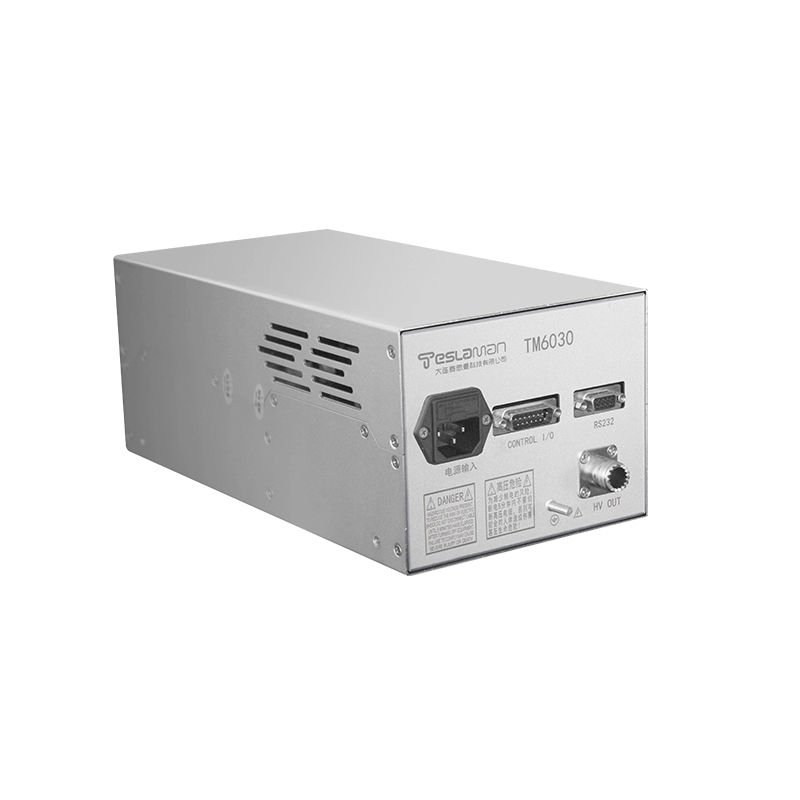
Integration with the overall manufacturing system is facilitated by communication protocols such as Ethernet, RS-232, or GPIB. The power supply can be programmed and monitored from the central system controller, allowing for automated operation and coordination with other process steps. The ability to store and recall multiple operating parameter sets enables rapid changeover between different optical component types and process requirements.
Ramping and sequencing functions are important features for electrostatic chuck power supplies in precision optical applications. The voltage can be gradually increased and decreased according to programmed profiles, allowing for controlled application and removal of the holding force. This is particularly important for fragile optical components or for processes where sudden changes in holding force could cause displacement or damage. Multi-step sequences can be programmed to coordinate the chuck operation with other process steps, such as applying a specific voltage profile during the coating process.
The selection of dielectric materials for electrostatic chucks used in precision optical applications is critical to performance. The dielectric must have high dielectric strength to withstand the applied voltage, low leakage current to minimize power consumption, and excellent surface finish to provide intimate contact with the optical component. Materials such as aluminum oxide, aluminum nitride, and various polymer composites are commonly used, with the choice depending on the specific requirements of the application including temperature range, chemical compatibility, and surface finish requirements.
Maintenance requirements for electrostatic chuck systems include periodic inspection of the chuck surface for damage or contamination, verification of the insulation resistance, and calibration of the power supply output. The chuck surface may require periodic cleaning to remove residues that can accumulate during processing, and the dielectric layer may eventually require replacement if it becomes damaged or degraded. Proper maintenance procedures help ensure consistent performance and extend the service life of the chuck system.
In conclusion, electrostatic chuck high voltage power supplies play a vital role in the precision manufacturing of optical components, providing the controlled electrostatic forces necessary for secure, distortion-free fixation during processing. The demanding requirements for voltage stability, current control, safety, and integration with manufacturing systems drive continuous advancement in power supply technology. As optical components continue to find applications in increasingly demanding systems, the importance of reliable, high-performance electrostatic chuck power supplies will continue to grow.