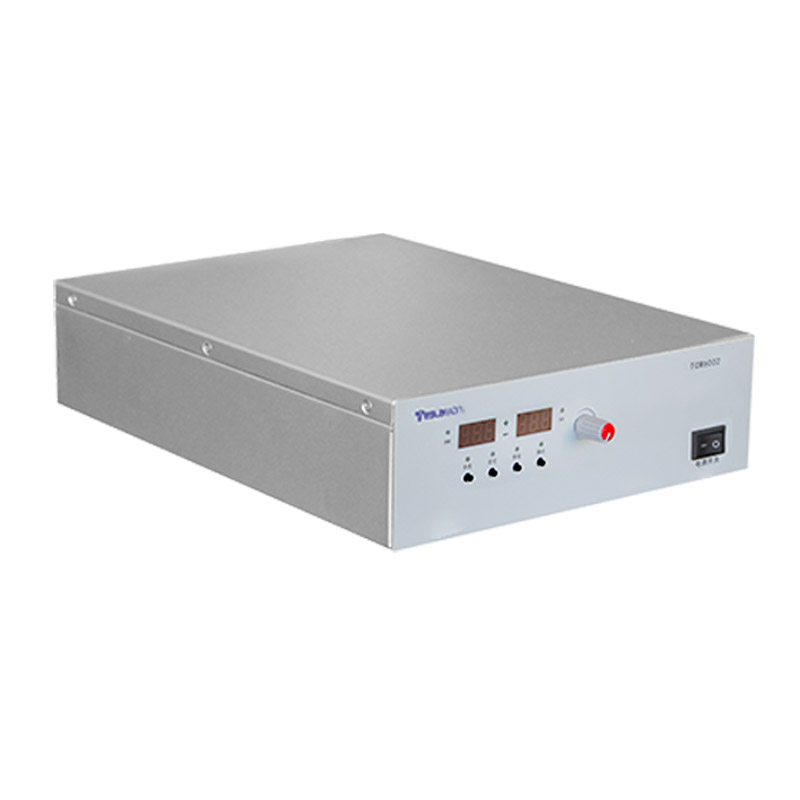
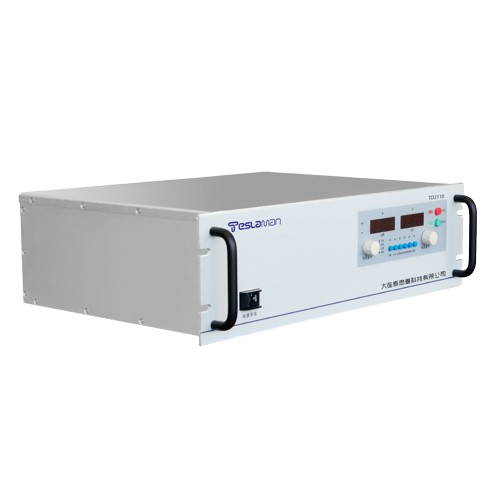
High voltage power supply for atomic layer deposition assisted etch processing
The application of High voltage power supply for atomic layer deposition assisted etch processing shows that high voltage power systems are not simply converters of electrical energy but precision control interfaces that sustain stable operation under demanding load conditions. In modern industrial equipment, the power stage must deliver repeatable voltage and current behavior while remaining compatible with thermal drift, insulation stress, electromagnetic interference, and sudden process disturbances. When output ripple, transient dropout, or field imbalance develops, process quality drops quickly. This is why the real function of the power unit is to create a reliable operating environment rather than only providing a high voltage level.
A well designed architecture begins with input conditioning and ends with closed loop protection and monitoring. The front end filters grid distortion, stabilizes the incoming power, and reduces switching harmonics before the energy is delivered to the high voltage section. The conversion stage then raises the voltage using a carefully arranged transfer path that preserves efficiency, minimizes thermal dissipation, and maintains isolation margins. After this, the output network reduces residual ripple and smooths the delivered waveform so the process load sees a stable electric field. In practice, stable performance depends on the interaction among component tolerances, parasitic capacitance, layout geometry, and thermal distribution rather than on any single part alone.
Control is the decisive factor behind dependable operation. Precision measurement channels monitor output voltage, current, and temperature, then send the information into a regulation loop that compares actual values with the target setpoint. The controller then adjusts switching timing, compensation coefficients, current limiting thresholds, and protection margins to eliminate drift and suppress transient error. In repetitive or high speed manufacturing tasks, a slow response can create overshoot, undershoot, or field distortion that directly affects yield and uniformity. The core objective is therefore not only to maintain voltage but also to preserve waveform consistency and process repeatability under varying operating conditions.
Output quality is especially important in detection, treatment, and material handling systems because the power stage often defines the process window itself. Even if the final device still operates after a moderate drift, the measurement sensitivity, thermal behavior, and product consistency may degrade. A stable electric field produces predictable particle motion, uniform coating, reliable detection threshold, and repeatable treatment depth. In this sense, high voltage stability is not a secondary parameter. It is one of the primary conditions that allows precision hardware to remain productive, consistent, and safe over long service periods.
Protection and diagnostics are essential parts of any mature high voltage solution. Overvoltage, undervoltage, overcurrent, short circuit, insulation aging, and thermal escalation all create hazardous operating states. A robust system includes fast hardware shutdown, software current limiting, fault tracking, and remote condition monitoring, which help isolate abnormal events before they evolve into severe equipment damage. This is critical in continuous production, where even small undetected fluctuations can lead to cumulative losses in throughput, calibration stability, and product quality. An effective protection scheme is therefore not just a safety feature but a direct contributor to operational continuity.
Electromagnetic compatibility also shapes system performance. Switching edges, stray coupling, and sensing loops can generate unwanted noise that disturbs control channels or measurement circuits. If grounding, shielding, and routing are not optimized, the power system may begin to influence its own measurement references and degrade process repeatability. Careful separation of high current paths, low noise measurement routing, segmented filtering, and disciplined grounding all reduce interference and improve overall device integrity. These measures matter most when the process depends on precise field control, low ripple, and stable energy delivery.
From a system level perspective, High voltage power supply for atomic layer deposition assisted etch processing demonstrates how the power supply becomes part of the production mechanism itself. It sets the range of usable process conditions, determines how consistently the equipment can run over extended duty cycles, and influences maintenance planning as well as long term efficiency. Stable output supports better product uniformity, reduced corrective intervention, and more reliable operation across large batches. As power electronics, control algorithms, and insulation technologies continue to improve, future systems will become more compact, more responsive, and better matched to the demands of advanced industrial and scientific applications.