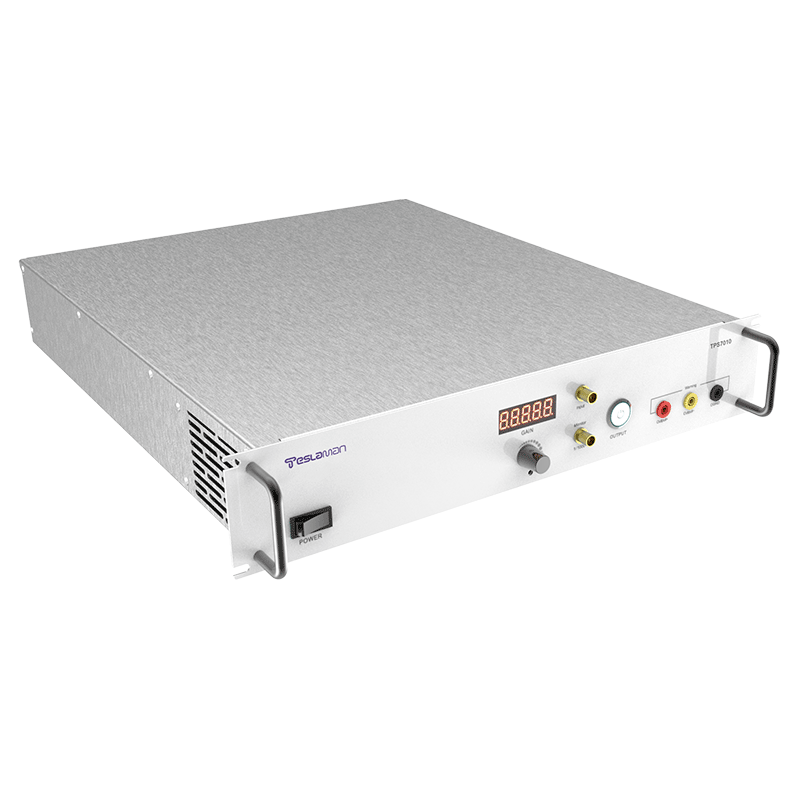
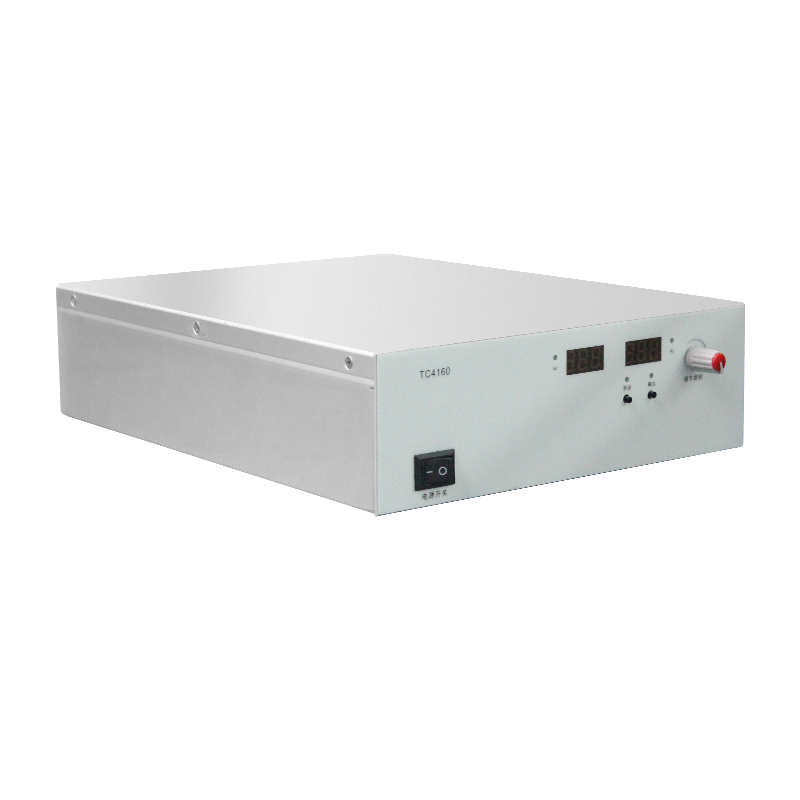
Electrostatic Chuck High-Voltage Power Supply in Optical Lens Assembly
The assembly of precision optical systems requires the stable positioning of lens elements during bonding and alignment processes. Electrostatic chucks provide a method of holding optical components without mechanical clamping, eliminating the distortion and contamination associated with physical contact fixtures. The high-voltage power supply that drives the electrostatic chuck determines the holding force, the stability of the clamp and the safety of the assembly process. The application of electrostatic holding in optical assembly demands careful consideration of force control and material compatibility.
Electrostatic chucking operates on the principle of electrostatic attraction between a charged electrode and the workpiece. When a high voltage is applied between the chuck electrode and the conductive or dielectric workpiece, opposite charges accumulate on the two surfaces, generating an attractive force. The magnitude of this force depends on the applied voltage, the dielectric properties of the materials and the separation between the surfaces. For optical lens elements, the holding force must be sufficient to maintain position during assembly operations without being so large as to distort the optical surface.
The design of the chuck electrode geometry influences the distribution of the holding force across the lens surface. A uniform force distribution prevents localized stress that could deform the optical element. The electrode pattern must be engineered to provide consistent clamping while accommodating variations in lens diameter and curvature. The high-voltage supply must deliver a stable voltage to the electrode pattern, maintaining the force distribution throughout the assembly operation.
The control of the applied voltage determines the holding force and the rate of change of the force. A gradual voltage ramp allows the lens to seat gently on the chuck, avoiding the impact and positional error that would result from a sudden application of force. The release of the lens requires the controlled removal of the charge, with careful management to prevent residual charge from causing sticking or position errors. The power supply must provide precise voltage programming to execute these controlled sequences.
The dielectric properties of the lens material affect the performance of the electrostatic chuck. Optical glasses and crystals exhibit different dielectric constants and volume resistivities, which influence the charging and discharging behavior. Materials with low conductivity require longer times to establish full holding force and may retain residual charge after the voltage is removed. The power supply and process sequence must be adapted to the material characteristics of the specific lens elements being assembled.
Temperature stability is important in optical assembly, since thermal expansion affects the dimensions and optical performance of the assembled system. The power dissipation in the chuck and the lens must be minimized to avoid temperature changes during the holding process. The high-voltage supply contributes to temperature stability through low power consumption and efficient operation. The charging currents and leakage currents must be controlled to prevent localized heating of the optical element.
Precision alignment in optical assembly demands that the position of the lens remain stable while bonding material cures. The holding force must remain constant over the curing period, which may extend for hours. The power supply must provide stable long-term output with minimal drift, ensuring that the lens position does not shift during the process. Monitoring of the voltage and current provides an indication of the chuck state and allows detection of any abnormal conditions.
The safety of personnel working with electrostatic chucks requires careful design of the high-voltage system. The voltages used for chucking are significant and present a risk of electric shock. The supply must incorporate interlocks that prevent voltage application when the chuck is exposed, and the stored charge must be safely discharged when the equipment is idle. Clear indication of the energized state and proper grounding procedures protect operators during loading and unloading of lenses.
The integration of the chuck power supply with the assembly equipment control system enables automated process control. The controller commands the voltage sequence for clamping, holding and releasing the lens, coordinating with the alignment and bonding mechanisms. Status signals from the power supply inform the controller of the chuck state, enabling proper sequencing of the assembly operations. The communication interface must provide reliable and timely exchange of commands and data.
The cleanliness requirements of optical assembly environments place constraints on the chuck and power supply design. Particulate contamination can degrade optical performance, so the chuck surface must not shed particles and the power supply must not generate contamination in the cleanroom environment. Sealed enclosures and filtered airflow protect the components, and the materials used in construction must be compatible with cleanroom standards. The power supply should operate quietly and generate minimal electromagnetic interference.
The calibration of the electrostatic chuck system ensures consistent holding performance. The relationship between the applied voltage and the resulting holding force must be characterized for the specific lens types being assembled. Calibration data allow the control system to set the voltage for a target holding force, compensating for variations in lens materials and chuck condition. Regular verification maintains the accuracy of the process over time.
The application of electrostatic chucks in optical assembly continues to expand as optical systems become more complex and precise. Multi-element lens assemblies, precision spacers and optical modules all benefit from the clean and distortion-free holding provided by electrostatic clamping. Advances in power supply technology, including more precise voltage control and improved safety features, support the development of more sophisticated assembly processes. The reliable and stable holding provided by the electrostatic chuck remains an essential element of high-precision optical manufacturing.
The validation of the electrostatic chucking process involves the measurement of the holding force and the positional stability of the lens during simulated assembly operations. These measurements verify that the chuck provides the required force for the specific lens types and process conditions. The validation data support the definition of the operating parameters and the specification of the process limits. Regular revalidation ensures that the process continues to meet the requirements as the equipment ages and the materials change. The systematic validation of the chucking process contributes to the overall quality assurance of the optical assembly operation.