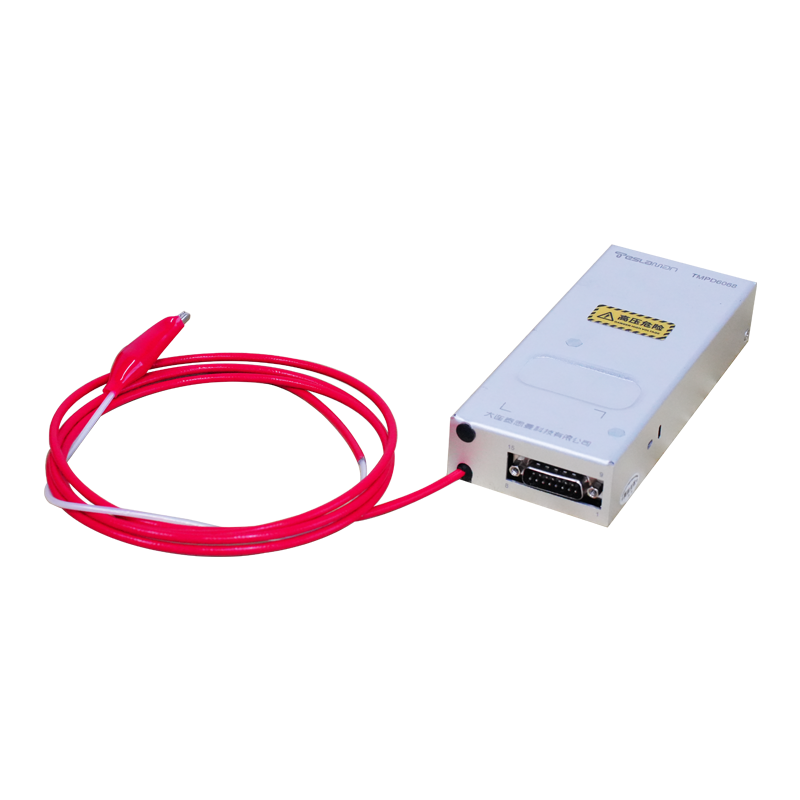
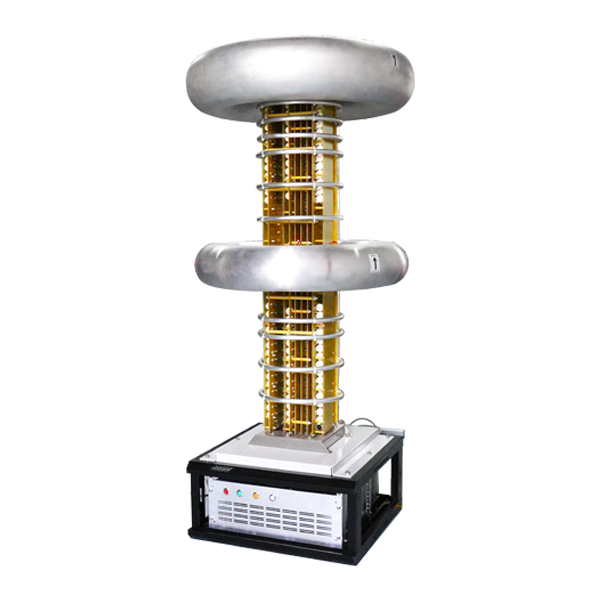
Electrospinning High-Voltage Supply for Smart Textile Sensing Fibers
Electrospinning high-voltage supply for smart textile sensing fibers controls the electric field that draws polymer solutions into continuous nanoscale filaments. Sensing fibers require consistent diameter, uniform dopant distribution, and reproducible electrical properties across long production runs. The high-voltage supply defines the spinning stability, the fiber morphology, and ultimately the sensor response. Requirements combine the precision of laboratory electrospinning with the throughput of industrial textile manufacturing.
The electrospinning process depends on the equilibrium between surface tension and electrostatic repulsion at the droplet tip. When the applied voltage exceeds the threshold, a Taylor cone forms and a charged jet is ejected. The jet accelerates toward the collector, elongating and thinning through electrostatic forces. The supply determines whether this process runs steadily or transitions into dripping, and the threshold voltage varies with solution properties.
Smart textile fibers are often produced from polymer blends loaded with conductive fillers such as carbon nanotubes, graphene, or conductive polymers. The presence of fillers changes the solution conductivity and dielectric constant, which shifts the optimal spinning voltage. The supply must offer a wide voltage range and fine adjustment steps so that the operating point can be matched to each formulation.
Fiber diameter directly influences sensor sensitivity and mechanical flexibility. Diameter is governed by the balance between flow rate and electric field strength. Higher field strength produces thinner fibers, but excessive voltage causes jet instability and bead formation. The supply must hold the output voltage steady enough that diameter variation remains within the tolerance required for reproducible sensor characteristics.
Alignment of fibers on the collector is essential for many sensing architectures. Parallel fiber arrays respond to strain in a defined direction, and crossed arrays provide two-axis sensing. The collector field configuration, including rotating drum speed and auxiliary electrode potentials, interacts with the main spinning voltage. The supply provides the auxiliary bias potentials that guide fiber deposition.
Doping uniformity along the fiber length determines sensor consistency. Local voltage fluctuation changes the evaporation rate of the solvent and the migration of dopants within the jet. A stable supply minimizes compositional variation, ensuring that each segment of the fiber exhibits the same sensing properties. This uniformity is critical for strain gauges and temperature sensors that rely on resistance changes.
Scale-up from laboratory to production requires multiple spinning nozzles operating simultaneously. Each nozzle must experience the same field strength to produce identical fibers. The high-voltage supply for multi-nozzle systems must maintain a uniform potential across the nozzle array while allowing independent flow control at each position.
Continuous production introduces long operating times and the associated requirement for thermal stability. The supply output must not drift as internal temperature rises during hours of operation. Temperature-compensated references and controlled cooling maintain the voltage set point, preserving fiber quality from the first meter to the last.
Ambient conditions in textile plants vary more than in laboratories. Humidity affects the charge dissipation on the fiber surface and the solvent evaporation rate. The supply should support process monitoring that detects the onset of instability, allowing the operator to adjust voltage before fiber quality degrades.
Encapsulation of sensing fibers into fabrics introduces downstream processing that must not damage the embedded sensors. Weaving, knitting, and lamination subject the fibers to mechanical stress. The electrospinning parameters, including the applied voltage, influence fiber crystallinity and strength, which determine survival through these processes.
Many smart textile sensors operate on capacitive or resistive principles. The baseline resistance of the fiber network is set during spinning by the filler loading and the fiber morphology. The high-voltage supply contributes to a repeatable baseline by ensuring that the spinning process produces fibers with consistent cross-section and filler distribution.
Health monitoring garments require sensors that survive repeated washing and flexing. Fiber-to-electrode junctions are failure-prone points, and the spinning process can be arranged to create graded interfaces. The high-voltage control during co-spinning of sheath-core structures determines the integrity of these interfaces.
The jet path between nozzle and collector can be stabilized by a secondary electric field. Guard electrodes supplied with lower voltages confine the jet and reduce whipping amplitude. The main supply and the guard supplies must be synchronized so that the field configuration remains stable during production.
Data acquisition from sensing textiles depends on the electrical continuity of the fiber network. Breaks or thin sections created by spinning instabilities produce high-resistance points that degrade the sensor signal. Stable electrospinning conditions, enabled by precise supply control, minimize these defects and improve the reliability of the finished garment.
Production monitoring can use the electrical parameters of the spinning process themselves. The current drawn by the jet correlates with the process state, and the supply can record this current continuously. Analysis of the current trace reveals nozzle blockages, solution depletion, or voltage drift before fiber quality is visibly affected.
The economics of smart textile production favor processes with high yield and low waste. Electrospinning is sensitive to operating conditions, and off-specification fiber cannot be economically recycled into the same product. A high-voltage supply that maintains the process within the stable operating window reduces waste and improves the yield of usable sensing fiber.
Wearable applications demand electrical safety even at low power levels. The spinning supply operates at kilovolt potentials, and the production equipment must include interlocks and discharge paths that protect operators. The supply design includes current-limiting behavior that prevents sustained arcs during fiber breakage or nozzle contact.
Standardization of sensing fiber properties supports integration into commercial textile products. Manufacturers need fibers with specified resistance ranges, gauge factors, and temperature coefficients. The electrospinning process, stabilized by the high-voltage supply, provides the repeatability that makes such specifications achievable.
Research into novel sensing materials continues to expand the design space. Biodegradable polymers, ionic liquids, and piezoelectric additives each require specific spinning conditions. The supply must accommodate new formulations quickly through a broad operating range and programmable voltage profiles.
The integration of electrospinning with other textile processes points toward inline production, where fiber spinning, yarn formation, and fabric construction occur in one continuous line. Inline operation demands that the supply run reliably for extended periods without intervention and respond to automatic adjustments from the line controller.
In summary, the electrospinning high-voltage supply for smart textile sensing fibers must combine wide range, fine resolution, long-term stability, and multi-nozzle uniformity. The supply determines fiber diameter, dopant distribution, alignment, and process yield, all of which directly shape the sensing performance of the finished textile. A supply engineered for industrial electrospinning enables reproducible production of sensing fibers that meet the demands of wearable health monitoring, environmental sensing, and intelligent garments.