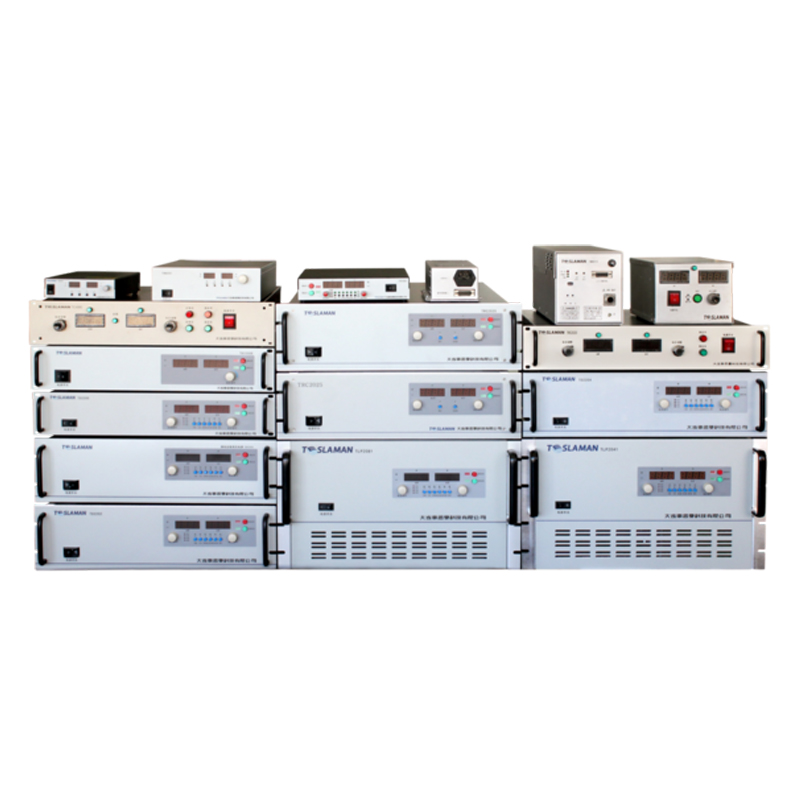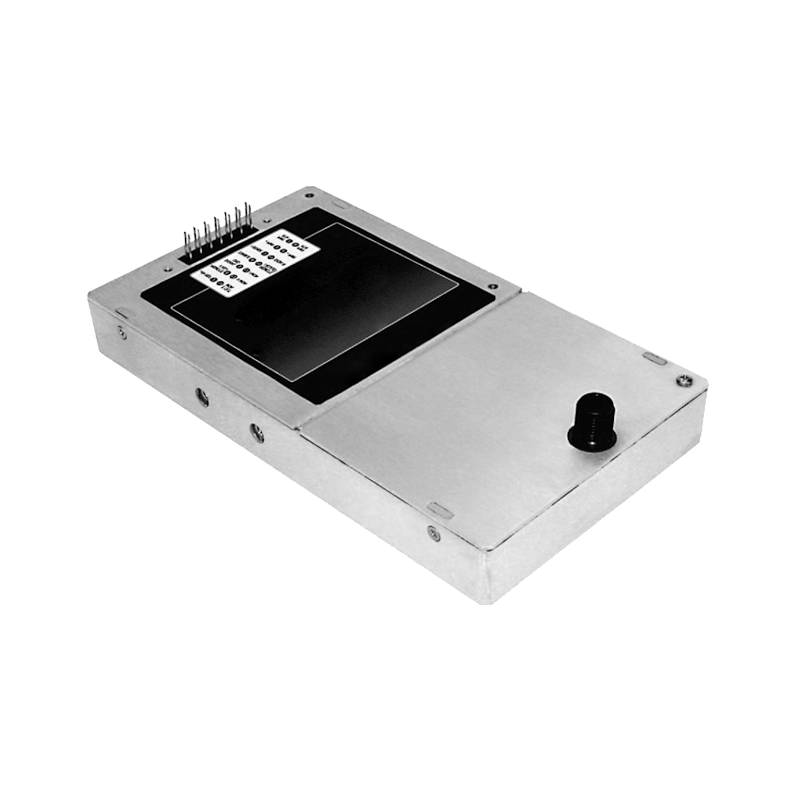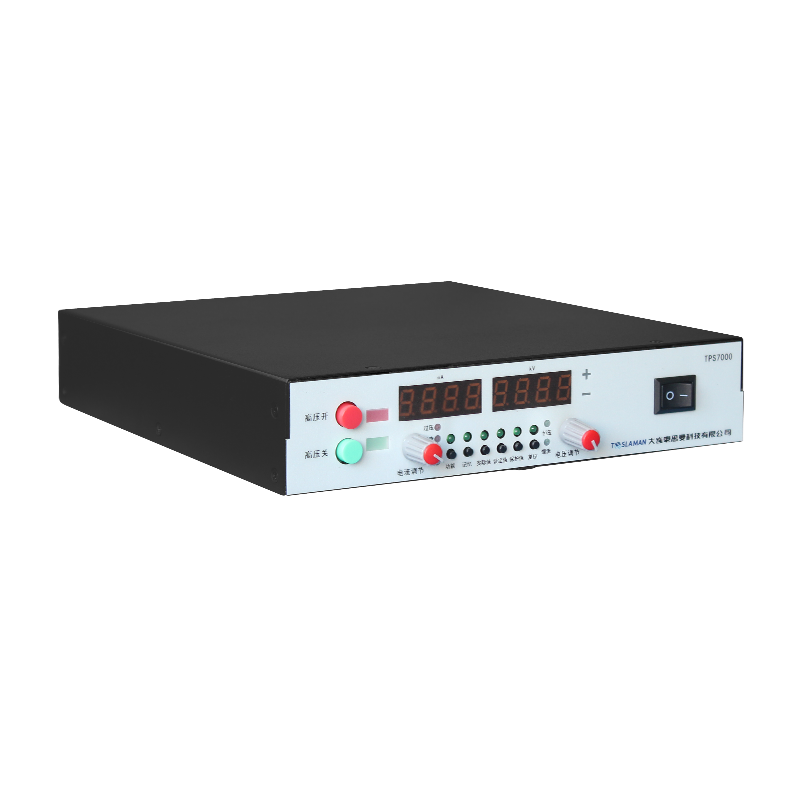













High Voltage of Mass Spectrometer High-Voltage Power Supply in Metabolomics and Food Safety Authenticity
The high voltage of a mass spectrometer supply in metabolomics and food safety authenticity keeps the ion source repeatable for the sample batch. The measurement depends on the stable ionization, so the supply holds the source voltage and the calibration is verified by the reference standard.
The source voltage stability sets the ionization efficiency. The voltage is held by the loop, the drift is bounded, and the signal intensity is repeatable.
The low ripple keeps the mass resolution. The filter and the shield reduce the interference, the mass axis is stable, and the peak position is consistent.
The scanning and the source are synchronized. The voltage ramp follows the scan, the mass range is covered, and the measurement window is accurate.
The calibration covers the full range. The reference standard is measured, the deviation is corrected, and the traceability is archived.
The protection covers the source faults. The overvoltage and the overcurrent are handled, the source is protected, and the recovery follows the defined sequence.
The process verification uses the reference measurement. The peak position and the intensity are compared with the standard, and the source voltage is adjusted from the result.
Field maintenance focuses on the high-voltage chain and the source state. The calibration is verified periodically, and the anomaly is located from the record.
The channel consistency of the multi-channel system is guaranteed by the calibration. The gain and the offset of each channel are calibrated separately, and the residual deviation is recorded.
The timing synchronization of the channels uses the trigger signal. The sampling follows the same trigger edge, and the sampling moment difference is kept inside the allowed window.
The isolation design of the multi-channel system is not skipped. The ground potential differs between the channels, the loop current appears without the isolation, and the loop disturbs the sampling and the output.
The pulse measurement requires the dedicated probe. The common meter cannot read the pulse peak, the probe with the narrow bandwidth cuts the rising edge, and the measured result is distorted.
The capacitance of the energy storage capacitor is measured by the charge method. The constant current charges and the time is recorded, the capacity is calculated accurately, and the method is more reliable than the voltage reading.
The charge current and the charge time are a trade-off. The large current refills fast but stresses the grid, and the compromise follows the field supply capacity.
The magnetic loss is measured by the power meter. The difference between the input power and the output power is the loss, and the meter accuracy decides the loss judgment.
The saturation of the core is observed from the current waveform. The obvious distortion of the current waveform indicates the approaching saturation, and the waveform monitoring is more direct than the theoretical estimate.
The winding arrangement of the high-frequency transformer decides the distributed capacitance. The small layer distance gives the large capacitance, and the trade-off between the insulation distance and the capacitance follows the application.
The leakage compensation of the transformer balances the efficiency. The over-compensation adds the loss, the under-compensation distorts the waveform, and the value is tuned from the waveform measurement.
The insulation test of the transformer follows the standard flow. The withstand test and the insulation resistance test are done separately, the conditions differ, and the mixed result is not reliable.
The input current waveform of the PFC is observed on the oscilloscope. The high distortion gives the large harmonic, and the measured waveform guides the parameter adjustment.
The resonance point of the input filter avoids the working frequency. The filter resonance amplifies the specific frequency interference, and the resonance frequency is designed outside the switching frequency.
The efficiency curve of the wide input range has the valley. The efficiency drops when the input deviates from the nominal value, and the full-range evaluation is weighted by the actual voltage distribution.
The transition of the constant-voltage constant-current switch is smooth. The overshoot of the voltage and the current during the switch damages the load, and the switch logic is verified on the oscilloscope.
The long-term output accuracy relies on the periodic calibration. The reference drift is the main cause of the accuracy drop, and the calibration interval matches the drift rate.
The micro-current measurement demands the shielding and the insulation. The leakage and the space interference affect the reading, and the insulation and the shield of the path are handled first.
The temperature drift of the current sense resistor affects the accuracy. The large current heats the resistor, the resistance drifts, and the compensation or the low-drift selection follows.
The resolution of the high-precision setting conflicts with the noise. The high resolution gives the visible step noise, and the stepping method and the filter are matched.
The load line characteristic is decided by the output impedance. The high impedance gives the poor load regulation, the low impedance affects the stability, and the value follows the load type.
The transient control of the mode switch uses the ramp. The sudden change of the output parameter causes the overshoot, the ramp or the rate limit is added, and the transient is controlled.
The abnormal record during the test has the same value. The phenomenon, the action and the recovery are recorded, and the abnormal record is the material for the design improvement.
The first power-on check follows the fixed order. The wiring is checked before the power, the low voltage before the high voltage, the no-load before the loaded, and the reversed order causes the accident.
The parameter change during the field debug is kept. The content, the reason and the effect of the change are recorded, and the rollback and the trace are supported.
The re-test after the transport is not skipped. The vibration loosens the fastener and shifts the component, and the re-test items match the factory acceptance.
The long-running equipment gets the periodic inspection. The temperature, the noise, the vibration and the drift are recorded, the trend is built, and the anomaly is found early.
The test fixture life is managed. The worn fixture shifts the test result, the fixture is replaced by the count or the period, and the calibration verifies the state.
The environment condition during the test is recorded. The temperature and the humidity affect the insulation and the accuracy result, and the condition is written into the report.