









High-voltage chain of accelerator high-voltage supplies in medical electron accelerators and research synchrotron radiation sources
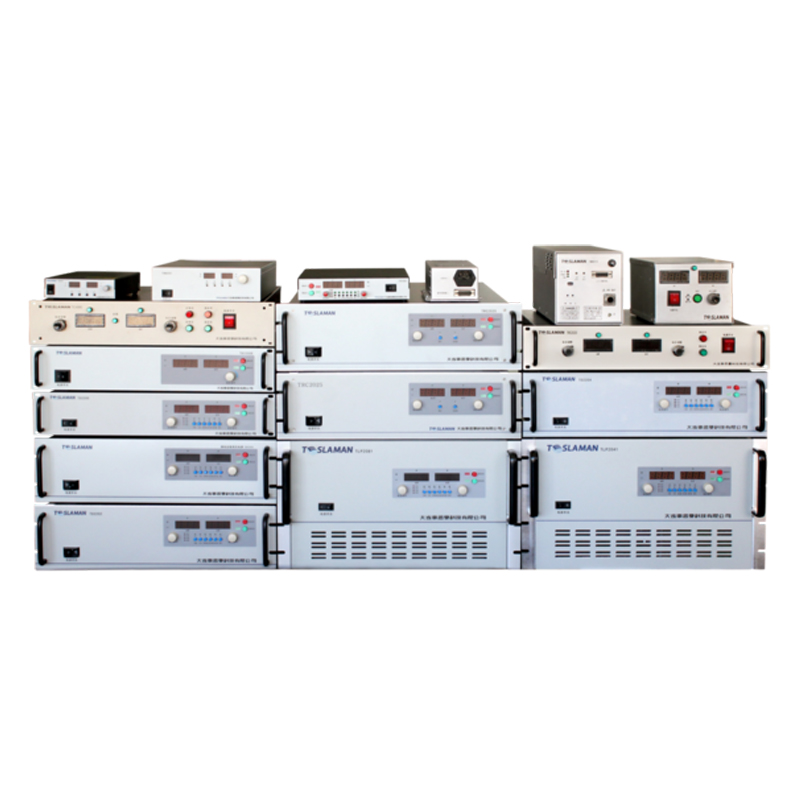
The high-voltage chain of a medical electron linac delivers 6 MV electron beams for radiation therapy. The supply generates 120 kV DC, at 5 kW, for the electron gun and the accelerating waveguide. The chain consists of a 400 V three-phase input, a step-up transformer, a 12-pulse rectifier, and a voltage multiplier chain that brings the output to 120 kV. The chain is mounted inside the linac gantry, rotating around the patient couch. The gantry rotation is continuous, and the high-voltage cable passes through a slip ring at the gantry axis.
The electron gun is a triode type, with a tungsten filament heated to 2200 degrees. The filament power supply is a 10 V, 50 A unit, isolated from the high-voltage chain by a 150 kV transformer. The grid bias is set at negative 200 V, to control the beam current. The beam current is held at 100 mA during the 4 microsecond pulse, at a repetition rate of 200 Hz. The pulse modulation is done by a pulse forming network, charged to 20 kV and discharged through the gun grid.
The accelerating waveguide is a standing wave type, 1.2 m long, powered by a magnetron. The magnetron generates 3 MW of microwave power at 2998 MHz. The magnetron high-voltage supply is a separate unit, delivering 40 kV at 20 A peak, pulse modulated. The magnetron filament is heated to 1800 degrees, and the filament life is 1000 hours. The magnetron output power is monitored by a directional coupler, and the signal feeds back to the high-voltage supply to hold the output at 3 MW.
The high-voltage chain output ripple must stay below 0.1 percent, to avoid beam energy spread. The 12-pulse rectifier produces a ripple at 600 Hz, with a peak to peak amplitude of 1 kV. A 10 μF filter capacitor reduces the ripple to 120 V peak to peak, equivalent to 0.1 percent at 120 kV. The filter capacitor is an oil-filled type, rated for 150 kV and 10 μF. The capacitor once failed short, and the 120 kV output dropped to zero. The linac went offline for 8 hours, while the capacitor was replaced.
The gantry slip ring transmits the high-voltage power and the control signals across the rotating interface. The slip ring has 24 channels, rated for 150 kV and 5 A. The contact material is silver graphite, and the contact resistance is 5 mΩ. The slip ring brushes wear 0.1 mm per 1000 hours of rotation, and the brushes are replaced preventively at 5000 hours. The slip ring once developed a bad contact, and the high-voltage output dropped intermittently. The drop caused beam energy instability, and the patient treatment was interrupted. The brushes were replaced, and the output stabilized.
The linac control room houses the operator console, the treatment planning workstation, and the high-voltage chain control cabinet. The console has a patient display, a beam status monitor, and an emergency stop button. The control room is shielded with lead, 2 mm thick, and the radiation level outside the room is below 0.1 μSv per hour. The control room window is lead glass, 18 mm thick, with a camera feed from the treatment room.
The treatment room has a concrete maze, 2 m thick, to attenuate the scattered radiation. The room has a door interlock, and opening the door stops the beam. The door is a lead-lined steel door, 100 mm thick, with a lead glass window. The room floor is epoxy coated, and the couch moves in three axes, controlled by the treatment planning system. The room has a camera and an intercom, for communication between the patient and the operator.
The safety interlocks were tested during commissioning. The door interlock trips the beam within 20 ms, and the high-voltage chain drops to zero within 100 ms. The emergency stop button also trips the beam, and the response time is the same. The radiation monitor in the treatment room triggers an alarm when the dose rate exceeds 10 μSv per hour, and the alarm routes to the control room. The interlocks are tested monthly, and the test record is filed in the medical physics department.
The maintenance log lists routine tasks. Each shift, the medical physicist records the beam energy, dose rate, and high-voltage chain status. Weekly, the service engineer inspects the slip ring brushes and the cable jackets. Monthly, the insulation resistance is measured with a 2500 V megohmmeter, and the reading should exceed 1000 MΩ. Quarterly, the divider is calibrated against a 0.1 percent standard. Annually, the accelerator is calibrated by the medical physics department, and the beam energy is verified with a water phantom.
The input side of the high-voltage chain draws 400 V three phase at 30 A. A 200 kVA isolation transformer sits between the plant bus and the chain, to isolate the gantry ground from the plant ground. The isolation transformer has a 2500 V insulation rating between primary and secondary. The input cable is copper, 25 mm², rated for 80 A, routed through the gantry cable chain. The input breaker is a 100 A molded case type, with electronic trip set to 1.05 times rated current long delay. The input power factor is 0.95, measured with a power analyzer during commissioning.
The high-voltage transformer inside the gantry is oil insulated, with a 30 L oil volume. The oil temperature reaches 45 degrees after 8 hours of continuous operation at 120 kV and 5 kW, against an ambient of 25 degrees. The silica gel breather on the transformer tank changes color after 12 months, and the gel is replaced before the color reaches half saturation. The oil breakdown voltage is tested annually, and the last measurement showed 42 kV per 2.5 mm gap, well above the 25 kV replacement threshold. The transformer sound level is 50 dB at 1 m, measured with a sound level meter during commissioning.
The output divider is a series chain of 100 MΩ high-voltage glass glaze resistors, totaling 2 GΩ. The divider tap at 1:2000 feeds the control board ADC. The divider is calibrated quarterly against a 0.1 percent standard divider. The calibration drift over 12 months was 0.3 percent, equivalent to 360 V at 120 kV. The drift is within the 1 percent acceptance limit, but the divider is scheduled for resistor replacement at the 24 month mark.
The magnetron high-voltage supply is a separate unit, mounted in the gantry base. The supply delivers 40 kV at 20 A peak, pulse modulated at 200 Hz. The magnetron anode current is monitored, and a 10 percent increase in anode current signals end of magnetron life. The magnetron once failed mid-treatment, and the beam stopped. The failure was caught by the anode current monitor, and the magnetron was replaced within 6 hours. The patient treatment was rescheduled, and the incident was documented in the quality system.
The linac cooling system is a closed loop with deionized water, conductivity below 1 μS per cm. The water flow is 20 L per minute, and the water temperature is held at 22 degrees by a chiller. The chiller once failed, and the water temperature rose to 32 degrees. The accelerating waveguide temperature reached 50 degrees, and the beam energy drifted 2 percent. The chiller was repaired within 6 hours, and the beam energy returned to normal. The water conductivity is measured weekly, and the ion exchange resin is replaced when the conductivity exceeds 1 μS per cm.
The customer acceptance test was run over five days. Day one covered the beam energy stability, measuring the energy drift over 8 hours. Day two covered the dose linearity, measuring the dose at different dose rates. Day three covered the safety interlocks, opening the door and verifying the shutdown response. Day four covered the gantry rotation, running 1000 rotations and verifying the high-voltage continuity. Day five covered the monthly QA tests, including the beam flatness and symmetry. The test report was signed by the medical physics department, and the linac entered the 12 month warranty period.
The treatment room environment is held at 22 plus or minus 2 degrees Celsius, with 40 to 60 percent relative humidity. The room has a dedicated air conditioning unit, with the airflow directed away from the gantry to avoid drafts on the waveguide. The room illumination is 500 lux, with dimmable LED fixtures. The room has a sign on the door, warning of radiation hazard. Entry requires a radiation badge, and non-authorized personnel are not permitted.
The safety interlock on the gantry service panel was tested during commissioning. A technician opened the panel while the linac was running, and the high-voltage chain dropped to zero within 20 ms. The residual charge on the filter capacitor bled through a 10 MΩ resistor within 100 ms. The interlock response time was logged at 18 ms, within the 25 ms design limit. The panel carries a high voltage warning label, and entry requires a sign-in log. The non-authorized personnel are not permitted inside the gantry service bay.
The linac quality assurance tests are conducted monthly, by the medical physics department. The tests cover the beam energy, the dose linearity, the beam flatness, and the beam symmetry. The test results are recorded in the quality system, and compared to the acceptance criteria. Any deviation outside the criteria triggers a corrective action, and the linac is taken out of service until the deviation is resolved. The monthly QA record is reviewed by the hospital medical physics committee.
The linac safety audit is conducted annually, by an external radiation safety consultant. The audit covers the radiation shielding, the interlocks, and the personnel monitoring. The audit report lists the findings, and the corrective actions are scheduled within 30 days. The last audit found two minor findings: a worn door seal, and a faded radiation sign. Both findings were corrected within the scheduled time. The audit record is filed in the medical physics department.
The linac spare parts inventory includes: magnetrons, klystrons, high-voltage capacitors, and slip ring brushes. The inventory is stocked at 20 percent of the annual consumption, and is reviewed monthly. The inventory is stored in a locked cabinet, and the key is held by the service engineer. The parts are logged out when used, and the log is reviewed by the medical physics department. The inventory was once depleted when a magnetron failed unexpectedly, and the stock was replenished within 2 days.
The linac operates 12 hours per day, 6 days per week. The day shift runs the patient treatments, and the evening shift runs the maintenance and quality assurance tests. The patient schedule is published weekly, and the treatments are booked in advance. The shift handover includes a status report, listing the completed treatments, the beam status, and the pending maintenance. The handover log is reviewed by the medical physics department, which allocates resources for the next shift.
The medical linac is qualified per IEC 60601, with the safety and performance tested. The acceptance test is conducted by the manufacturer, and the periodic tests are conducted by the medical physics department. The test results are recorded in the quality system, and the equipment is used only when all tests pass. The linac has maintained the qualification for 8 years, with no major findings in the last 3 audits. The medical physics department is accredited by the national authority, and the accreditation is renewed every 5 years.
The linac gantry drive system is maintained by the service department, with weekly inspection and monthly preventive maintenance. The gantry rotates 360 degrees continuously, and the slip ring transmits the high voltage and the control signals. The slip ring brushes are replaced at 5000 hours of rotation, and the brush contact resistance is measured monthly. The gantry drive system has a 99 percent uptime target, and the downtime is logged in the maintenance record. The system once had a slip ring contact failure, and the brushes were replaced within 2 hours, with no treatment loss.
The linac operator training is conducted by the medical physics department, with a 80 hour course covering the radiation oncology procedures, the safety rules, and the equipment operation. The operator must pass a written exam and a practical exam, before being authorized to run the linac. The operator certification is renewed annually, with a refresher course. The training record is filed in the quality system, and the certification cards are carried by the operators. The training has been conducted for 10 years, and 6 operators have been certified.
The high-voltage chain has run for 36 months. The filter capacitor has been replaced once, at 24 months. The magnetron has been replaced once, at 20 months. The slip ring brushes have been replaced twice, at 18 and 36 months. The unresolved issue is the beam energy drift when the magnetron filament ages. The drift is compensated by the feedback loop, but the compensation lags by 1 second. A faster magnetron supply is under evaluation, and the upgrade is scheduled for the next linac service contract.