Modular Innovation Schemes for Etcher High Voltage Power Supplies
Etching equipment, particularly plasma and ion beam etchers, relies on sophisticated high-voltage (HV) and radio-frequency (RF) power systems to generate and control the plasma or ion beam that performs the material removal. Modular innovation in the HV power supplies for these tools represents a critical advancement aimed at improving performance, increasing equipment uptime, and facilitating technological adaptation. This approach focuses on breaking down complex, high-power delivery into discrete, optimized, and interconnected functional blocks.
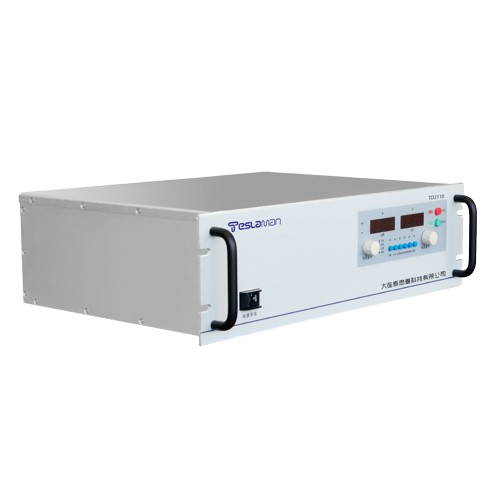
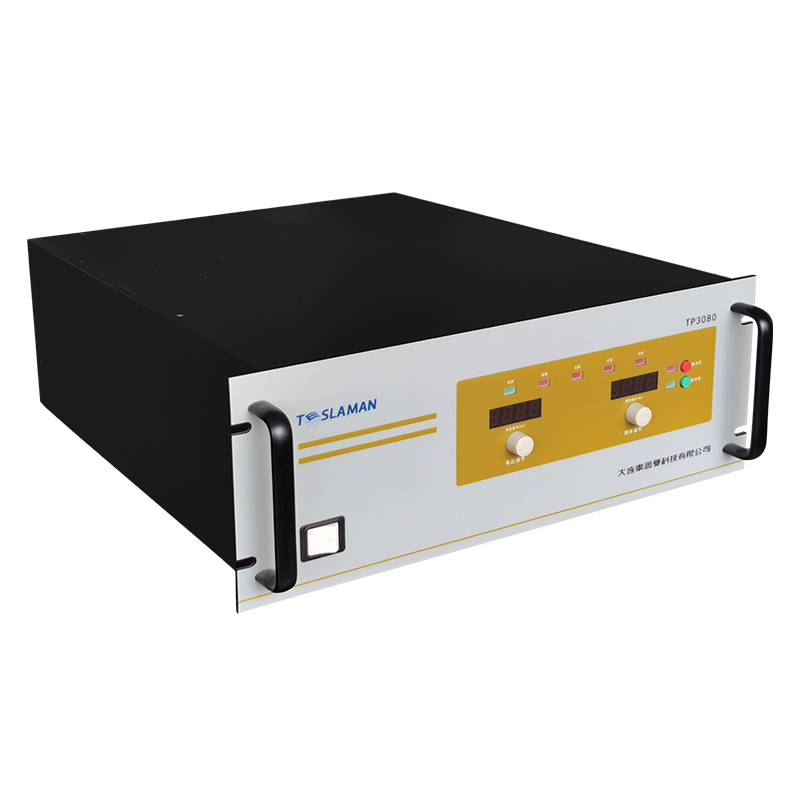
A primary innovation scheme is the creation of application-specific, standardized power modules. Etching tools typically require several distinct power sources: high-voltage DC for ion source extraction/acceleration (in IBE), medium-voltage DC for bias control, and various RF power modules for plasma generation and bias. Modularization dictates designing each of these as a distinct, self-contained unit with standardized physical dimensions, cooling interfaces, and communication protocols. This standardization allows for flexible configuration of the etching tool. For instance, a system designed for high-rate etching (requiring higher power) can be equipped with parallel-stacked power modules without extensive redesign of the main power frame. This scalability is essential for supporting future process nodes that inevitably require higher plasma densities or ion beam currents. The standardized interface also simplifies integration, allowing new or specialized power modules (e.g., a pulsed DC source for advanced etching techniques) to be easily incorporated into the existing platform architecture.
A second major innovation lies in the integration of intelligent digital control within each module. Instead of relying on a centralized, analog controller, each power module incorporates its own high-speed Digital Signal Processor (DSP) or Field-Programmable Gate Array (FPGA). This local intelligence allows for real-time monitoring of internal parameters, implementation of complex control laws, and autonomous fault handling. For example, an RF power module can dynamically adjust its impedance matching network based on local plasma impedance feedback, independent of the central controller's cycle, ensuring optimal power transfer efficiency. This distributed intelligence enhances the overall stability of the etching process, as localized disturbances (like minor load variations) can be compensated at the source, preventing them from propagating through the system. This modular intelligence directly supports process repeatability and control, which are the cornerstones of etching performance.
Furthermore, modularity is a critical driver for improving reliability through isolation and redundancy. By compartmentalizing the power delivery, a failure in one module (e.g., a bias supply) can be electrically isolated, preventing it from cascading into other critical power units. Redundancy can be easily built into the system by installing more power modules than minimally required, allowing the etching tool to continue operation at a reduced capacity even after a non-critical module fails. This enhanced fault tolerance significantly increases the tool’s mean time between critical failures (MTBCF). The modular design also enables streamlined diagnostics. A failed module's on-board intelligence can pinpoint the error, and the standardized format allows for quick, simplified replacement, drastically reducing MTTR. This modular innovation transforms the power architecture from a vulnerable, monolithic system into a robust, adaptable network of smart power resources.