Selectivity Control via High-Voltage Pulses in Atomic Layer Etching
Atomic Layer Etching has emerged as the indispensable technique for patterning next-generation semiconductor devices at the sub-10 nanometer scale. The process relies on sequential, self-limiting reactions to remove material one atomic layer at a time, providing unparalleled precision. While the chemistry of the etching gases is fundamental, the role of the high-voltage power supply that generates the plasma has evolved from a simple means of ionization to the primary tool for controlling the etch selectivity. After fifty years in this field, I have observed that the waveform of the applied voltage is now the knob we turn to decide which material gets etched and which remains untouched.
The conventional ALE process consists of two distinct steps. First, the surface is exposed to a reactive gas that chemisorbs onto it, forming a thin modified layer. This step is self-limiting, as only one layer of the gas can adsorb. The second step involves exposing this modified surface to an energetic process that removes this layer, ideally without disturbing the underlying material. This removal step is often achieved with a low-energy plasma or an argon ion beam. The critical challenge is selectivity: how do we ensure that the modified layer is removed, but the underlying substrate is not sputtered away, and how do we etch one material, such as silicon, while leaving an adjacent material, like silicon dioxide or a photoresist, completely untouched?
The answer lies in the precise control of the ion energy incident on the surface. Ions in a plasma gain energy as they are accelerated across the plasma sheath, the thin region between the bulk plasma and the wafer. The voltage drop across this sheath is determined by the potential of the wafer relative to the plasma. By applying a high-voltage bias to the wafer chuck, we can control the energy with which ions bombard the surface. For perfect selectivity, we need to apply a voltage that is high enough to cause the removal of the modified layer on the material we wish to etch, but low enough that it does not exceed the sputter threshold of the underlying material or the adjacent materials we wish to preserve.
This energy window is often very narrow, sometimes only a few electronvolts wide. Maintaining the bias voltage within this window requires a power supply with exceptional precision and stability. However, the real breakthrough in selectivity control has come with the move from continuous-wave bias to pulsed, or tailored, voltage waveforms. In continuous-wave operation, the ion energy is not mono-energetic. It has a distribution, typically with a peak at the sheath voltage plus a high-energy tail caused by charge-exchange collisions. This tail can contain ions with energies significantly higher than the intended value, enough to cause unwanted sputtering of the substrate or the mask.
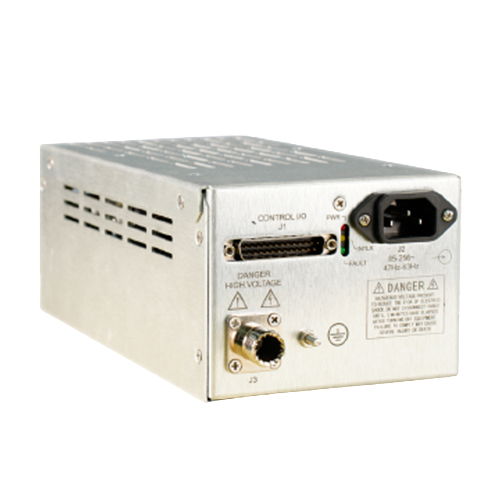
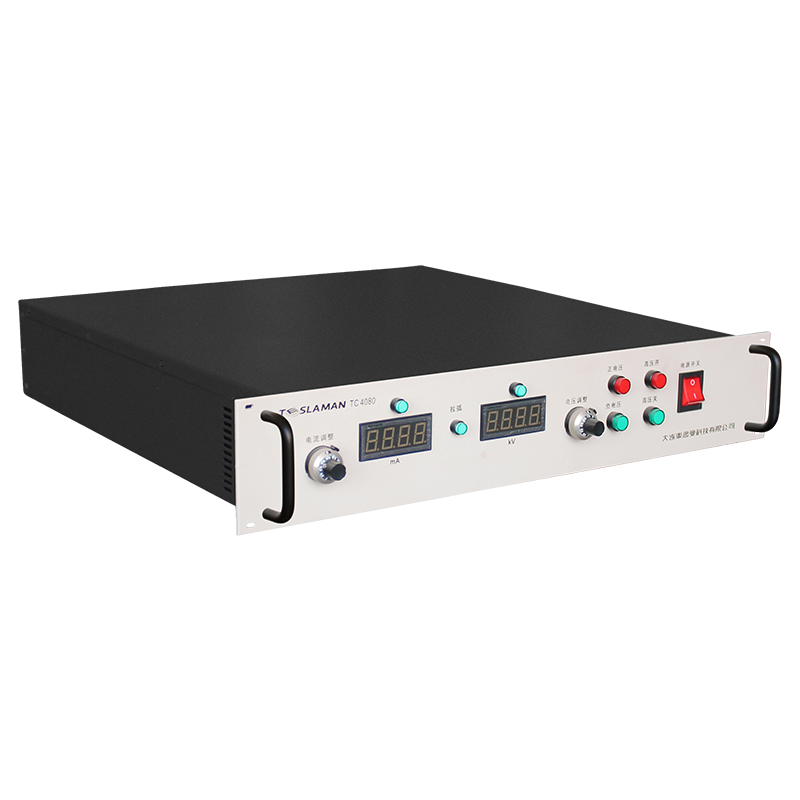
Pulsed voltage biasing offers a solution. By applying a very short, high-voltage pulse to the wafer, we can create a sheath that expands rapidly. Ions falling through this moving sheath can all acquire nearly the same energy, dramatically narrowing the ion energy distribution. This technique, known as tailored bias or synchronous bias, allows us to place the entire ion energy distribution within the desired selectivity window, completely eliminating the high-energy tail. The power supply for this application must be a marvel of modern electronics. It must generate pulses of kilovolts with rise times of a few tens of nanoseconds, at repetition rates of hundreds of kilohertz. The pulse shape must be precisely controlled to avoid overshoot, which would create a momentary high-energy spike, or droop, which would broaden the energy distribution.
Furthermore, the synchronisation of the bias pulse with the plasma generation pulse is critical. In a typical ALE process, the plasma is also pulsed to control the chemistry and reduce damage. The bias pulse must be applied at exactly the right moment during the plasma afterglow to extract ions with the desired energy. This requires a sophisticated timing control system that can adjust the delay between the plasma pulse and the bias pulse with nanosecond precision. The high-voltage pulser for the bias must be triggered by this system and must exhibit negligible jitter, ensuring that every pulse is identical and arrives at precisely the right moment.
Another advanced technique for selectivity control is the use of multi-level bias pulses. Imagine applying a bias pulse that has a low-voltage section followed by a high-voltage section. The low-voltage section could be used to gently desorb the modified layer from a material with a low removal threshold, while the high-voltage section then etches a more stubborn material. By carefully shaping the waveform, we can achieve simultaneous etching of multiple materials with different chemistries in a single ALE cycle. This requires a high-voltage arbitrary waveform generator capable of producing complex, multi-kiloVolt pulses with microsecond or nanosecond features.
The materials used in the wafer chuck and the electrostatic clamping system must also withstand these extreme voltage stresses. The chuck must provide a uniform and strong clamping force to ensure good thermal contact, while also having a high-voltage feedthrough capable of delivering the bias pulses without breakdown. The dielectric material in the chuck must be chosen for its high breakdown strength and its resistance to the reactive plasma chemistry.
In conclusion, the high-voltage bias supply has moved from the periphery to the very center of atomic layer etching process development. It is no longer just a power source; it is a waveform generator that sculpts the energy distribution of ions with exquisite precision. By mastering the art of high-voltage pulsing, we gain direct control over the etch selectivity, enabling the continued scaling of semiconductor devices and the creation of new material structures that were unimaginable just a decade ago. The next fifty years of nano-fabrication will be defined by our ability to manipulate matter with voltage pulses, and the power supply will be the primary instrument of this manipulation.