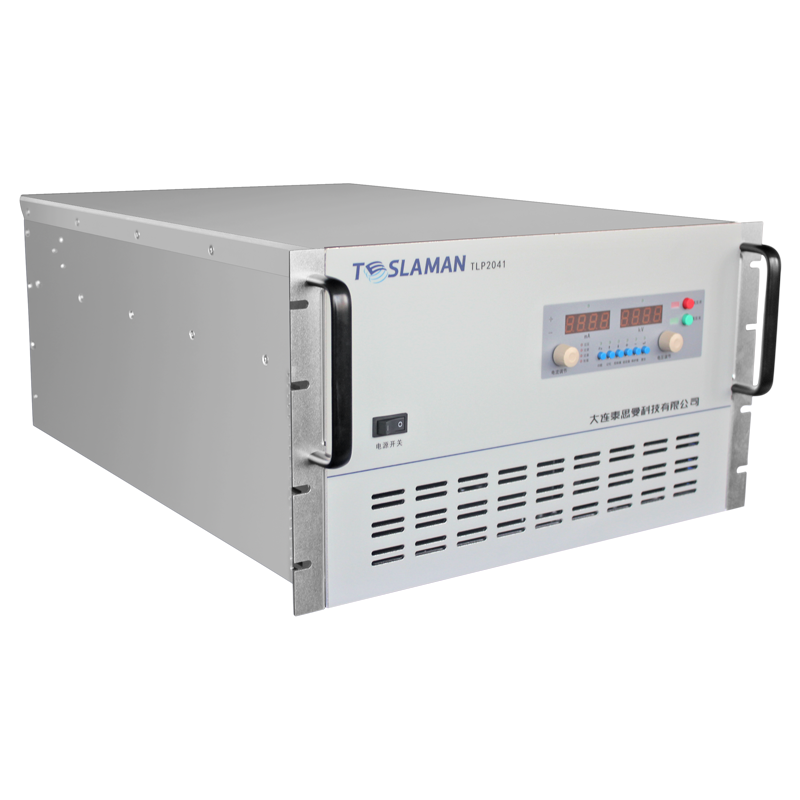
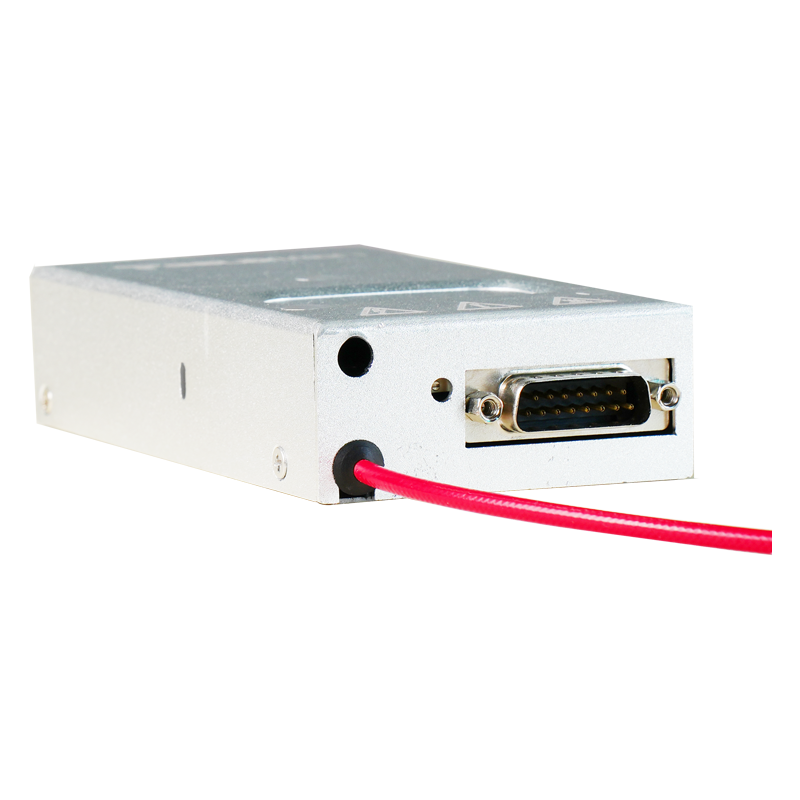
Electron Beam Lithography Proximity Effect Correction Power Supply
The relentless drive towards smaller feature sizes in semiconductor manufacturing and advanced nanofabrication has made electron beam lithography (EBL) a critical tool for mask writing and direct-write applications. However, a fundamental physical limitation known as the proximity effect poses a significant challenge to achieving high fidelity in dense patterns. This effect arises from the forward scattering of electrons within the resist and, more significantly, the backscattering of electrons from the substrate. These scattered electrons expose surrounding areas beyond the intended pattern, leading to linewidth variations, bridging, and loss of critical dimension control. While software-based dose modulation is the primary correction method, the hardware that executes this correction—specifically, the high-voltage beam blanking and deflection power supply system—plays a decisive role in the practical efficacy of any proximity effect correction (PEC) strategy. This analysis details the stringent requirements for power supplies in implementing real-time, variable-dose exposure for PEC.
At its core, PEC involves modulating the local exposure dose delivered by the electron beam. Areas prone to excessive exposure from backscattered electrons (e.g., the center of a large pattern or the intersection of lines) receive a reduced primary dose, while isolated features or corners receive a higher dose to compensate for lack of neighboring exposure contribution. This dose modulation is achieved by varying the dwell time of the beam on each pixel (or shot) and/or by adjusting the beam current. Both methods impose direct and demanding requirements on the beam control power supplies.
The most direct approach is variable dwell time. This requires the beam blanking system to switch the beam on and off with extreme temporal precision. The blanking plates are driven by a high-voltage amplifier (typically several hundred volts) that deflects the beam into a physical aperture. The switching speed and stability of this blanking amplifier are paramount. To achieve fine dose gradation—say, 64 or 256 dose levels—the minimum controllable time slice, or "clock period," must be exceedingly short, often in the nanosecond range. The blanking amplifier must therefore have a slew rate and bandwidth capable of generating clean, square-wave pulses with rise/fall times significantly shorter than this clock period. Any overshoot, ringing, or jitter in the blanking voltage directly translates into exposure dose error. Furthermore, the settling time to a stable beam position after unblanking must be negligible to ensure the beam starts exposing the exact intended pixel location immediately. This demands amplifiers with high bandwidth, low phase delay, and exceptional damping characteristics.
Simultaneously, the beam deflection system must work in perfect concert with the blanker. As the beam is unblanked, it must be positioned with sub-nanometer accuracy on the wafer. The high-voltage amplifiers driving the electrostatic or magnetic deflection plates (or coils) must exhibit extraordinary linearity and low noise. Non-linearity in deflection gain causes geometric distortion, which software can correct, but dynamic non-linearity during the rapid jumps between pixels can cause placement errors that interact with dose modulation. More critically, the deflection amplifiers must have a high update rate to match the pixel clock, moving the beam to the next position during the blanked interval. The synchronization between the blanking command and the deflection command, managed by the pattern generator, must be deterministic with picosecond-level jitter. This is often achieved using a single master clock that drives both the digital pattern generator and the digital-to-analog converters (DACs) for the deflection and blanking amplifiers, with careful attention to signal path delays.
An alternative or complementary method for dose modulation is the real-time adjustment of beam current. This involves dynamically changing the voltage on the gun's grid or Wehnelt cylinder to control the emitted electron flux. For PEC, this requires a dedicated, high-speed beam current regulator. To follow a complex dose map, this regulator must modulate the beam current at rates comparable to the pixel clock. This is a formidable challenge. The grid supply must have a wide control bandwidth, capable of switching between current levels within a few nanoseconds, while maintaining absolute stability at each level. Any overshoot or instability causes a dose error for that pixel and potentially several following pixels. The interaction between the grid voltage, the beam current, and the final beam focus (which is also voltage-dependent) must be carefully characterized and compensated. A change in beam current can slightly shift the beam's crossover point, altering the focus. Therefore, a comprehensive PEC system might require coordinated, real-time adjustment of the grid supply, the first anode or extraction supply, and the focus lens supply—a multivariable control problem executed at megahertz rates.
The stability of the high-voltage acceleration supply (typically 50-100 kV) underpins all other corrections. While not directly modulated for PEC, its absolute stability is crucial. A drift in acceleration voltage changes the electron's energy, which alters its scattering behavior (both forward and backscatter range) and its interaction with the resist. This effectively changes the underlying physical model of the proximity effect, rendering the pre-calculated dose map invalid. Therefore, the main high-voltage supply must have phenomenal long-term stability and ultra-low ripple, acting as a rock-solid reference for the entire exposure process.
Furthermore, the system must account for pattern-dependent effects. Writing dense patterns can cause localized charging on the resist, which deflects the beam (the "charging effect"). This deflection can mimic or counteract proximity effect distortions. Advanced systems may use a second, lower-energy electron flood gun to neutralize charge, requiring its own precisely controlled power supply. The timing and intensity of this flood beam must be integrated into the overall exposure sequence.
In essence, the power supply suite for PEC-enabled EBL is a symphony of ultra-high-speed, ultra-stable amplifiers operating in locked synchrony. Its performance is measured in picoseconds of jitter, microvolts of noise, nanoseconds of settling time, and parts-per-million of long-term drift. It transforms a software-calculated dose map into a physical exposure with the fidelity required for leading-edge nanofabrication. The successful correction of the proximity effect, and thus the ability to write high-density, high-accuracy patterns, is ultimately limited by the precision, speed, and coordination of these high-voltage beam control power supplies.