Modular Development Trends in Power Supply Systems for CMP Equipment
The progression toward fully modular high-voltage power architectures in CMP equipment reflects the industry’s need for rapid serviceability, scalable performance, and technology insertion without complete system replacement. Contemporary modular systems decompose the traditional monolithic high-voltage supply into hot-swappable functional blocks that can be upgraded or serviced independently while the polisher remains in production.
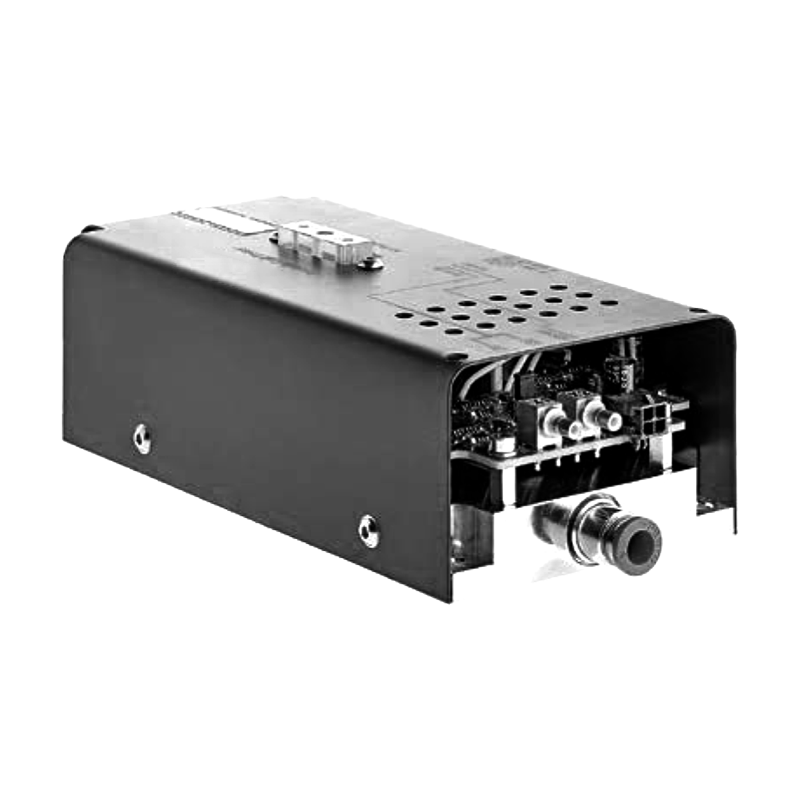
The primary building block is the high-voltage brick—a self-contained module typically rated for 1000-2000 V at 1-2 A that incorporates its own inverter, transformer, rectifier, filtration, and digital controller. Multiple bricks connect in parallel through a high-speed backplane that provides both power combining and bidirectional data communication. This arrangement allows capacity scaling from single-platen development tools requiring only two bricks to high-throughput multi-platen systems demanding twenty or more, all controlled by identical hardware.
Control intelligence resides in a separate master module that orchestrates brick synchronization, load sharing, and fault management. Because the master contains no high-power components, it achieves extremely high reliability and can be upgraded to support new features—such as enhanced arc detection algorithms or multi-frequency diagnostic capability—without disturbing the power generation modules.
Cooling modules represent another independent subsystem. Liquid-to-liquid or liquid-to-air heat exchangers with quick-connect fittings and redundant pumps allow complete cooling system overhaul in under thirty minutes. Sensor arrays monitoring flow, pressure, and conductivity feed predictive maintenance algorithms that schedule service before performance degradation occurs.
Cable harnesses have evolved into modular segments with standardized high-voltage connectors rated for thousands of mating cycles. Each segment incorporates embedded identification chips that enable automatic topology discovery and cable degradation monitoring through time-domain reflectometry.
Diagnostic and calibration modules plug into dedicated slots on the backplane. These units perform automated output characterization, dielectric absorption testing, and partial discharge mapping without external test equipment. Results upload directly to the fab’s equipment management system for trending across the entire installed base.
The modular approach dramatically reduces mean time to repair. A faulty brick can be replaced in minutes by floor technicians using only basic tools, with the system automatically executing self-calibration routines upon reinsertion. Spare bricks maintained in a charged and tested state ensure immediate availability.
Technology insertion becomes straightforward. When next-generation wide-bandgap devices enable higher efficiency or lower loss operation, only the affected brick design changes while preserving all interfacing standards. Similarly, introduction of active energy recovery or advanced waveform shaping requires only new brick types rather than complete supply redesign.
Multi-voltage capability emerges naturally from the architecture. Different brick types optimized for 500 V, 1500 V, or bipolar operation coexist on the same backplane, allowing a single power system to support diverse processes from conventional oxide polishing to emerging metal gate or ruthenium applications without hardware changes.
Standardization efforts have produced open interface specifications covering mechanical envelopes, communication protocols, and safety interlocks. This allows second-source availability of modules and prevents vendor lock-in while accelerating feature development through ecosystem participation.
Environmental sustainability benefits from modularity through extended system life and reduced electronic waste. Rather than replacing entire supplies when performance requirements evolve, only specific modules need upgrading, preserving the substantial embedded carbon footprint of the overall assembly.
These modular trends have shortened new polisher qualification times, reduced spare parts inventory value by more than 60%, and enabled field upgrades that keep decade-old platforms competitive with current-generation performance, fundamentally altering the economics of CMP equipment ownership.