Modularization Development Trend of Coating Machine Power Supplies
The evolution toward fully modular power supply architectures in vacuum coating equipment reflects recognition that future competitiveness depends on rapid adaptability to changing process requirements, minimal downtime during maintenance, and optimized capital deployment across varying production scales. Rather than monolithic converters sized for worst-case simultaneous demand, modular systems construct required power capacity from standardized building blocks that can be added, removed, or reconfigured with minimal mechanical and electrical intervention.
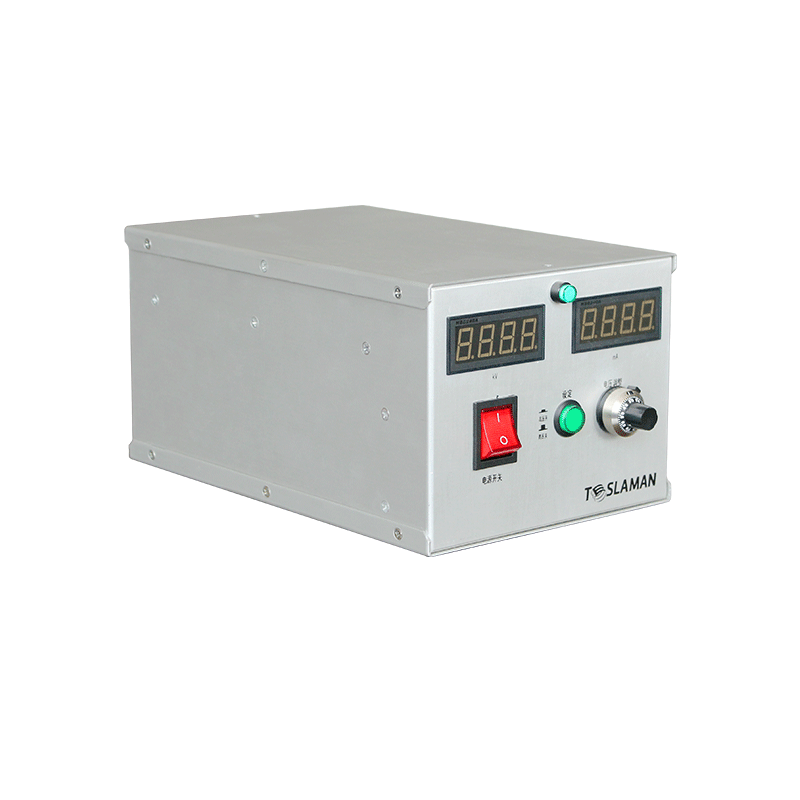
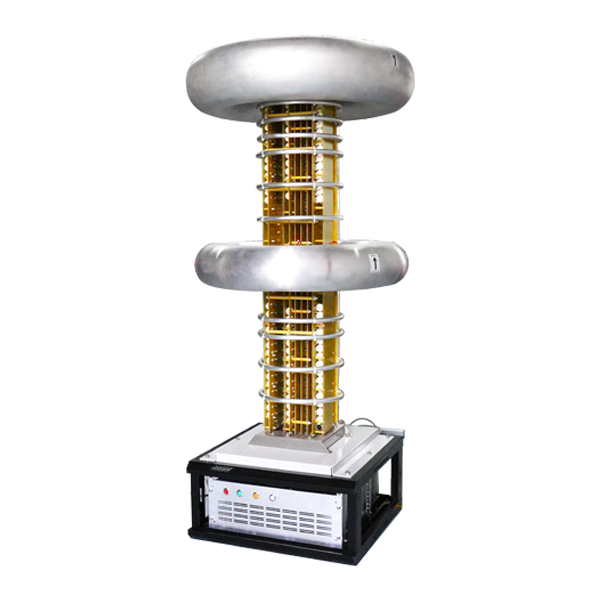
Contemporary modular designs typically employ self-contained high-voltage bricks rated 30–120 kW, each incorporating primary rectification, phase-shifted inverter, high-frequency transformer, synchronous output rectification, and complete liquid cooling manifold in a single rack-mountable chassis. Uniform mechanical footprints and blind-mate coolant/quick-connect HV output connectors enable installation or removal in under fifteen minutes using standard handling equipment. The bricks share a common high-speed fiber-optic control network that automatically recognizes newly added units and redistributes load without operator intervention.
Redundancy emerges as a primary driver for modular adoption. Large coaters requiring 1–3 MW total power operate with N+2 or N+3 redundancy, ensuring that failure of multiple bricks leaves sufficient capacity for continued production at slightly reduced rate while maintenance proceeds. Historical data from high-volume automotive coating lines show unplanned stoppages attributable to power system faults decreasing from several per month to effectively zero following modular implementation.
Scalability benefits extend across the entire production spectrum. Small R&D coaters begin with two or three bricks delivering 100–300 kW for process development, then scale seamlessly to pilot or production configurations by adding identical units to the same rack framework. This approach eliminates the traditional requirement for complete power system redesign when moving from laboratory to factory floor, accelerating time-to-market for new functional coatings.
Zonal power independence represents another significant advantage in advanced optical and display applications. Individual brick groups dedicate themselves to specific process zones—pre-cleaning, base layers, functional stacks, or protective overcoats—allowing completely independent voltage, current, and waveform optimization without cross-talk. The resulting process flexibility has enabled single chambers to run widely divergent product families by simply reassigning brick allocations between campaigns.
Maintenance strategy transforms fundamentally under modular paradigms. Spare bricks maintained in charged, tested condition permit immediate swap-out of suspect units, with detailed root-cause analysis performed offline. Built-in diagnostic capabilities monitor more than two hundred internal parameters per brick, predicting failures weeks in advance through trend analysis of partial discharge activity, coolant quality, and semiconductor degradation markers. Mean time to repair for the complete power system typically falls below one hour including verification testing.
Energy efficiency improves through right-sizing and dynamic reconfiguration. Lightly loaded zones automatically consolidate onto fewer bricks operating near optimal efficiency, while idle bricks enter deep sleep modes consuming less than 50 W standby power. Seasonal production variations see entire brick groups relocated to different lines within the same facility, maximizing asset utilization across the manufacturing network.
The trend toward ever-higher integration density continues with development of liquid-immersed modular bricks eliminating traditional heat sinks and fans entirely. Direct immersion in fluorinated dielectric fluids achieves junction-to-fluid thermal resistance below 0.015 K/W while providing voltage isolation exceeding 50 kV, permitting physical stacking densities previously impossible with air-insulated designs.
Standardization efforts now encompass complete communication protocols and mechanical interfaces, allowing bricks from the modular ecosystem to serve diverse load types—DC magnetron, mid-frequency dual magnetron, HIPIMS, or bias applications—through firmware reconfiguration alone. This universality dramatically reduces spare parts inventory and engineering effort for multi-process coating groups.
As layer counts increase and substrate sizes grow, the ability to construct arbitrarily large yet fully fault-tolerant power systems from standardized, field-replaceable modules has become indispensable for maintaining competitive production costs and responsiveness to market requirements. The modular approach has effectively commoditized high-voltage delivery, shifting competitive differentiation toward process knowledge and system integration expertise.