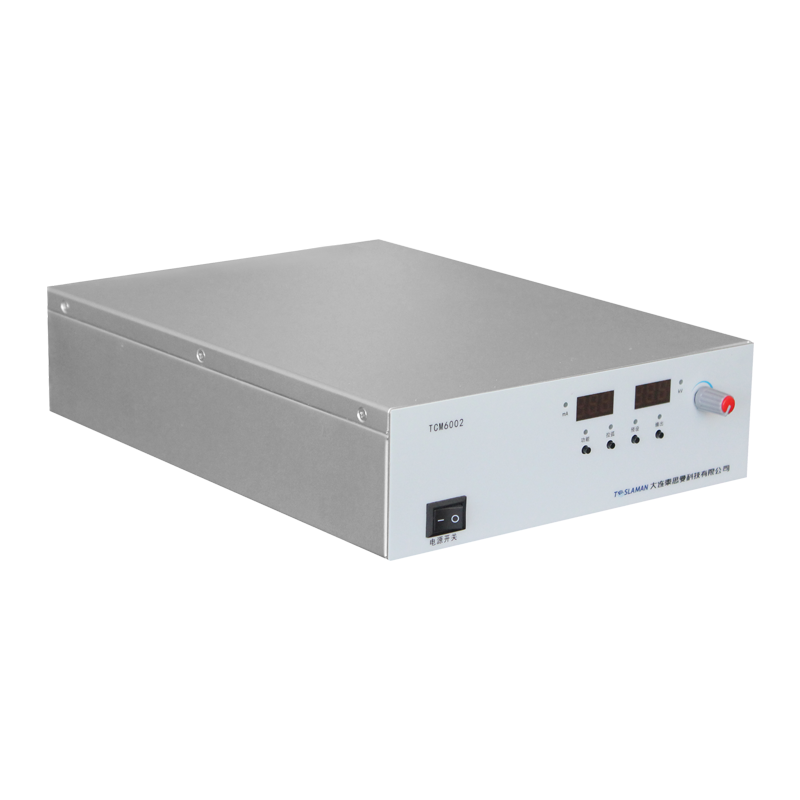
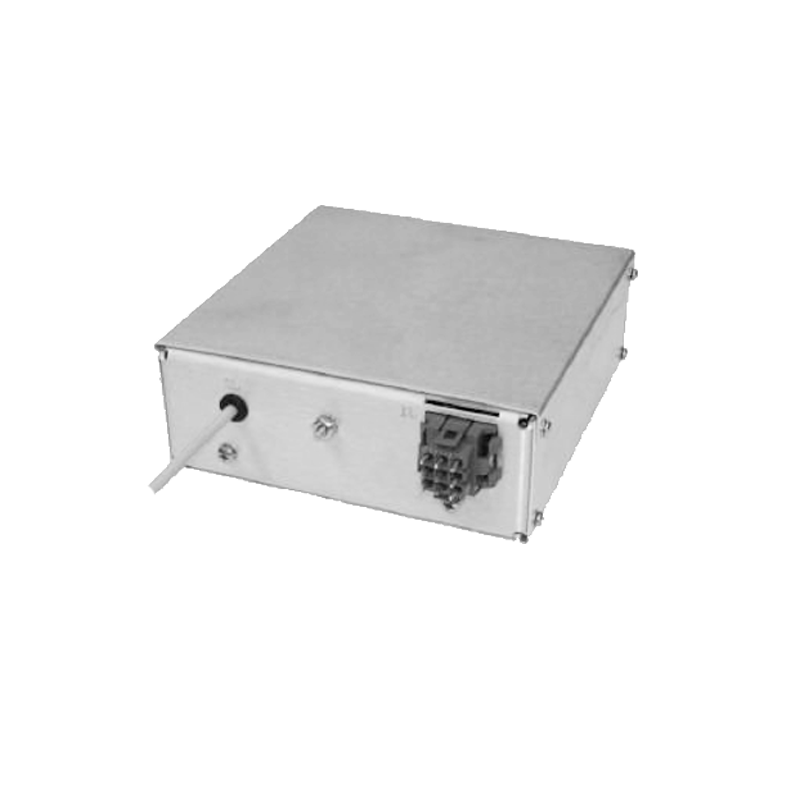
Synchronized Flash High-Voltage Triggering for Ampoule Inspection Machines
High-speed ampoule inspection lines operate at 600-900 units per minute, requiring xenon flash tubes to deliver greater than 50 J optical energy in under 10 µs with trigger jitter below 400 ns to freeze motion and prevent blur in particulate and cosmetic defect imaging. Synchronized flash high-voltage systems therefore combine precise external triggering with internal energy management that guarantees repeatable light output despite line voltage variation and lamp aging.
The power train begins with a resonant charging supply that maintains a 900 V storage capacitor within ±1.5 V using a series-resonant inverter locked to the capacitor voltage zero-crossing point. Charging completes within 18 ms after each flash, supporting 900 flashes per minute with greater than 30 % margin. A digitally controlled current source adjusts charge rate dynamically to compensate for facility voltage sags, ensuring consistent stored energy even during simultaneous operation of multiple inspection stations.
Triggering employs a 12 kV pulse generator using a compact trigatron-style spark gap fired by a silicon carbide MOSFET avalanche stack. Timing is derived from a fiber-optically isolated input that accepts TTL pulses from the machine vision controller with less than 80 ns added delay. An internal precision delay generator with 10 ns resolution compensates for measured optical delay variations as lamps age, maintaining flash-to-camera synchronization within ±250 ns over the full 200 000 flash lamp life.
Light output stabilization against electrode erosion is achieved through active simmer current modulation. Between flashes, a 150-300 mA DC simmer maintains plasma conductivity; the supply continuously adjusts simmer level based on measured trigger voltage trend to minimize erosion while guaranteeing first-flash success after idle periods exceeding 30 minutes. This eliminates the warm-up sequences that previously reduced effective line speed during shift starts.
Multi-lamp synchronization for dual-sided or 360° inspection uses a master-slave architecture where one supply distributes optically isolated trigger pulses with matched fiber lengths. Delay matching to within 50 ns is verified during weekly automated calibration using an internal photodiode array, with compensation tables updated in non-volatile memory.
Energy-based dosing replaces simple capacitor voltage monitoring with real-time integration of lamp current during discharge. When integrated joules reach target ±0.8 %, the supply terminates conduction via an IGBT crowbar, preventing the 3-5 % light increase that occurs as xenon pressure drops over lamp life in fixed-duration systems. This maintains illumination uniformity below 1.2 % RSD across 500 000 ampoules.
Arc-down protection monitors lamp impedance during the first 2 µs of discharge; detection of abnormal voltage collapse triggers immediate energy dump into a parallel MOSFET clamp, limiting total dissipated energy to less than 8 J and preventing envelope rupture that would contaminate the inspection tunnel.
Cooling optimization uses temperature-aware fan speed control that references both capacitor bank and trigger transformer temperatures, reducing acoustic noise by 12 dB during low-throughput periods while extending component life through lower average thermal stress.
These synchronized systems routinely achieve greater than 99.999 % flash success rate and illumination repeatability supporting particulate detection below 30 µm in 1 mL ampoules at full production speed, enabling 100 % in-line inspection previously possible only through sampling methods.