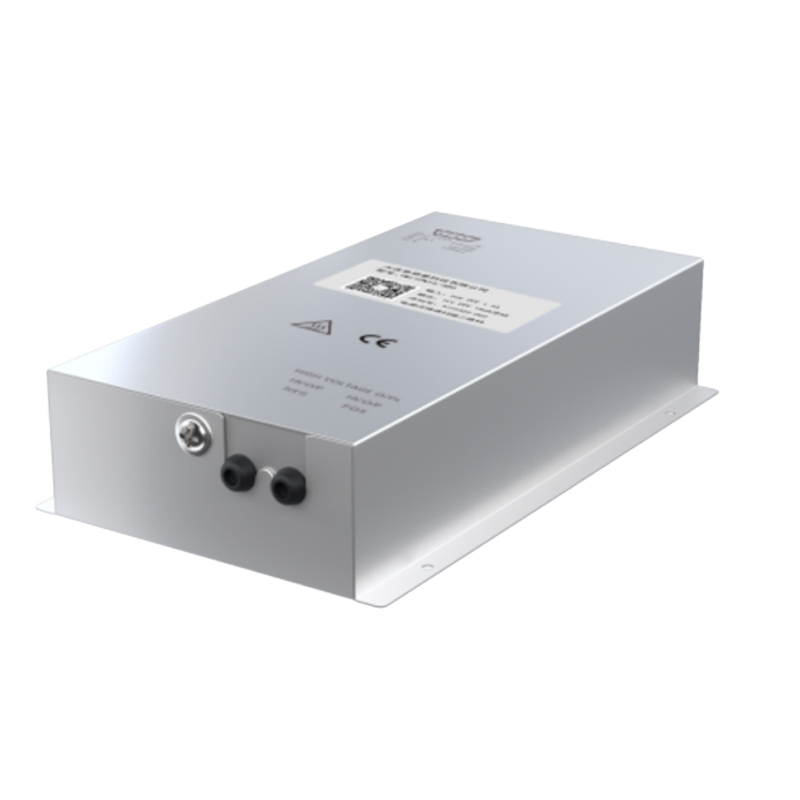
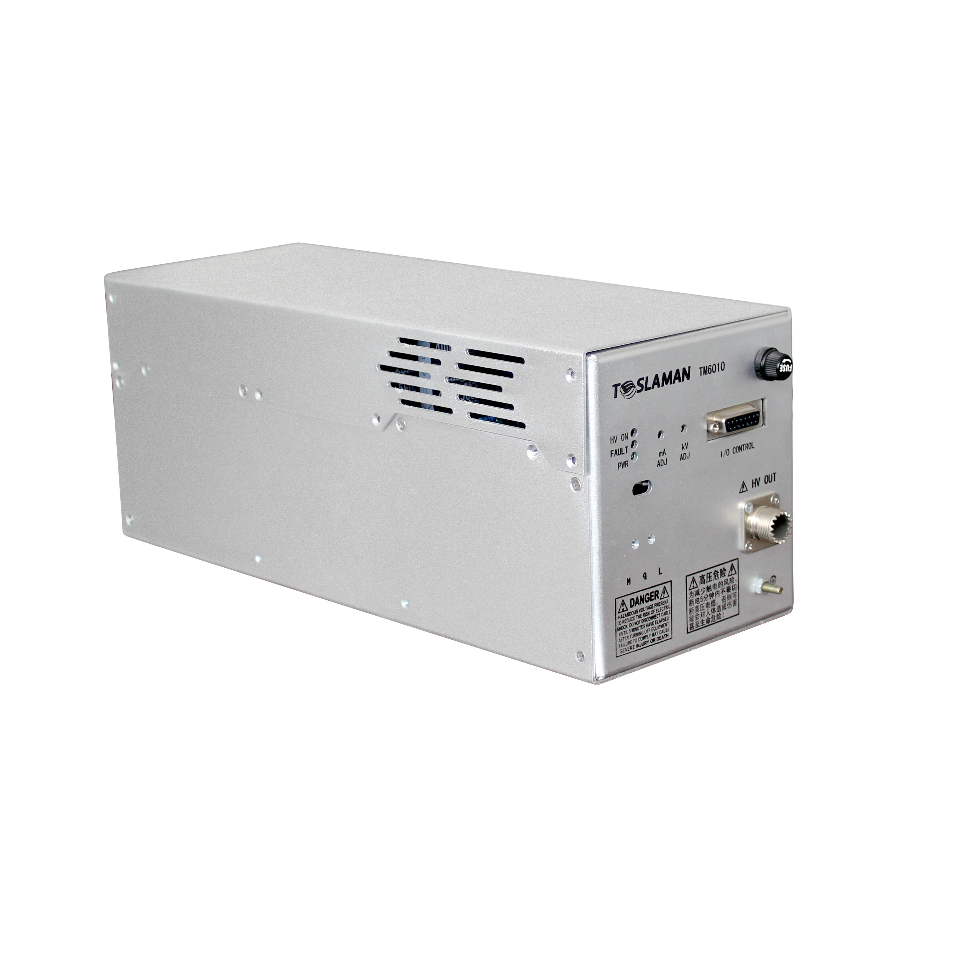
30 kV Miniature High-Voltage Module for Capillary Electrophoresis Lab-on-Chip
Portable and point-of-care capillary electrophoresis chips require an on-board ±30 kV supply occupying less than 6 cm³, weighing under 18 g, and consuming <1.1 W average while delivering stable fields >420 V/mm for DNA fragment separations in under 180 seconds.
The module uses a four-stage sinusoidal resonant converter operating at 420 kHz with a piezoelectric transformer fabricated from PZT-5H providing 1:110 voltage gain in a 22 × 7 × 3 mm package. Primary drive is supplied by a 3.3 V lithium-polymer cell through a half-bridge of 20 V enhancement-mode gallium nitride transistors. Output is rectified by a hybrid Cockcroft-Walton multiplier using zero-bias Schottky diodes and 0402 ceramic capacitors selected for <0.06 % voltage coefficient.
Voltage is regulated by primary amplitude modulation with a 160 kHz digital control loop that maintains setpoint within ±12 V across 0–80 nA capillary current. Polarity reversal is accomplished in <42 ms by switching the piezoelectric transformer drive phase by 180° and reconfiguring the multiplier diodes via MOSFET switches, eliminating mechanical relays.
Energy efficiency exceeds 78 % end-to-end through synchronous rectification on the low-voltage side and near-zero quiescent draw in standby (26 µA). A single 180 mAh cell supports >2200 separations between charges.
Safety is implemented via current signature analysis: sudden capillary current rise >180 nA triggers immediate collapse to 1.2 kV in <18 µs, followed by lockout until manual reset. All high-voltage traces are buried between ground planes with 1.8 mm creepage in air.
Temperature compensation uses an integrated MEMS resonator reference that adjusts drive frequency to null piezoelectric transformer resonance shift over –10 °C to +55 °C, maintaining field strength within ±0.7 % without external ovens.
These miniature 30 kV modules routinely achieve >680 000 theoretical plates for 100–1000 bp DNA ladders in 2.8-minute runs on disposable glass-PDMS chips, enabling field-deployable pathogen detection and forensic STR typing with battery life exceeding 36 hours continuous operation.