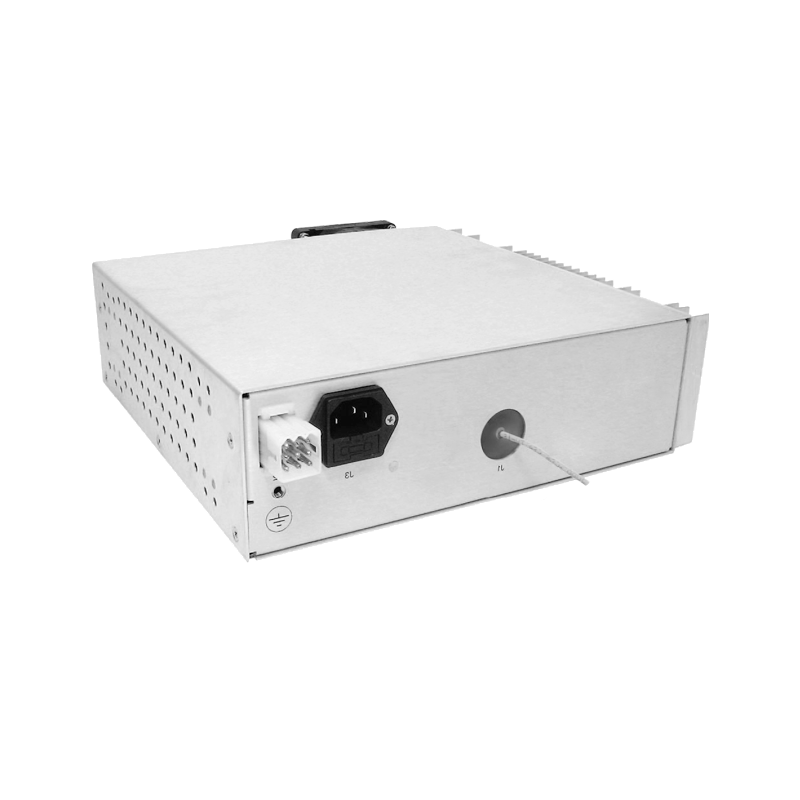
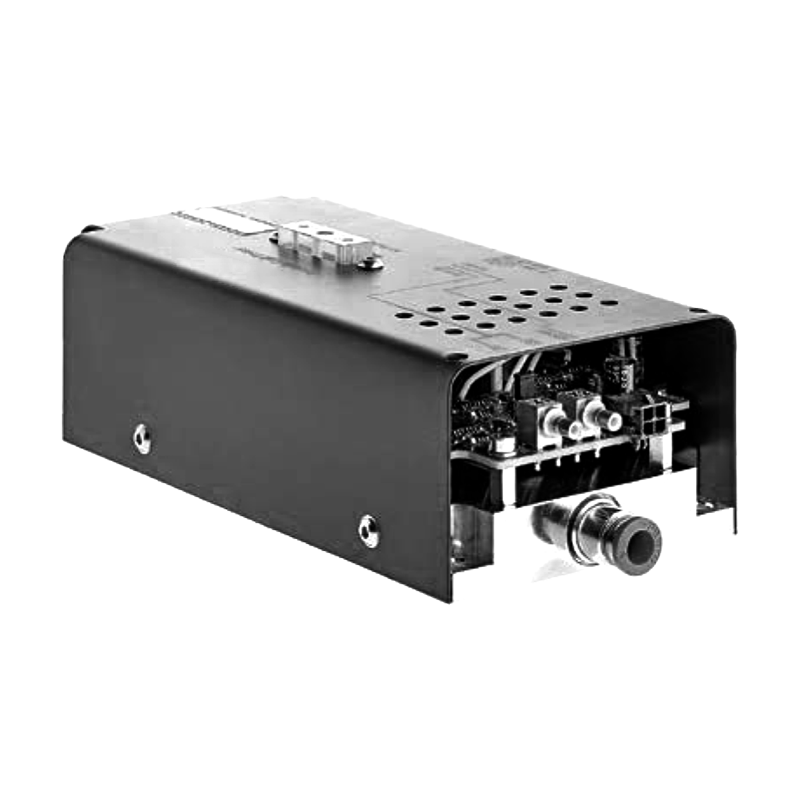
Non-Destructive Testing Multi-Modal High-Voltage Switching Power Supply
Modern non-destructive testing and evaluation, particularly in aerospace, energy, and heavy industry, relies on a suite of complementary techniques to ensure material integrity and component safety. Common modalities include X-ray imaging, computed tomography, ultrasonic testing, and eddy current testing. Each of these techniques often requires a specialized high-voltage power supply with distinct output characteristics to energize its respective source: X-ray tubes, ultrasonic transducers, or eddy current probes. Deploying separate, dedicated power supplies for each modality in a single inspection system is inefficient, costly, and space-prohibitive. The development of integrated, multi-modal high-voltage switching power supplies addresses this need by providing a single, reconfigurable platform capable of servicing multiple NDT techniques through rapid, reliable output switching and transformation.
The core challenge in designing such a supply lies in the vastly different electrical requirements of each modality. An X-ray tube typically requires a high-voltage DC output, ranging from tens of kilovolts to over 400 kV for deep-penetration imaging, with current capabilities from a few milliamps to several hundred milliamps. The output must be highly stable with minimal ripple, as voltage fluctuations directly affect the X-ray spectrum and intensity. An ultrasonic testing system, in contrast, may require a bipolar high-voltage pulse train (e.g., ±100V to ±900V) with very fast rise times (nanoseconds to microseconds), high repetition rates, and specific pulse shapes to excite piezoelectric transducers. Eddy current testing might require a lower-voltage, high-frequency sinusoidal or square wave output (tens of kHz to several MHz) to drive a probe coil.
A multi-modal architecture is built around a common, high-quality intermediate DC bus, typically generated by a front-end power factor corrected switching stage. This bus feeds multiple, independent, and specialized output converter modules housed within the same chassis. Each module is optimized for its specific task. The X-ray module is typically a high-frequency resonant converter (like an LLC or series resonant topology) feeding a voltage multiplier (Cockcroft-Walton) stack to generate the ultra-high DC voltage. It incorporates closed-loop voltage and current regulation with precision feedback from high-voltage dividers and fiber-optic isolated current sensors. The ultrasonic pulse module is a high-speed MOSFET or IGBT-based H-bridge or Marx bank circuit, capable of generating programmable unipolar or bipolar pulses. The eddy current driver module is a class-D or linear amplifier optimized for high-frequency, low-distortion output.
The critical enabling technology is the high-voltage switching matrix and output management system. This is not simply a mechanical relay system; it comprises solid-state high-voltage switches (such as insulated-gate bipolar transistors or MOSFETs in series for higher voltage) and sophisticated control logic. Upon command from the system's main computer—dictated by the selected NDT mode—the control logic performs a sequence of actions. It first ensures the active output module is properly disabled and its output capacitors are safely discharged through bleeding resistors. It then configures the internal switching matrix to disconnect the previous output channel and connect the newly selected one to the common high-voltage output port, which leads to the NDT probe or source. Safety interlocks prevent any possibility of two modules being connected simultaneously. The switching sequence must account for timing, ensuring the new module is fully initialized and stable before enabling its output.
System integration and synchronization are paramount. In automated inspection cells, the NDT modality may change frequently as a part moves through different test stations or as a single probe performs multiple functions. The multi-modal power supply receives digital commands over a fieldbus network (e.g., Ethernet/IP, Profinet). Its controller must interpret these commands, execute the mode switch, and report status back within milliseconds. Furthermore, in techniques like phased-array ultrasonics, the power supply's pulse generation must be synchronized with nanosecond accuracy to multiple channels and with data acquisition systems. This demands a master timing clock distributed throughout the supply's modules.
Reliability and safety are designed into every layer. Each output module has independent over-voltage, over-current, and arc-detection protection. The chassis features extensive shielding to prevent electromagnetic interference from the high-power switching modules from affecting sensitive signal acquisition electronics used in ultrasonic or eddy current testing. Thermal management is aggressive, using forced air or liquid cooling to handle the varying heat loads from different operating modes. By consolidating multiple high-voltage functions, this multi-modal approach reduces system footprint, simplifies cabling, lowers maintenance costs, and enables the creation of more flexible and automated NDT work cells capable of comprehensive component inspection without manual reconfiguration.