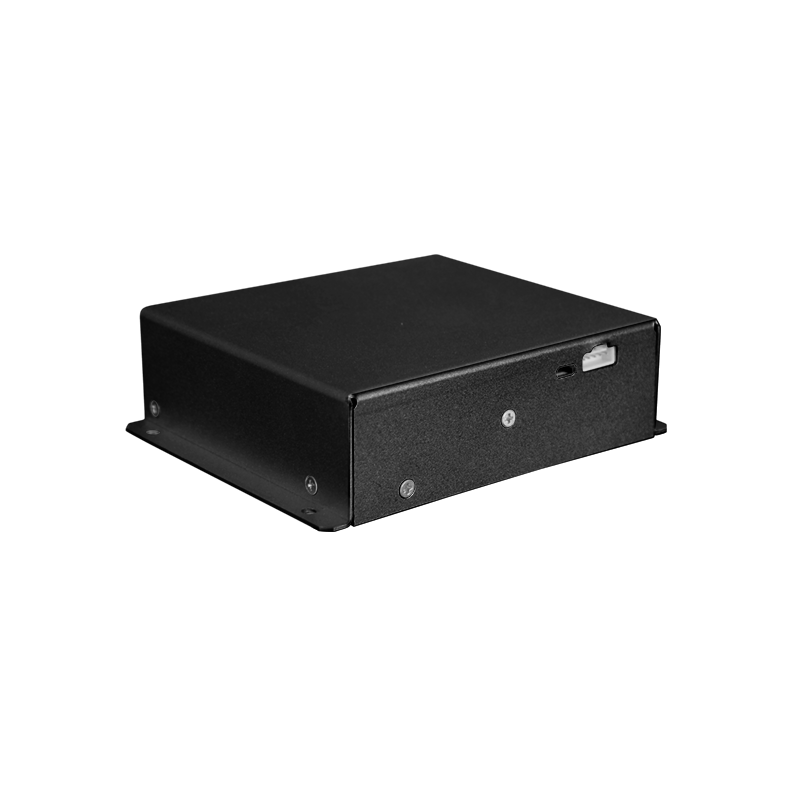
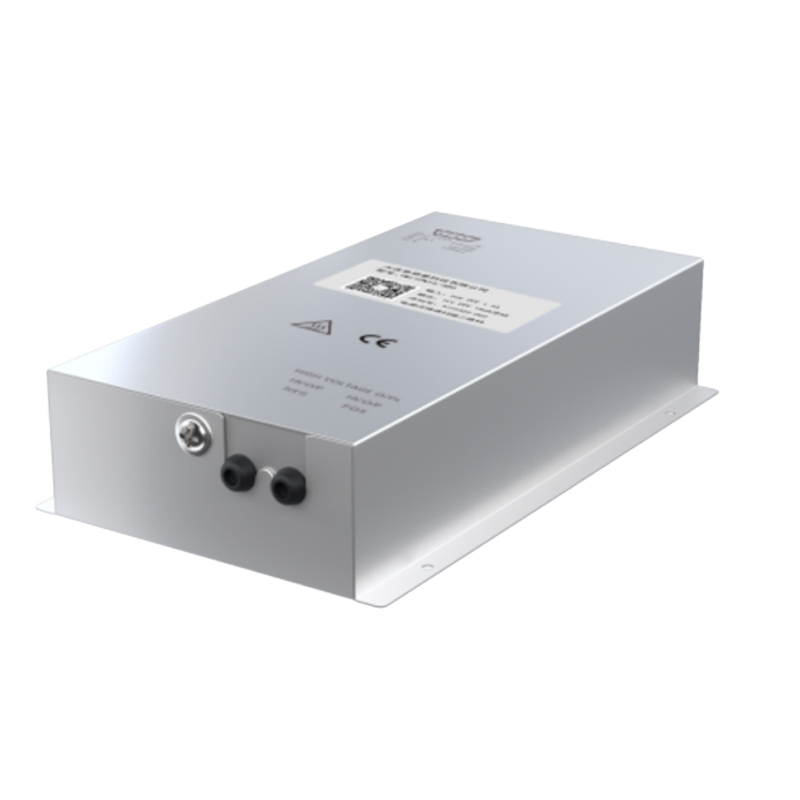
Irradiation Sterilization Conveyor Synchronized High-Voltage System
Industrial irradiation for sterilization of medical devices, pharmaceuticals, and food packaging relies on exposing products to a controlled dose of ionizing radiation, typically from electron beams or X-rays generated by high-power accelerators. A key to achieving uniform dose distribution and maximizing throughput in a continuous process is the precise synchronization of the material handling system—usually a conveyor belt—with the high-voltage scanning system that sweeps the electron beam across the product. The failure of this synchronization leads to under-dosed or over-dosed regions, rendering products unsafe or unusable. Therefore, the high-voltage system governing the beam's deflection is not an isolated unit but the central component of a tightly integrated motion-control feedback loop.
In an electron beam irradiation system, electrons are accelerated to high energies (typically 1-10 MeV) and then passed through a scanning magnet. This magnet is driven by a high-current, high-voltage scan power supply that produces a near-triangular waveform. The frequency and amplitude of this waveform determine how fast and how wide the beam is swept across the treatment window. Products are carried through this window on a conveyor belt moving at a constant velocity. The fundamental requirement for dose uniformity is that the product's exposure time per unit area must be constant. This translates into a precise relationship: the horizontal scan frequency must be locked to the conveyor speed, and the vertical scan (or the conveyor itself) must index the product between horizontal sweeps to ensure complete, non-overlapping coverage without gaps.
The synchronization system is built around a master encoder attached to the conveyor drive motor or a dedicated timing roller. This encoder generates a high-resolution pulse train proportional to the linear belt speed. This pulse train serves as the primary timing reference for the entire irradiation process. A dedicated motion controller or programmable logic controller (PLC) receives this encoder feedback. It calculates the required horizontal scan frequency based on the beam spot size at the product surface and the current conveyor speed to achieve the desired overlap between successive scan lines. This calculated frequency is sent as an analog voltage or a digital frequency command to the scan power supply's waveform generator.
The scan power supply is a specialized component. It must generate a highly linear, reproducible current waveform through the inductive load of the scanning magnet. Any non-linearity or jitter in the flyback period of the scan (when the beam reverses direction) creates dose non-uniformity at the edges of the scan pattern. Therefore, these supplies employ high-fidelity, closed-loop current control with feedback from precision current transducers. The phase relationship between the conveyor's encoder pulse and the start of each beam scan sweep is critically controlled. A phase-locked loop circuit is often used to lock the scan frequency to a multiple of the encoder frequency, ensuring that even if the conveyor speed varies slightly, the scan pattern "tracks" the motion perfectly, maintaining a constant dwell time of the beam on the product.
Beam blanking adds another layer of synchronization. When the beam scans outside the physical width of the product or during the flyback period, it is often "blanked" (deflected into a beam stop) to prevent unnecessary irradiation of the conveyor mechanism or chamber walls. The signals controlling the blanking high-voltage supply (which typically operates a fast electrostatic or magnetic deflector) are generated by the same master controller, synchronized to both the conveyor encoder and the main scan waveform. The timing of the blanking signal's rise and fall must be accurate to within microseconds to ensure sharp dose boundaries.
System calibration and verification are continuous processes. Dosimetry films or real-time diode arrays are placed on the conveyor to map the actual dose distribution under various operating conditions. This data is fed back to adjust the synchronization parameters—scan frequency, amplitude, phase offset, blanking timing—in a control algorithm. Modern systems often incorporate adaptive control, where the conveyor speed can be dynamically adjusted based on the measured beam current to maintain a constant dose per product, with the scan frequency following in lockstep. The reliability of the high-voltage scan and blanking supplies, the precision of the encoder feedback, and the deterministic performance of the synchronization controller collectively determine the process window for safe, effective, and efficient industrial irradiation sterilization.