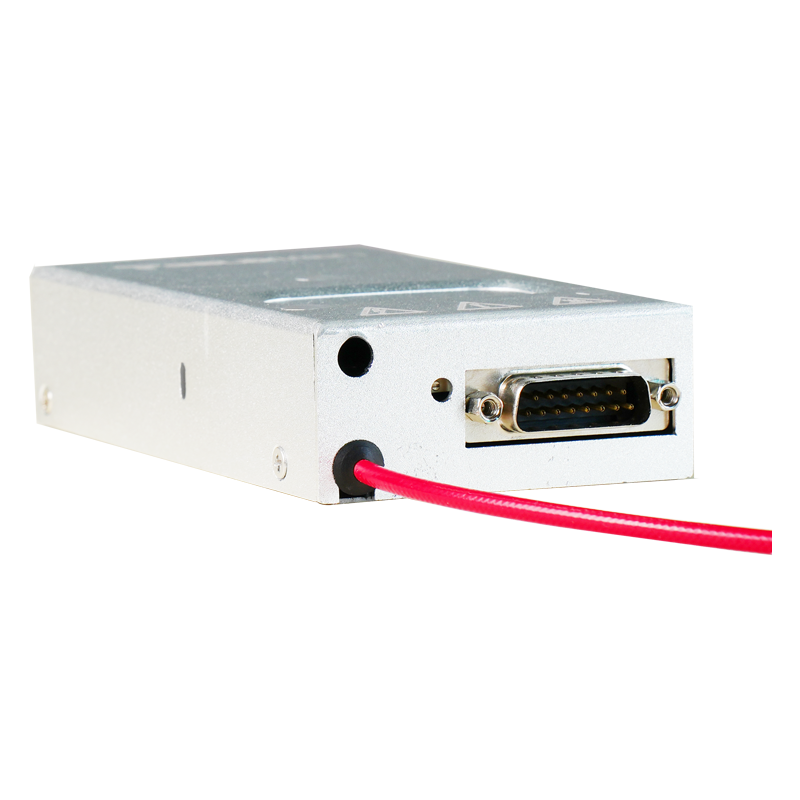
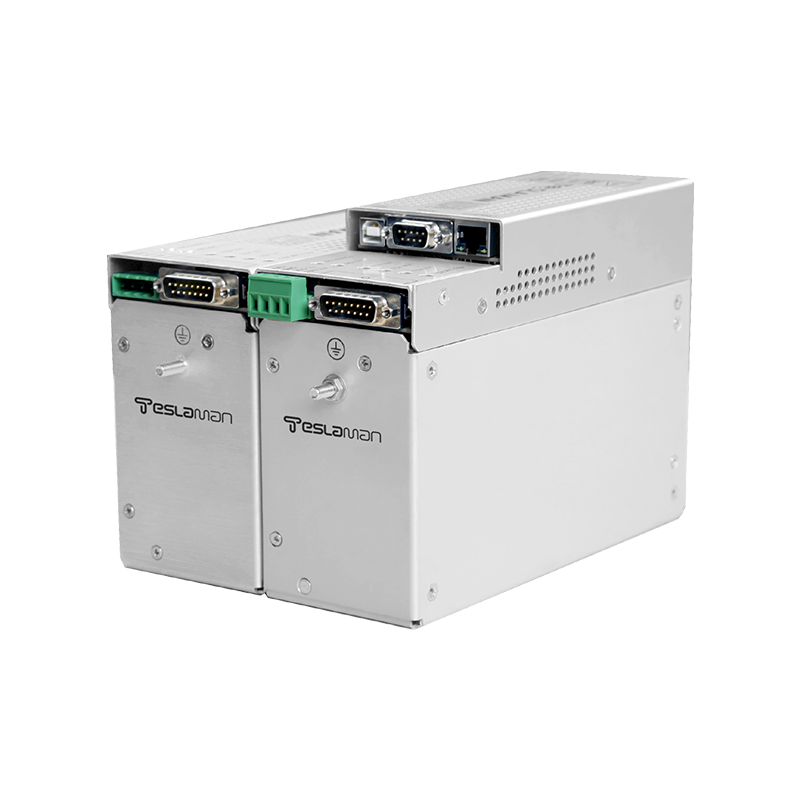
320kV DC Superimposed Pulse Composite Power Supply
The frontiers of experimental physics, advanced materials processing, and pulsed power research increasingly demand high-voltage platforms capable of delivering not just a single form of energy, but precisely tailored combinations of continuous and transient electrical fields. A prime example is the 320kV DC superimposed pulse composite power supply, a system engineered to provide a stable, ultra-high direct current bias while simultaneously injecting precisely timed, high-power electrical pulses onto that DC baseline. This capability is critical for applications such as driving advanced particle beam optics, where a steady extraction field is needed alongside pulsed focusing or chopping elements, or for novel plasma generation schemes where a DC bias stabilizes a discharge that is then modulated by high-power pulses for enhanced control over ion energy distribution.
The architecture of such a system is inherently hybrid and presents significant design challenges in isolation, synchronization, and protection. It is not merely two independent supplies connected in series; it is an integrated system where the dynamic interaction between the DC and pulsed components must be meticulously managed. The foundation is the 320kV DC power supply. Achieving this level of continuous high voltage with low ripple and high stability typically involves a cascade configuration, such as a Cockcroft-Walton multiplier or a series of resonant converter stages, fed from a medium-voltage, high-frequency inverter. This supply must be designed with a low output impedance across a wide frequency range to act as a stable "stiff" voltage source against which the pulse is superimposed. Its internal impedance and the distributed capacitance of its output structure become part of the pulse discharge circuit, a factor that must be incorporated into the overall system model.
The pulsed component is a separate, dedicated modulator. Depending on the required pulse parameters—width (nanoseconds to milliseconds), amplitude (a fraction to a multiple of the DC bias), rise time, and repetition rate—this could be a Marx generator, a line-type pulser (Blumlein), or a solid-state switched pulse-forming network (PFN). The key technical feat is coupling this pulse onto the 320kV DC line. This is accomplished through a specialized coupling network, often a high-voltage, high-frequency capacitor or a pulse transformer with appropriate insulation. The capacitor allows the fast transient of the pulse to pass while blocking the DC, effectively adding the pulse voltage in series with the DC output at the load. The design of this coupling element is critical: its self-inductance must be minimal to not degrade the pulse rise time, its capacitance value must be chosen to not excessively load the pulse generator, and its voltage rating must withstand the sum of the DC bias and the pulse peak, plus a significant safety margin.
Control and synchronization form the system's nervous system. A master timing generator orchestrates the entire sequence. It defines the pulse repetition frequency and, crucially, the precise phase relationship of each pulse relative to any external triggers (e.g., a particle beam bunch or a diagnostic laser). This timing signal is transmitted to the pulse modulator via fiber-optic links to maintain perfect galvanic isolation from the high-voltage potentials. The modulator then fires its switches (thyratrons, spark gaps, or solid-state devices like SiC MOSFETs), releasing the stored energy from its PFN or capacitors as a shaped pulse. Meanwhile, the DC supply's feedback loop must remain stable. The sudden injection of a pulse represents a significant load transient that could cause the DC output to sag or ring. To prevent this, the DC supply's control loop is designed with high bandwidth and incorporates feed-forward compensation; it can be designed to momentarily increase its current output in anticipation of the pulse load, or the system may employ a large external energy storage capacitor bank at the final output stage to act as a local buffer.
Protection is paramount at these voltage and power levels. The system incorporates multiple layers of fault detection. Fast voltage and current monitors on both the DC and pulse outputs detect arcs, flashovers, or overloads. An arc event in the load or transmission line during a pulse could reflect energy back into the DC supply. Therefore, the coupling network often includes fast-acting, high-voltage crowbar circuits or current-limiting elements. The entire system is housed in an oil or pressurized insulating gas (SF6) tank to prevent atmospheric breakdown, with all monitoring and control signals passing through bulkhead connectors with high voltage creepage and clearance distances. The development and safe operation of a 320kV DC superimposed pulse composite supply represent a pinnacle in high-voltage engineering, enabling unique experimental conditions by fusing the permanence of a strong electrostatic field with the controlled violence of high-power electrical transients.